The Danger of a Single Story

A friend sent me this link the other day and she has no idea how timely or pertinent it was to me.  This is a terrific example of the importance of Social Role Valorization: click

What stories do our programs tell about people and how can we tell the “rest of the story” as our speaker so eloquently puts it? 

(thanks to Robin OK for the inspiration!  Go Team Connect!)

timothyvogt
Neighbors

The other night, I got home, and the neighbors were all out on their front porches.  I walked over to one woman who was sitting on rocking chairs with her grandson, and we talked about how fast kids grow up.  I walked across the street and told Mike and Vivian that it was Aaron’s first day of kindergarten the next day.  I told them how he had asked Bridge earlier in the day where babies came from and we joked that we’d have him ask his new teacher.  I walked down to see R.L. a couple doors down and asked him how things were going. 

All of this took about 6 minutes total, and I went inside to read stories and tuck the boys into bed.

It’s not a very remarkable thing, is it?  But it’s a very intentional effort on my part to connect more with people on my street, in my city, at my work, at my church, at the grocery store, and on and on.

This is part of my journey along the other trail.  After hearing Judith Snow and John McKnight speak, I began looking up some of their writings and learning more about them.  The first stop was to get The Careless Society by John McKnight.  In it, McKnight talks about the effects of social services on our communities and how service workers, in particular, have displaced neighbors and even families as caregivers and offered an inadequate and temporary alternative. 

I remember the conversation Bridget and I had after reading it:  “Well, what about Bellevue?  There’s not one single service agency in Bellevue, and no one welcomed us to the neighborhood.  No one baked us cookies.  Our neighbors hardly talk to us!”  It felt like there was something deeper that could not be blamed on the “counterfeits of community.” 

Those questions sat with us for a minute until we realized that, for the eight years we’d been living in this house, we had never baked anyone cookies, or welcomed them to the neighborhood!  It was an embarrassing epiphany, and it’s hard to admit even today, but it’s true that we were not very good neighbors.

In our work at Starfire, both of us were extremely energized, active connectors.  We greeted everyone, made special efforts to reach out to others, and were completely engaged in building a vibrant and inclusive community.  But when we got home, it was like the switch was turned off. 

Don’t get me wrong here, we weren’t cooking meth or egging our neighbors houses or anything, but we were not helping our street or our city be a more welcoming place for anyone.  We immediately went to work in small, but intentional ways.  We started taking more walks with the boys, and we purposefully stopped and found reasons to chat with people out in their yards or on their front porch.  We would offer to help with the man two doors down who had to have his leg amputated.  We waved to people and crossed the street more often.  We would intentionally go the checkout line at the grocery store that the lady down the street (who dresses a little “marginally” at times and has some wild parties) was managing, instead of avoiding it like we used to.    

In short, we made simple efforts at being better neighbors.   And yes, despite the recent housing market troubles, someone moved in on our street about 3 months ago.  We made two plates of chocolate chip cookies.  We took one to our friends a few streets up who had just had their first baby, and we took the other to Dave and Gretchen, who moved in four doors down.  

And when we took Dave and Gretchen’s cookies to them, we used one of our best plates, with the hope that they would bring it back and we could have a second conversation with our new neighbors.  This was a technique we learned from Whitney Kays down at Realizations in Louisville.  She was helping someone she supported be a good neighbor, and they decided to forgo the paper plates, which would be thrown away, and instead used a good plate, which would create the opportunities for future conversations.  Simple, but brilliant.  Dave brought our plate back a few weeks later and we talked about recycling and how he can get a bin.

About six months after we started all of this, I had an opportunity to meet with John McKnight and heard him say something about how we’ve become “rusty citizens” in this country.  It stuck with me.  That was who I was.  We’ve tried to figure out what the opposite of a “rusty citizen” is and I think “awakened citizen” seems best.  That’s how I feel at least.

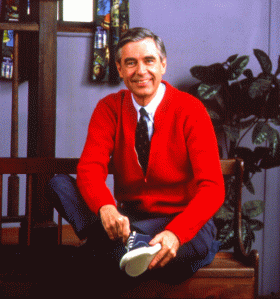
Why does all of this even matter?  Because it’s a step along the other trail of building a more welcoming community for everyone, which naturally means a more welcoming community for people who are marginalized by the labels we’ve put on them.  I have lots more stories and learnings from this trail, but you’ll have to excuse me…I need to change my shoes and put on my cardigan.

timothyvogt
Hope is the Thing with Feathers…

Hope is the thing with feathers
that perches in the soul
and sings the tune without words
and never stops at all.

–emily dickinson

These past two weeks I spent interviewing a myriad of potential candidates for an opening here at Starfire.  Interviewing was met with mixed emotions for me: the person we are replacing is leaving rather unexpectedly, but on kind terms.  We wish this person well, but still, there’s that old familiar feeling I remember of when I was dating in high school.  It’s that rejection feeling, the “So…you don’t like me anymore?” neediness of break-ups.  Will we really still be friends?  Can I still call you?  This is silly banter of course, but a question we wrestle with in this field.  A true test of a staff person really comes after they’ve moved on: will you still take an active role in our lives?  I hope so.  And hope, I’ve learn over the past two weeks, is a delicate, fragile, and fickle thing.  Sometimes, it’s all we’ve got.

I’ve been vacant from this blog for awhile, dealing with my own struggles and emotions when it comes to this work.  Instead of focusing on the negative, the stressors, the things that upset me about this world, I have instead compiled a list of things I am currently loving:

  1. I love the frustration that the juniors of Starfire U are experience when they are using their own planners, and choosing their own days.  Something about their frustration of having to choose is refreshingly wonderful.  When Ronny says, “I’m doing your job now…” I want to yell, “hell yeah!  And keep it up!”  Not because I am lazy, but because his doing my work (calendars, making connections, making phone calls, asking in speakers, finding new places in the city), is the point.  I shouldn’t be the one doing this for him.  They are struggling, but it’s a beautiful struggle.

  2. While the candidates for this recent round of interviews were all qualified and exciting people, I had a wonderful conversation with one applicant in particular.  Imagine that!  A conversation instead of grilling someone with mindless, monotonous questions.  If interviews weren’t already like awkward first dates, (two people getting dressed up, knowing very little about each other, not knowing how the whole thing will turn out, both hoping – could this be “the one?!”), the uncomfortable series of questions certainly makes it feel like one.  So… tell me about yourself.  What do you do for fun?…  Where do you see yourself in five years?… all so personal, so serious, so quickly!  It was great to pause and recognize that interviews could also be conversations.  What a novel concept!

  3. My favorite phrase of the week “recognizing someone’s humanity.”

  4. “Did you celebrate?”  was a question Tim asked someone during a meeting.  What a great question!  It’s been echoing for me all week.  Ask yourself this question, ask it of your friends and family too when they tell you something great.  It’s a phrase that brings me back to equilibrium.

While I can’t guarantee I’ll have inspiration to blog as frequently as Tim, I do hope that this recent wave of things I’m loving continues, and I’m assured with the knowledge one never needs a reason to celebrate.  Happy Friday, Cincinnati.

timothyvogt
Raymond Thunder Sky’s Weekend News & Views

I’ve been “off the grid” for the last week, camping with the fam in Indiana.  For my return, I figured I’d better update the news out there. 

  • We’ll start with another article on the Thunder-Sky, Inc. Gallery.  (There’s also a nifty blog by Keith Banner here!)  The Thunder-Sky, Inc. website has announced a festival in late September, so mark your calendars.

  • The 20th Anniversary of the ADA came and went, and there were a boatload of articles about it.  Most were simply announcements of celebrations, but some were a little more in-depth, including something from Deborah Kendrick.  I went to the celebration on Fountain Square and was less than enthused with what I heard from the speakers.  Most just touted the law and it’s impact.  Only Steve Driehaus seemed to really get what the important issues are.  He spoke about his experience with the practicalities of the law, its shortcomings, and the work to do in the future.  Yours truly wrote a letter to the editor essentially saying the same thing.  I think Driehaus stole my ideas!  If he starts talking about the need to finish painting the back of the house, you’ll know he’s been monitoring my thoughts for sure.

  • Here’s a gem:  an article/podcast about the recent grant awarded by the Ohio Rehabilitation Services Commission to Griffin-Hammis Associates.  As Candice mentioned, Dave Hammis lives nearby and we got to meet him for coffee a few months ago.  I learned more about work from that dude in that one hour than I’ve learned in ten years. 

  • Hamilton County Board of DD Services won a National Award for Excellence!  Complete with a terrific pic of Cheryl and Brady.  I hold those people in high esteem.  But it is surprising that these people didn’t win that award…Cheryl, if you want more awards, I think you should consider funding lap dances in the future.

  • An article about inclusive theatre. I only link it for two reasons: A) it briefly mentions Cincinnati and references (I think) the Marjorie Book Continuing Education Society and Joe Link’s work and B) it talks about Kevin Kling, who I saw at the Playhouse in the Park for his show How? How? Why? Why? Why?

timothyvogt
The return

Last night, I had the opportunity to attend a conversation with Ward Mailliard, who talked about “Re-Humanizing Education.” (He’s the guy in the tie above!)

Ward was brought into town by Peter Block and “A Small Group.”  I cannot express what a treasure Peter Block is here in Cincinnati.  I first heard his name a few years ago, and as I mentioned, first heard him speak when he gave an introduction to Judith Snow in 2008.  (A funny aside:  There is a man named Peter Bloch, who is the Executive Director at a local workshop.  When I first heard about the work of Peter Block, I thought they were the same person and was in awe at what that man accomplished with his time!)  Since then, I’ve had the good fortune to work more closely with him, in particular on the Connectors Table project, which is related to his new book with John McKnight, The Abundant Community.  It’s really exciting work and a lot of fun, but I’ll need to devote a separate post to that in the future.

The more I hear from Peter, the more I’m amazed at what he does and what he means to our city.  FYI, he’s really humble and defers a lot of credit for this work to others, but make no mistake, Peter has the attraction of a magnet and drive of two men (get it?..two Peter Block(h)s!)  He’s not big on celebrating his birthday, but I told him how Jean Vanier says we need to party more.  So in that spirit, please note that his birthday is on July 29th:)

Back to Ward:

Ward told us of his work with his students, the trips they’ve taken and the approaches he uses in the classroom.  He told stories of how he understands that life happens to his students, and he tries to look at them as individuals and as people to be cared about.  He spoke a bit on how we claim to want to raise compassionate and engaged citizens, but our educational systems are designed around power and control.  The audience was mostly educators, which was good news, so I hope they take his message back to their classrooms.  I thought of our field’s emphasis on person-centered approaches..we might be ahead of the game on that…

I was particularly interested in how he breaks down what he calls “the learning journey” into a call, a journey, and a return.  The call is the curiosity stage, the journey is the experiential stage, and the return is the reflective and sharing stage.  Make sure to check out that link.  It’s important stuff.  Especially the return.  I think everyone last night thought (and I agree) that we all neglect the return stage too often.  In a sense, this blog is part of my return stage.  It’s so important to share our learnings and discoveries with each other.  And to do it in a personal basis.  That’s why this blog is not a sufficient “return” for me.  I’ve got to talk to people about this:  friends, people I work with, Bridget.

The small group technique is a perfect complement to Ward’s stages of the learning journey, so our conversation and learning last night was completely consistent with the message.  There was a call to curiosity, which was the invitation/email/thinking behind each gathering.  Then there was the experience of listening to the presenter and ideas.  It was followed by getting together with two or three others, reflecting and sharing, and then bringing those thoughts back to the large group.

It was a terrific night and again, I just can’t say enough how thankful I am that Peter is bringing people like Ward into town.

timothyvogt
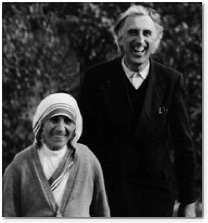
Wouldn’t you just love to be along for this walk?

I’ve been reading a lot of Jean Vanier lately, and these two people make me proud to be Catholic.

this seems appropriate for today….and any day, for that matter!

“People are often unreasonable, irrational, and self-centered. Forgive them anyway.
If you are kind, people may accuse you of selfish, ulterior motives. Be kind anyway.
If you are successful, you will win some unfaithful friends and some genuine enemies. Succeed anyway.
If you are honest and sincere people may deceive you. Be honest and sincere anyway.
What you spend years creating, others could destroy overnight. Create anyway.
If you find serenity and happiness, some may be jealous. Be happy anyway.
The good you do today, will often be forgotten. Do good anyway.
Give the best you have, and it will never be enough. Give your best anyway.
In the final analysis, it is between you and God. It was never between you and them anyway.” – Mother Teresa

timothyvogt
the other trail

I think it was around November of 2007 when my friend Kira asked me if I was going to go see Judith Snow speak in Cincinnati.  I had received an email invite from someone else, and didn’t really know much about Judith Snow, but Kira’s invitation was enough for me to go.

When I arrived, I met up with Kira, who had a couple of VERY crowded plates of hors d’oeuvres.  (She and I share a tremendous love of snacks and tease each other that we’re always meeting up at places where free food is offered!)  After hugs and catching up, she led me to our seats, which she had been saving. 

The first thing that struck me when I walked in to the room where Judith was going to present was that it was in chaos.  There weren’t nice orderly rows of chairs facing a podium or stage.  There were about 20 circles of 6 or so chairs.  This most certainly did not look like any presentation I’d ever been to.  I sat down in the circle next to Kira and we chatted for a bit with each other and greeted the other people in the circle.  The first person I met in our small group was Jo Krippenstapel.  I’d been introduced to her one other time by one of Starfire’s Board members, Diana Mairose, but knew little else about her.

About 5 minutes before Judith was scheduled to start, Kira tells me she’s leaving, as she has another appointment to get to.  (I still give her a hard time about that one.  I mean, I’m all about the free snacks, but I always stick around for at least a part of the presentation before jetting!)  So here I am, in the middle of these circles, uncomfortably facing people I hardly know, and the worst part is that Kira had picked the circle directly next to where Judith would present that evening.  There is a video taken of that night out there somewhere, and I think I’m probably in 90% of it just because of how close I was.  I’m not kidding…I was practically sitting in Judith’s lap! 

Judith was introduced by John McKnight, who was introduced by Peter Block, who invited an a cappella hiphop group to get us started.  I think they made us get up and sing along, which only added to my discomfort. 

I don’t remember a ton about Judith’s message that night.  She talked about considering gifts, instead of disability, and she talked about how differences can be a positive, rather than a negative.  The main thing I remember was feeling out of the ordinary…everything felt different that night:  the setup, the introductions, and of course, the ideas. 

Going that night was one the most important decisions I’ve ever made, because it was my first step along the trail of learning what this work is truly about.  Before that night, I was trapped in the awful bliss of simple charity and the grind of  professionalism. 

As I look back on it, I can clearly see how Kira’s invitation launched me on a new path.  All of the principle instigators were there that night:  I started reading things by Judith, Peter and John, and have learned so much from Jo since then.  They have turned me on to others and helped me understand that this effort isn’t what I thought it was.  It’s much much bigger and way more important that I ever imagined.

I wonder what my work and life would be like if I’d declined Kira’s invitation that night.  I imagine I’d have found my way here eventually, but I feel blessed and privileged to have discovered this Other Trail.  It’s made life more full and interesting.

I’ve gotten to see Judith speak again since that night, and she introduced the term “Syncopated Transition,” which is beautiful.  I’ll write more on that later, but today is for considering the impact of invitations and their acceptance.

I find it funny that I now get frustrated when I sit in traditional presentations in rows of chairs.  I find myself speaking up and commenting and trying to shake things up a bit.  I wish every meeting involved more stories, conversations on ideas and sharing experiences.  I get annoyed with pre-scripted messages or agendas these days…regardless of the quality of snacks.

Thanks a lot, Kira.


timothyvogt
SIC Day 5

I feel like this has taken forever to complete the recap of the Summer Institute…but it gave us a lot to think about.  I think I pared each post about 50%, so you got off easy.

On the 5th day, we wrapped up the morning session with KFI and then headed to the auditorium where Tom Kohler was offering the  closing keynote.  He told the story of Waddie Welcome, albeit an abridged version due to the time constraints.

We gathered again after his keynote, shared sandwiches, and talked about how to bring some of the things we learned back with us. 

I really cannot sum up adequately everything I feel about the experience, but I noticed that Tom wrote this on his blog on the last day of the conference.  I don’t purport to know what he was thinking when he wrote it.  He could have been talking on a personal level, or on a broader level, but the words are beautiful and spoke to me:

What We Do…June 25th, 2010 By Tom Kohler

  • What we do is not flashy.

  • What we do is not “solving a community problem” unless you consider indifference to injustice in another person’s life a community problem.

  • What we do is based on possibility, not prescription.

  • What we do is as strong as people, and as weak as people.

  • What we do demands and deepens character.

  • What we do is both humble and audacious.

  • What we do can speak to people of good heart who have little else in common.

  • What we do is to do this as best we can, which is different than the best it can be done. We aspire, given our limitations as individual people, as a group of people and as an organization to do this the best it can be done.

  • What we do fans the flame of personalism rather than professionalism.

  • What we do is part of the very current and hip DIY movement.

  • What we do has roots in each of the major faith stories of the world.

  • What we do ties back to the underground railroad, the sheltering of Jews, to other movements and individual acts of courage that focus on saving individual people from harm at the hands of a power structure.

I think that is all the summation necessary.  Thank you to Hope for making it possible, and all at Realizations.  Thanks to John and Diana and Brady and Robert and ALN for the model, wisdom and solidarity. Thanks to Tom and Janet and Gail and Jim and Milt for the patience, guidance and challenges.  And thanks to all who traveled in the Starfire circle for the example and strength.

timothyvogt
Marge Schott’s Weekend News & Views

Last night, the Reds celebrated the 20th anniversary of their 1990 World Series.  M.C. Hammer is in town along with the Nasty Boys and Chris Sabo.  But I haven’t heard much about the architect – Marge Schott. 

Say what you will about Marge, but she brought us a World Series and no one can deny her love for the Reds.  At the beginning of the 1990 season, the Reds won their first 9 games.  I went with some friends to see them play the Braves in game #10.  It was a Sunday afternoon and they were giving out team photos.  The Reds lost, but we got to meet Marge and she autographed our pictures, complete with Schottzie’s paw print.  So now I’ve got a “To Tim” autograph from Marge on the World Series team photo hanging in the room at Starfire that her foundation sponsored.  

So as we celebrate the Wire-To-Wire team from 1990, let’s not forget the woman who made it possible! 

On to a few quick links you may be interested in:

  • Citybeat has a great article previewing an Antonio Adams show at Thunder-Sky, Inc.  Terrific thoughts on the problems with labels by Keith Banner and an excellent job by the writer, who asks why it’s necessary to even discuss disability in the context of art.   

  • A new Political Action Committee focused on Disability Power and Pride….I wonder if they’ll get involved in Kentucky’s U.S. Senate race?

  • story out of Columbus (with Michael Rench quotes!) about the difficulties of people with autism in finding jobs.  As my friend Diana would say, it’s all about relationships!!!

  • new study out of Britain says that people with disabilities are the group most discriminated against in society. 

  • Speaking of Cleveland, an employee of Anthony Wayne Services was arrested for stealing thousands of dollars from the people he was supposed to be supporting. 

  • I’m sorry, but does a “special needs subdivision” really sound like a good idea to anyone?  If it works, maybe we could then just have a whole city, just for people with disabilities.  Perhaps their own state?  Anyone with me?  Anyone?

timothyvogt
SIC 2010 Day 4

After lunch on Day 3, I was signed up for Tom Kohler’s course on “Invitation.”  Tom is with Chatham-Savannah Citizen Advocacy, and wrote the book Waddie Welcome & The Beloved Community.

If you ever get the opportunity to hear Tom tell the story of Waddie Welcome, jump on it.  Bridget and I saw him speak back in November of 09 when Hope brought him into town, and it’s powerful.  Tom has this great soulful voice….the cadence and rhythm are the perfect delivery for Mr. Welcome’s story.  Part of it is his Georgia drawl, but mostly, it’s just his way.  He’s also a maestro in conversation.  I heard Tom talk to a few different people the week of the conference and he has a way of talking to people that gets to the heart of them in minutes.

So after reading about my crush on Tom Kohler, you’re probably going to be surprised to hear that I ditched his class for the rest of the week.  I guess “ditched” is the wrong word.  More like “dropped,” though that doesn’t sound much better.  You see, my runner-up choice to Tom’s course was with an organization in Maine called KFI.  I checked out their website before the conference and was struck by the milestones on their “About” page:

(KFI 15 years ago)

Preschool Only For Children With Disabilities
Segregated Special Purpose School
Sheltered Workshop
Segregated Day Program
Foster Homes or Living With Family
Everyone Transported To One Location
Agency Owned and Operated Vans
Services Provided In KFI Owned Buildings
Groups, GROUPS, GROUPS

(KFI Today)

Fully Integrated Preschool For Children With and Without Disabilities
Public School Education
Individual Job Placement In Real Jobs
Support Individuals To Use Community Resources
Support Individuals In Their Own Apartments or Homes
Services In The Individual’s Community
Public Transportation Or Staff’s Personal Vehicle
Services In The Community; Nothing Done Within Space Owned by KFI
Individuals, INDIVIDUALS, INDIVIDUALS

It is a simple table, but it impressed me:  “Now here are some people who’ve done it,” I thought.  Imagine the work they’ve put in transforming KFI from a sheltered workshop to what it is today!  Plus, there were about 7 other people from Starfire, including Candice, attending Tom’s course, so I figured we were in good hands there.  Gail and Jim from KFI are some pretty cool people.  Listening to their stories, you can tell that they’ve got a ton of practical experience doing this work.   They’re aware of the pitfalls and the rewards, and they care a lot about what they do.  It was wonderful spending time with them and learning about their work over the past 30 years, and it gave me a sense of horizon for my own work.  Bonus:  I got to spend time with Milton Tyree, who was in the same course.  Milt is an expert in helping people find jobs and has written a manual on positive introductions.  Just a great guy all around.

So I was happy with my decision to learn from KFI instead of Tom, but angry at science, who have yet to figure out a decent way to clone yourself despite millions of dollars and decades of work.  Gail and Jim gave me a ton of concrete ways to keep moving forward.

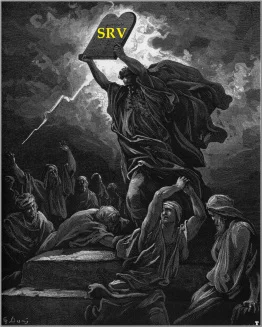
At the end of the day, Whitney Kays and I offered up something a little different to the marketplace.  We told everyone about our friend, SRV, who has a ton of gifts to share with the world.  But she is sometimes misunderstood and might seem scary to people.  So therefore, she finds herself a little lonely these days.  We asked if anyone would like to participate in a PATH for our friend and ended up with about 10 people!  It was really fun.  We all talked about how we met SRV,  the highlight of which was when Tom Kohler said he knew SRV’s mother, Normalization, and Whitney corrected him that she likes to be referred to as “Norma.”  We discussed that we’d like for her to have more friends, we talked about her protective father (Wolfensberger) and all her cousins (the theories that contribute to SRV and have spring from it).  We discussed her bright future and our highest hopes for her (that she would influence everyone in the community:  funders, workers, families, etc.) and we talked about her need to update her wardrobe a little bit for 2010 (some people felt like she was stuck in the 70’s).  All in all, it was a fun exercise and really stretched us. 

After that, we had a terrific dance.  Seriously, I’ve been to a lot of dances and this was one of the best.  There’s photographic evidence out there that I think will be used to blackmail me in the future.  I think everyone was in the mood to cut loose…and boy, did we ever! 

The night ended with a game of Catch Phrase and beers in the hotel lobby.  I was struck by how much Catch Phrase is a grown up version of Hot Potato… 

timothyvogt
Celebrating David

Hi All. I am really excited about contributing to this blog, so I want to introduce myself. My name is Jenny. You can find my personal blog here (just a small plug!  )

I’ve gotten to know many people with disabilities in the past three years, and it’s been eye opening and a pleasure. When I first started working where I do, it was really intimidating walking into a room of people with disabilities, but after a few months, it became no big deal because I saw that they are just people. Like everyone else, with the same goals and desires.

Anyway, enough about me.

You may have read this post by Tim. I had the pleasure of meeting with some folks at Starfire a few weeks ago to talk about David because I was writing a remembrance article about him. We met right before David’s memorial service, so he was fresh on everyone’s mind.

(I must admit, I was a bit nervous writing a remembrance piece because I’d never met him, but mostly because he seemed so joyful I was afraid I wouldn’t be able to personify that in my article. But again, enough about me.)

Here’s the piece:

It was impossible to feel bad when David Johnson was around. He was known at Starfire U as the king of compliments.
“Once, David gave the ultimate compliment,” said Tim Vogt, Starfire Executive Director, “He and our receptionist would always try to one-up each other. One morning, David said ‘You look nice today as usual and in the future.’ How can you top that?”

David started attending the Starfire U day program two years ago.

“He pretty much owned the place as soon as he walked in,” said Tim.

With a huge, constant smile, David was interested in everyone he met and the first to volunteer for anything. David asked new friends about their families, pets, jobs.

A member of Starfire’s ambassador program, David was known for wearing a Spongebob tie when speaking to kids, and for loving to share his favorite gummy candy.

David was also a big music fan. His favorite singer was Miley Cyrus, and he was known around Starfire to dance and sing in front of everyone.

In May, David passed away at age 21. He will be remembered fondly for demonstrating love, acceptance, and starting each day with a smile.

Jan Goings
The Memory Keeper

Now and again my two sisters and I engage in a raucously filled night of making up fake memories from our shared childhood. I might say, “hey, you guys remember the time I broke both my knee caps rollerblading?” Or Raven or Jenny might say, “oh yeah, like the time you and mom were boxing in the living room and that’s how you lost your front teeth?” The three of us will cackle until Mom yells from another room, “Why do you lie?! That never happened!” flustered at our inane and false stories of our lives together, she returns us to reality.

I have been mulling over this idea of “story keeper” or “memory keeper” and the role of motherhood for the past few months. It stemmed from a conversation with my partner’s mother. His mother, Judy, and her seven brothers and sisters are in the midst of an unfortunate losing battle. An oft-told tale of elderly parents and rapidly fading memories. What started as frustration, “Mom, we just told you when Leah was coming home next!” grew into a desperate realization of defeat: her memory, her life, their life as she remembered for them, was slowly being worn away by time.

I was forwarded an article written by David Pitonyak, entitled “Who Holds Your Story?” He writes, “Having our stories held and told by others gives us a sense of place in the world, a sense of belonging.” The entire piece is moving, depressing, hopeful, and cathartic.

Judy teared up recently in the car and asked Jordan and myself rhetorically, “who am I if my mother doesn’t remember me?” There was a silence—and extended pause of pain. Jordan answered, “well, you’re you of course.” But we got the point. When the person who holds your memories, your life, forgets— what then is left but that unspeakable sadness and guilty anger?

David’s writings remind me of many who I’ve encountered who cringe at revisiting the past. This work we live has a shameful, and dark history. “Let’s look toward the future!” “We’ve moved on, thank God!” “What good will come of reliving those days?” I can’t help but think of the countless and forgotten names who lived that shameful history. Judy’s words, her aching question is painfully valid and eerily haunting. “Who am I if my mother doesn’t remember me?” In this work, who are those we’ve forgotten, if we don’t remember? Pitonyak writes about case files, ““professionals do everything they can to make sure it is textbook sterile: “Delivery normal. Child failed to reach developmental milestones. Problem behaviors began to emerge in special education classroom at the age of 7. Mother and father no longer able to care for child. Child institutionalized at age of 14. Mother visited every Sunday afternoon until she passed away in 1977.”” (Pitonyak pp. 2) The story ends there, in the file. Rarely a picture is found, no letters from old loves, no Christmas cards from Auntie, no old yearbooks, no dried flowers from old Proms, or wedding, no newspaper clipping noting honors, graduations, births.


Sandy, Debbie, Judy, 1970.
When my grandmother passed away we found boxes of drawings, first hair cut clippings, school photos, spring concert programs, letters, birthday cards, parish bulletins, all documenting my mothers and her four sister lives, my life and my two sisters’ lives, all my cousins, all of my relatives lives compiled in stacks of yellowed paper and bent photographs. It took us months (literally) to sort through everything. No paper, no picture was unimportant to her. To her, it all had to be remembered.

Starfire U juniors recently wrote their own biographies. I am proud to say that none of them read as case files. Here is a sneak peak:

“Navigator. Metro Expert . Tour Guide, just ask Joseph how to get to anywhere in Cincinnati …” and my favorite quote from Joseph, “I hope my future will be as joyful as it right now.”

“On September 19, 1986 at 11:03 p.m. marked the beginning of something special. That was the day that Nikki was born and where all of her struggles and triumphs started….”

This is a just snapshot, of course. But the point is, their stories are known. Their history, their lives preserved, their future made evident, in their own words. Living documents of who they are. I am grateful to know their stories, be in their lives, and relieved to know that it is not my duty alone to remember it.

I struggle often thinking that sometimes this work we do sets us up to poorly eulogize those we are supposed to be serving, while they are still living and breathing. In Louisville, someone talked about the separation and segregation of language between us “professionals” and “those other people.” “He’s a screamer, biter, eloper, hitter, inappropriate at times, prone to outbursts, needs redirection.” WHEW! I’m sure, if you asked my mother, my own memory keeper, she could describe me in a similar way, “She’s neurotic, sarcastic, cynical, confrontational, selfish, annoying, easily offended, nail biter.” And for gosh sake, don’t we all “need redirection”?! However, she wouldn’t describe me in that way, no—no one would describe those we care about with all the negative secrets first. Why then, do we do so in our work? As those who document in baselines, incident reports, daily logs, MyPlans, IEPs, paperwork galore—let’s preserve the memories as we’d like our own story to read: dignified and humanely. Let’s “reclaim the person’s story” as Pitonyak asks.

timothyvogt
Friend$hip

On Wednesday, February 20, 2008, we got about six inches of snow.  I remember because I had to get Bridget to the hospital for her scheduled c-section by 7:00 a.m.  Little Paddy was on the way!  He was born around 9:15 that morning and spent the day in an oxygen tent, due to his lungs not being quite ready.  Around 10:30 a.m., I glanced at my phone and noticed I had three missed calls.  They were all from Mike.

I met Mike at a summer camp in 1998.  Over the next 13 years, we’ve hung out, gone to wrestling matches and baseball games, talked on the phone and crashed each other’s parties, graduations and family functions.  On that snowy day, Mike was the only person not in our family who called to check and see how we were doing:  Was the baby here?  Was Bridget OK?  Did we make it through the snow?  All of these questions were waiting on my voicemail.  No other calls from other high school or college friends.  I think I sent out a text message announcement and received few texts in response.

When I called Mike and told him the news, he screamed and dropped the phone cheering.  I know that I was in a pretty fragile state, with Patrick under the ventilator and Bridget still recovering, but I got pretty choked up listening to how excited Mike was.  When we hung up, it was clear to me that Mike was, and still is my best friend.  We’ve argued, celebrated, mourned, and worked together over the last decade, and I can’t imagine my life without him.

A friend sent me this article in last week’s Times about friendship.  The author analyzes our relationships in the modern world.  It’s a love story for friendship, and at one point, the author states:

“Friendships worthy of the name are different. Their rhythm lies not in what they bring to us, but rather in what we immerse ourselves in. To be a friend is to step into the stream of another’s life. It is, while not neglecting my own life, to take pleasure in another’s pleasure, and to share their pain as partly my own. The borders of my life, while not entirely erased, become less clear than they might be.”

I can’t tell you how much it hurts me to hear Mike tell me stories about how people at his work or at his high school called him retarded.  I cannot imagine a friend of mine being put down like that every day of his life.  But when I hear those stories, it reminds me that Mike is a young man living with a disability in an extremely un-inclusive world, not just my friend.  Our lives are woven together and will be for the rest of our lives.  I know that no matter where Mike goes, I will be in touch with him once or twice a week.  We’re linked together.

So what about the relationships between the voluntary members and paid staff of Starfire?  Are those friendships?  Well, no, not all of them.  Just as elsewhere in life, at Starfire there are people you click with and people you don’t. 

This article was timely because of the questions posed by Janet Klees in Louisville about friendships between people with a label of disability and the people supporting them (check my recap of that conversation at the end of this post.)

I purposefully didn’t put our group answers to the third question we discussed on Day 3 of the Summer Institute:  What do we know that others outside of Starfire might not know?  One of our answers to that question is that people with disabilities and people without, even in a paid relationship, can indeed form deep and caring friendships.  We all know that at Starfire because we’ve all got them.  Some of them take years to recognize, as my friendship with Mike took me, but that’s one of my jobs:  to help the people I work with recognize that beautiful possibility more quickly than I and to leave themselves open to it.  It’s not required, but it’s allowed, and it’s beautiful to see when it happens. 

I’ve got another friend who spent a week with Starfire last week and is now interviewing our staff and members, asking them what Starfire has that feels so different…and how we got it.  We’re not sure exactly, but I think it has something to do with friendship.  We pay people to be excellent in their work:  to maximize choice, to minimize exclusion, to find new ways.  We don’t pay them to be friends, but it happens nonetheless.  All of us accept who we are, with our potentials and limitations, and we challenge each other every single day.

Tomorrow night, Bridget and I are going out with some old and dear friends.  Three of them have significant physical disabilities.  When we meet at the BW3’s in Western Hills tomorrow night, there will be three of us that got paid to help the other three eat, swim, change clothes and get around a long time ago.  But we haven’t done that work in 11 years, and no one will know that any of us were once paid to do that work.  Tomorrow night, we’ll be six friends catching up after not seeing each other for a few months.  Three of us will help three others eat and get around.  We’ll have some wings and beers and tell old stories on each other, and at some point, we’ll talk about Bobbi Jo, our lucky 7th, whose funeral three years ago was the last time we were all in the same room.  We’ve all stayed in touch in different ways and frequencies since then, but it felt like a good time to get everyone together again.  And as difficult as it’s been to coordinate our schedules and get everyone there, it will be a damn good time and well worth the trouble.  Our friendship is impossible to some, and insincere to others. 

But we know what they don’t.

timothyvogt
SIC 2010 Day 3

When last we left them, our Starfire heroes were in the throes of agony, drowning their sorrows in a vat of Bourbon Barrel Ale from the Bluegrass Brewing Company…..


(OK, so maybe that’s an exaggeration, but I get some degree of artistic license, right?)

On Day 3 of the Summer Institute, we had our final session with Janet Klees.  She saved the best for last and talked about some cool things that I get excited about as well:  connecting people in the community with the people she supports.

This is one of my new favorite things to do.  Locally, Joe Erpenbeck and his team at Hamilton County ABCD are the ones doing this work, and they’ve got some great stories. 

It’s so simple:  Look at the common gifts, assets and interests of people and connect them.  I have a friend Joe, who loves nature and being outside.  He’s tried to raise a family of snakes, he’s been known to stop along the side of the road and pick duckweed if he’s forgotten his lunch, and he’s just an all-around outdoors-y fellow.  Last week, Joe was at UC, taking a week’s worth of classes, one of which happened to be botanical in nature.  I was visiting the class and asked one of the instructors where she got all of her plants for the class.  She explained that her father owned and operated a greenhouse up on Rt. 747, which is in Springdale.  I immediately called Joe over and introduced him to Mary.  Joe lives in Springdale, and his biggest challenge is getting around.  I told Mary what a geek Joe was for flora and she got all excited and told him about her dad’s greenhouse.  Then I told them how close they were to each other and watched them chat away. 

Now the challenge is to help nurture that connection.  This is the part we’re working on currently at Starfire.  It’s so new to us and there are lots of subtleties inherent.

We’ll write more on that in the future, but back to the Institute…

After the morning session, Janet came up to me and we had a terrific conversation.  She said she was interested in Starfire’s work and told me that we were “clearly very creative, talented and enthusiastic.”  In fact, she said we were one of the best segregated programs she’d seen…Youch!  But she also said that we had a chance to be one of the best, if we got more intentional in our work…I’ll take it!

After the afternoon session, we entered the “marketplace,” which is where anyone could stand up and talk about things they’d like to discuss.  Hope said she’d like to do an SRV overview, and I decided to go with her.  One other Starfire person came along with me, and within one hour, Hope had laid out the basics of SRV in a very honest but accessible way.  She prefaced it with the caveat that in no way should we take her one-hour PowerPoint as the be-all end-all of SRV, but her presentation convinced me that there is a more accessible way to train everyone in the basics of SRV.

I’ll relay a specific story to illustrate the point:

One woman in Janet’s course was completely anti-SRV after her last session on Wednesday.  She said SRV felt like another example of professionals making decisions for people with disabilities – “If my son wants to play Hot Potato, he should be able to play Hot Potato!”  Her son also moved out of her house and into a group home for the first time about two weeks prior to this conference, so Janet’s very strong opposition to group homes didn’t help her much.  Another example of unfortunate timing for Janet.  I asked her to go with me to hear Hope’s presentation for a different spin.  She agreed, but I could tell that we were in danger of losing her.

After Hope’s hourlong presentation on SRV, this mother told me how wonderful SRV was and wanted to know how we could help the people at her son’s group home to adopt it as one of their guiding philosophies!  What a change, huh?  And I sighed with relief…this was the SRV I was hoping would catch on with our group!  This is the power of doing the right work in helping people experience and gain valued roles and expand their expectations of themselves and the others’ expectations of them.

So, as I mentioned in a previous post, I have a few issues with how SRV is presented.  And this stems from my personal experience:  When I was  trained at my first part-time job in this field in 1997, I was taught how to put people in a restraining hold.  Non-Violent Crisis Intervention, it was called, and I’m proud to say that I’ve never used the techniques or even considered it.  13 years later, I first heard of Social Role Valorization.  So why was it that I was taught how to physically restrain someone who was having “behavior problems” right away, but not taught SRV (or even made aware of it!) until 2010?  Why is this not the first thing you’re taught when you get hired on everywhere that supports people with the label of disabilities? 

What if you were a jeweler, and your job was to take rough diamonds straight from the earth and set them in rings and necklaces?  But instead of learning about cut, color and clarity, you only learned techniques of molding the gold/silver around the stone.  No matter how skilled you get at setting the stone in that ring/necklace, you’re still not anywhere near releasing that stone’s true beauty because you never learned to bring out the light in the corners or how the imperfections can be minimized or incorporated into the cut so as to enhance the value.  You’d be a terrible jeweler, right?  But no jeweler skips that learning.  In fact, it’s the very base of jewlery!  It’s step #1.


That is my question:  Can SRV be step #1???  I’m no expert, as I’ve only recently learned about this, but I see two areas of potential:

  1. Let’s start in the shallow end before we try to brave the deep waters:  What if everyone got a quick half-day training on SRV the first day they arrived?  What if parents and families and people that are supported themselves were taught the basic principles of SRV as part of some “Intro” course offered in every community?  Sure, we wouldn’t get into the various (and important) underlying theories, but we would have a basis on which to build and raise awareness.  Then, as you were more interested or as you grew in your work, you could learn more deeply, including a five-day PASSING or some similar intensive training.  Currently, it seems that trainings are almost always a multi-day event (one PASSING offered here is 5 days in Pennsylvania).  So getting to one is going to cost the fee of attendance, the meals and accommodations, travel to and from, as well as the time away from work.  It ends up being rather expensive…maybe $1,000 or more per person!  That’s a big chunk of a training budget and probably completely cost-prohibitive for families.  That being said, I originally intended to send a few staff (Bridget being one, so I knew I’d hear it from her) to my SRV training in Columbus, and not attend myself.  I was encouraged to go by a friend.  He said that it was important that I, as a leader with power to effect change and make decisions, should make it a point to attend.  I did so and agree with him completely.  All leaders of organizations or efforts like this should carve out the time and money to attend this, as it will require your conviction to help implement it.  But what about the other 30 employees of Starfire?  What about the 500 families of Starfire?  What about the 200 community volunteers?  How do we get that message to them?  Can you imagine the power of all of those people being aware of and advocating for the principles of SRV and helping us implement its beautiful principles here?  Can we get an intro course down to four hours so as to bring that closer to possibility?  What if we included funders in that training?  What if SRV approaches became the “new normal” by which systems operated and on which families expectations and funding decisions were based?

  2. Remember what your grandmother told you…You’ll catch more flies with honey than vinegar!  I first learned SRV principles from Jo Masserelli and she was a wonderful teacher.  She had great examples and kept it informal with lots of opportunities for questions.  We would ask her “What about’s” and she would walk us through the thought process of how that would be looked at in an SRV framework:  Is using the term “respite” a problem?  What about volunteering at an animal shelter?  What about when people say “you must be a saint” to do this work or parent a child with a disability?  She worked through all of these questions (and the good news was that it was only two days, instead of five days!  But she did tell us that we should consider doing the longer trainings.)  Others I’ve seen or read have detached from anything that isn’t purely SRV.  They don’t have much patience for the messiness of the present.  So I think an understanding and accepting teacher in this arena is critical, or you’re going to turn off more people than you turn on.  So aside from cloning Hope Dittmeier, how do we help people who teach and know SRV spread the gospel in a positive way?   Can it be part of the training to think from a honey-perspective, gently nudging or coaxing change out of your friends or co-workers instead of vinegar, offending people left and right over things they may have deeply invested themselves in that don’t meld with a pure SRV approach?  I’ve not done a PASSING yet, but as I understand it, a critical part of it is to evaluate another place or agency.  I wonder if that technique might build in a “go forth and criticize” expectation upon completion of the training.  In our session with Janet, all of us had no problem tearing apart Patrick Henry Hughes’ father, who called him “buddy” and patted him on the head a few times during his performance.  But the real challenge is to turn the mirror on ourselves, and that’s difficult.  We need friends and allies for support when we do that.  We need people to remind us there is time aplenty and that small changes can reap big rewards.  Otherwise, (take it from me!) the task can seem incredibly daunting and people may just check out.  

In the end, I just think there’s a better way to share the wonderful challenge of SRV.  I know that one of the basics of SRV is that the problem lies in our systems and how they’re designed to go against everything SRV stands for.  But if even a cursory introduction is offered to people as they begin their journey in the systems or community in general, they’ll be better prepared to recognize and challenge the issues.  There are lots of things that I would have done differently, had I been aware of the “color, cut and clarity” needed in my work over the past 13 years.

We ended Day 3 of the Summer Institute by hijacking a conference room at the hotel and ordering pizza.  There’s a picture floating around out there of me with a case of Bud Light, some wine and a six-pack of Smirnoff Ice (yuck, Diana!) which we added to a bottle of bourbon as we digested the first half of our week.  I asked everyone to gather into small groups of three to four people and consider these four questions:

timothyvogt
The Hypotenuse

We may as well keep on our theme of “The genius of Tom Kohler”…

When I first heard Tom speak, someone in the audience asked him what we should be doing in the future.  He answered something along these lines (I’m paraphrasing):  “The 60’s, 70’s, 80’s and 90’s were the era of rights…Civil Rights, disability rights, women’s rights, gay rights, etc.  This time that we live in now should be the era of doing right.  Our democracy is a vertical democracy, where we look up for our solutions.  We should be creating a horizontal democracy, where we look to each other for the answers to our problems.” 

I thought that was so incisive.  Our leaders, who by all accounts are mostly intelligent, reasonably competent, and fairly well-educated, are completely impotent in many ways at solving our problems.  Politicians, CEO’s, and the like don’t have the answers for the oil spill and other environmental issues.  They can’t prevent or cure economic despair.  They can’t fix the injustices that people on the margins of society suffer.  But we can do all of that.

We can vote both at the ballot box and the cash register how we want this world to work.  And we can care about each other enough to raise our children to be good citizens and take care of our neighborhoods.  We don’t need our salvation to come from on high.  It’s all around us.

I recently re-connected with an old friend and she was telling me about her work in the past as a lobbyist in the pharmaceutical industry (Talk about your double whammies!  I backed away, in case of lightning.  She assured me that she’s out of the biz, though, so we were safe.)  As we caught up, I mentioned Tom’s vision for the present and future to her and we talked about how her work as a lobbyist felt like the vertical democracy.  I said something dismissive about that vertical world and my desire to get as far away from it as possible.   

Then my friend whipped out a geometrical comparison.  She said she didn’t see the vertical democracies and horizontal democracies as separate or antithetical to each other.  She saw them as a perpendicular.  Then she said that she saw power in advocating to our elected officials for social issues, while working to build and support the associations that build communities.  She said we should try to become the hypotenuse!


I didn’t have much to say after that, and it’s stuck with me since.  Do I know anyone who can navigate the vertical and horizontal democracies?  I would say Al Etmanski is a great example of a hypotenuse.   He does the work, brings people together in innovative ways, and advocates at the highest levels of Canadian government for positive change and helpful policies.  Do you know others?

(By the way, can you tell that I’m a sucker for metaphors?  Even mathematical ones!)

timothyvogt
A celebration of service

Last year, I wrote about a cool project we launched in collaboration with the Mayerson Student Philanthropy Project

I should have kept you up to date on it, because thanks to the efforts of Candice and Steve Elliott and Roger Grein and a bunch of wonderful teachers and young people dedicated to service, this has blossomed into an amazing effort.  Basically, from the initial discussions, a few of the people in their second year at Starfire U teamed up with some people from Moeller here in Cincinnati and worked on giving out $1,000.  So young people with and without disabilities were working together to analyze proposals from local non-profits and making a decision as to where the funds went.  What a neat way to include people living with disabilities in philanthropy and provide a collaborative experience, huh?  They met many times, got to know each other and got to work.

Out of that partnership grew another very cool collaboration.  Each year, Steve recruits a bunch of teachers and students and they spend a week doing service.  This year, he invited the people entering their third year at Starfire U to join them.  So every day this week, young people with and without disabilities have volunteered all over Cincinnati….together!

I spoke with some of them last night, as they celebrated with pizza and pop at a building on UC’s campus and the place was alive with energy.  They have really gotten to know each other and Steve has some incredible stories of the learning and common experiences they’ve all gotten to share.  They talked about working at a camp for homeless children, a Senior Center, Stop AIDS, a day care, and about 10 other places in small, inclusive groups all over the city. 

I wanted to make sure to post this this morning because they’re working on a surprise project that takes place on Fountain Square today at 12:30.  If you’re downtown already, take your lunch to the square.  You won’t regret it.  It’s a beautiful way to celebrate the culmination of a group of young people who are showing us a picture of a more inclusive and peaceful future.

UPDATE 4:30

Here’s the video to the flash mob they all did today on Fountain Square…This is great, but being there to see it in person in its totality was moving: Click

UPDATE 7/8/10: 

Another version of the video: Click

timothyvogt
SIC 2010 Day 2

Ol’ Timbo meant to write at the end of each day of the Summer Institute in Louisville last week, but as you can see, that didn’t happen.  Still, I definitely wanted to write some thoughts on the week.  I’ve gotten tons of invitations to various conferences over the years, but few seem worth the regsitration fee.  This was definitely worth every penny, and then some.  Hope deserves a lot of credit for getting this together and it gave all of us at Starfire a lot to think about.

On the second day, we were all seriously challenged by Janet Klees.  As I mentioned, Janet helps run Deohaeko in Toronto.  Basically, it’s a co-op of seven families who built a place for their sons and daughters to live.  It’s really interesting because instead of building a home or apartment complex just for them, the families built one with an additional 95  or so units, so there’s lots of people without disabilities that live there, and they help build the social community.  A terrific model of natural inclusion and individualized supported living.

Janet started the morning by talking about a “segregated” place in Toronto called the “Sunshine Club,” where people with disabilities could go out, attend dances, etc…..Sound familiar?  She said that the families of Deohaeko were welcome to use their services (and that of Special Olympics), but that she and Deohaeko would not help get them there or support them there.  She framed it as part of her belief system to have nothing to do with places like that.

This is where the principles of Social Role Valorization start to get challenging.  Basically, a tenant of SRV is that if people with disabilities are grouped in any way, they are in danger of being judged as only being able to live/work/be friends with other people with disabilities.  The thinking is that “congregating” people with disabilities creates an “us/them” separation, which perpetuates the isolation of people who live with a disability.  So you can imagine that this is a tough pill to swallow.  Indeed, SRV raises your awareness about nearly everything you’ve ever done.  But “anti-congregation”, in my opinion, is the hardest to digest because it basically goes against every single program, service, and approach in our field.  It’s also the biggest hurdle to overcome because most services are based upon congregation to some degree.  It’s an unfortunate historical reality that basically comes from the old institutions and it’s difficult to break that mentality.  I’ll need to get into this in a future post, but for now, just know that that your first time hearing this is like a dagger to the heart, and you get a glimpse of the immense challenges ahead, which can seem overwhelming. 

Also keep in mind that out of the 16 people in Janet’s presentation, 9 of them were from Starfire.  And out of those 9, SRV was a new concept to all but me.

So our minds were blown.

I did raise my hand after Janet described the “Sunshine Club” and told her that it sounded a lot like Starfire and that we understand the challenges of “moving forward in our work” which was “why we’re here.”  That’s the truth.  We’re not perfect, and we know we can do a better job.  So we show up to places like the Summer Institute to learn new ways.  (When I was first made aware of the principles of SRV, I was stunned.  It really does blow your mind, if you’ve spent any amount of time in this work.  A friend who knew how much I was struggling with this gave me this article by John O’Brien.  Every once in a while, as the case was when Janet brought up her criticisms of the “Sunshine Club,” I re-visit this.  John O’Brien is my new hero and this article is like my blankie…my happy place, if you will.  He understands the great challenges and opportunities of our work, and, most importantly, the slow process it takes to turn around an aircraft carrier.  I treasure that article.)

This is one of my criticisms (I have a couple, the other of which is that the concepts are too inaccessible, but we need to save that for another time) of some of the practitioners of Social Role Valorization:  I’ve found more than a few who, once they come down from the mountain, have little to no patience for the rest of us philistines.  As O’Brien states, it’s typical to walk the “path of detachment” from traditional methods once one discovers SRV, but he doesn’t mention the “path of criticism” or “the path of impatience with others.”  I’ve found that people who walk those paths typically turn more people off than on to SRV.  Now here’s the crappy part:  I have felt that tendancy in myself and understand the dilemma of people who have “seen the light,” so to speak:  How do you make change without criticizing the status quo, thereby alienating the very people who could be most valuable in bringing about the change you seek?  How do you remain silent when you see things that you know are misguided, however unintentionally?  As new as all this is to me, I’ve decided to take two approaches to this:

  1. Meet people where they are, not where you want them to be.  I heard this from Fr. Eric Knapp, pastor of St. Xavier church.  He was talking about raising the awareness of Social Justice issues within our parish community.  I know it’s probably a tried and true axiom, but it was the first time I’d heard it so simply put, and it reminded me of people like Jo Krippenstapel, John Romer, Hope Dittmeier, and others who have taken my hand and helped me understand things like SRV.  They’ve been supportive and challenging at the same time…the best kind of teacher you could ask for.   

  2. Bring some friends along for the ride.  No one can do this work by themselves, and as I mentioned, SRV is an incredibly dense and challenging set of principles.  I’m still in the beginning stages of learning it myself.  That was one of the reasons for bringing 18 people from Starfire to the Summer Institute, to bring them along so they can be part of Starfire’s “path of creation.”  These people are strong enough to hear this and smart enough to put it into action, so they’re crucial to the future of Starfire, and the movement at large.  We need them desperately on this journey. 

I think Janet probably missed out on #1.  After she criticized the “Sunshine Club,” I caught 8 distinct and obvious winces from our Starfire people.  Keep in mind that she, for some reason, decided to talk about the “Sunshine Club” first thing in the morning session.  Also keep in mind that her Day 1 session was all about Deohaeko and nothing about SRV.  So the first thing they all experienced that morning was defensiveness of Starfire, before they even learned anything about SRV.   I was worried that she had turned them off before they even got started, and my suspicions were confirmed at the lunch break.  Everyone was incredibly upset and most needed to talk to me right away:  “What did you think of the Sunshine Club?”….”Is this really where you think Starfire needs to go?”….”What on earth is she talking about?”  And those were the most professional questions!  It started to get off track quickly, as the conversation turned to people looking at Janet and her organization and trying to find SRV-ish chinks in her armor.  I knew it was bad when I had people from other sessions coming up to me and asking me what had happened that had everyone so upset.  Our beautiful week of reflection and learning was slipping away.

I wish I could say that the afternoon session was better, but it wasn’t.  Janet presented a very important and legitmate concept, but one that cut the Starfire contingent deeply.    Janet said that people who are paid to be in the lives of people with disabilities are not their friends.  She had some reasons for saying that:  (A) If we introduce ourselves as “friends,” others might think that role is already filled in the person’s life, and (B) by placing ourselves in that role, we won’t be as tuned in to helping the person find other friends.  We become the endpoint (a friend) rather than the conduit (to other friends).  I get (B) way more than I get (A), so that was important to hear.  But everyone heard it as “You can’t be friends with the members of Starfire, and if you think you have a friendship now with one of them, you’re wrong.”

Yikes!  So that night, everyone chose to go off-campus for dinner, and most chose to eat at a brewery.  

We needed a beer. 

I know that I’m writing these recaps a week after the conference, but hopefully, after reading this, you can understand why.  It was an intense experience.  I’ll write about the rest of the week soon, but rest assured knowing that I’ll be decribing how Janet was mostly the victim of poor timing and is interested in Starfire’s potential, Hope Dittmeier rescued SRV from the abyss, Tom Kohler is everyone’s hero, and the rest of week was immensely better than the day I’ve just recounted.

timothyvogt
S.I.C.2010 Day 1

We’ve wrapped up our second day at the 2010 Summer Institute on Community.  Whew!  what a whirlwind.  It’s being presented and hosted by Realizations, which his headed up by Hope Dittmeier, who is a helluva director.  Last night, at the end of our first day, Hope and I and a few others sat up thinking and drinking and she said she felt like she’d been here 3 days already.  Well it feels like 5 now!  A quick recap of Day One:

Arrived Monday and checked in.  It’s on the grounds of the Louisville Seminary, which is absolutely the perfect place for any conference. ever. 

It’s just gorgeous and the grounds and buildings surprise you in every way and make the experience all the better.  We started with a welcome from Hope and a keynote from Peter Leidy.  Peter’s a pretty funny guy and entertained us with some songs, but he was to be outdone a little later, as you’ll see.  He discussed the differences between compliance and curiosity, both as roles as givers and receivers of services.  There is some irony to this, which I’ll touch on for Day 2.

After Peter’s keynote, we moved into our first courses.  I was signed up for “Social Role Valorization Around the Kitchen Table” with Janet Klees of Legacies and the Deohaeko Support Network in Toronto.  Janet’s got a pretty cool thing going up there and told us all about Deohaeko.  We really didn’t get into SRV much in that first session…more just learning about Deohaeko, which was a fine place to start.

The highlight of Day 1, for me, was after dinner, when we were entertained by Patrick Henry Hughes

Patrick played about 10 songs and spoke about his life and just capped off a terrific first day.  I broke open the bourbon and a few of us toasted our arrival and learning.  I was up with friends (new and old) until nearly 2 a.m.  It was exhausting, but terrific.  Day 2 recap coming soon!

timothyvogt
Hot Potato

Candice wrote a beautiful post on choice/work the other day.  Make sure to check it out.

Her last line was powerful:  “allow them to choose with, not be chosen for.”

This is the sentiment that underlies all of our best values:  Self-determination,

independence, empowerment, and personal choice to name a few.

A few months ago, Candice, Bridget and a few of us were introduced to the concepts of

Social Role Valorization, which has been championed by Wolf Wolfensberger, among

others.  It was a powerful experience for me, and I will never look at my life and work

the same way.  That’s a good thing.  We’ll have to get into Dr. Wolf and how he and his

theories have been marginalized (after all, they strike at the heart of the status quo) at a

later date.  But for now, I’d like to talk about one particular concept presented through a

discussion of SRV:  The Perpetual Child.

It’s pretty simple, really:  part of SRV is simply PR for people with a label of disability. 

 How are they viewed by others?  

 In turn, how does that view translate to our society’s values?

 Finally, how does that value encourage (or in most cases, discourage) inclusion

in life, love, work, homes, etc? 

So in the case of the perpetual child, we would ask:  How are people with disabilities

portrayed as children trapped in the body of adults?  Are they given coloring pages at

restaurants?  Do they carry around stuffed animals?  Do they participate in juvenile

games as a regular part of their day (as opposed to the occasional silliness we all try to

incorporate in our lives once in a while)?

The week after we returned from the SRV conference, Starfire was hosting a birthday

party for everyone who had a birthday that month.  I watched the party unfold with a

new SRV-colored filter.  Everyone arrived and seemed excited, meeting new people and

talking with friends, and then the festivities started.  I cringed as I watched 20 adults

with disabilities play Hot Potato with a group of volunteers from a local high school. 

They played pin the tail on the donkey and bean bag toss, and then went on to have cake

and open gift bags where everyone got a brightly colored pencil and notebook, and a

crazy straw.  It was literally a scene from a birthday party I had just attended a few

months prior…the difference was that that party was for a group of four and five year-

olds.

The next day, we started discussing how we could offer more grown-up birthday

parties.  Some people didn’t think it was a problem, and that we were making too big a

deal of it.  Others thought birthday parties in general were for children, so we’d never be

able to offer one for adults.  We ended up deciding that we still offer the birthday

parties, but we’d split them up so that they were smaller groups (4-5 instead of 20) and

would do things that were more like what adults do for their birthdays:  go to dinner,

volunteer somewhere, snacks n’ board games or attend a show of some sort. 

After we made the change, I had a staff challenge me and ask me why I was limiting the

choices we offered.  I explained SRV briefly and told her how important it is to help our

members avoid the image of the perpetual child.

“Oh yeah!” she said, “I get that.  When we go out to dinner, if someone asks for a beer,

the waiter always looks at me and asks me if it’s OK.  I tell him ‘Of course!  They’re

adults!'”  She seemed pretty indignant that the waiter would commit this egregious

offense of treating an adult with a disability like a child.

I asked her “And where on Earth would that waiter get the idea that adults with

disabilities should be treated like children?”

A look of “a-ha” dawned upon her face and she said:  “Because he volunteered at a

Starfire birthday party in high school and we played hot potato.”

Exactly.

Personal choice is important.  But it can be used (just like “independence”) to relieve

supporters of people with disabilities of the responsibility to help them think about the

long-term impact of their decisions, both on them individually and the future

generations of people with disabilities coming after them.  It’s a cop-out.  It becomes an

excuse to not have to think and work harder to find a new way:  “Well they enjoy playing

hot potato.”  Didn’t we all?  But eventually, we had to trade hot potato for more grown-

up forms of interactions.

I definitely think people with disabilities can enjoy childish pleasures, just as many

adults do!  My brothers both get all geeked up about comic books and toys, and they’re

in their late 20’s.  But they are a policeman/husband/homeowner and a

zookeeper/boyfriend/homeowner (in addition to being giant nerds!), so they’ve got

status to spare.  And there are lots of adults who enjoy comic books and toys.  So far,

Google has been fruitless in finding me any references to an adult “Hot Potato” club.   

If a member of Starfire really wants to play hot potato, though, and it’s their

passion, then let’s find a group of adults that also love hot potato, and start the first

“Adult Hot Potato Championship.”

Until that happens, we’re going to have to work harder and think deeper to find a new

way.

timothyvogt