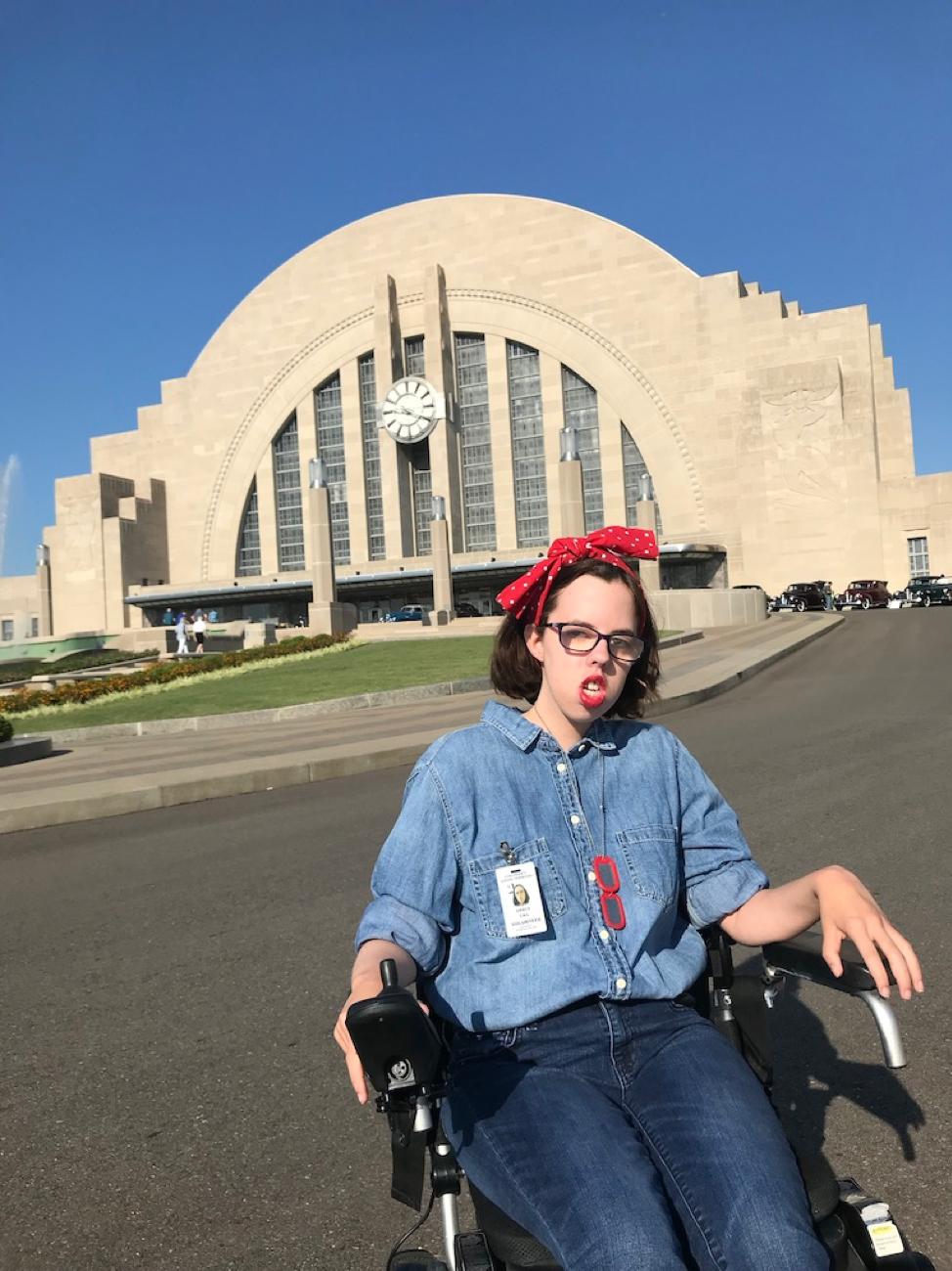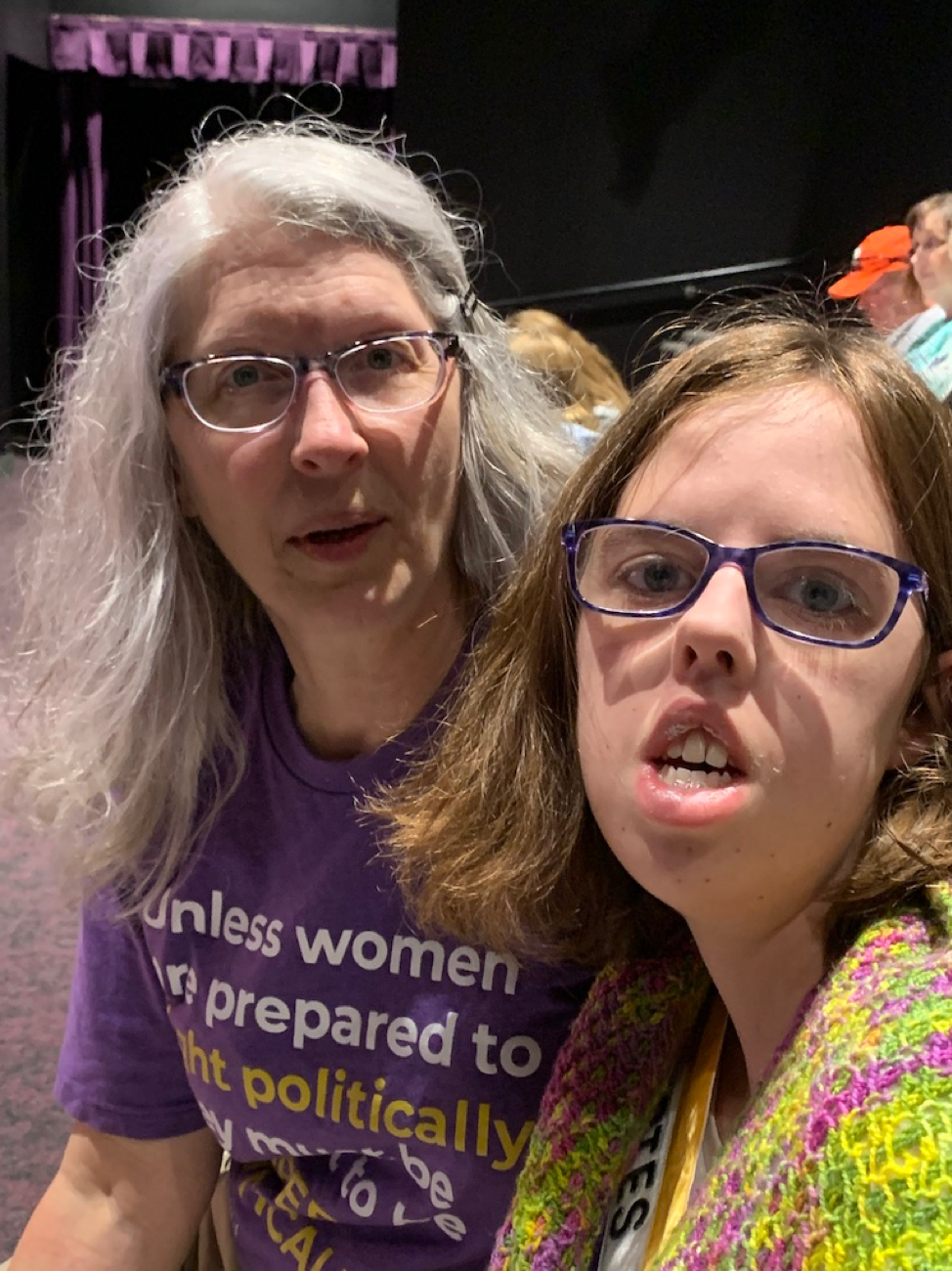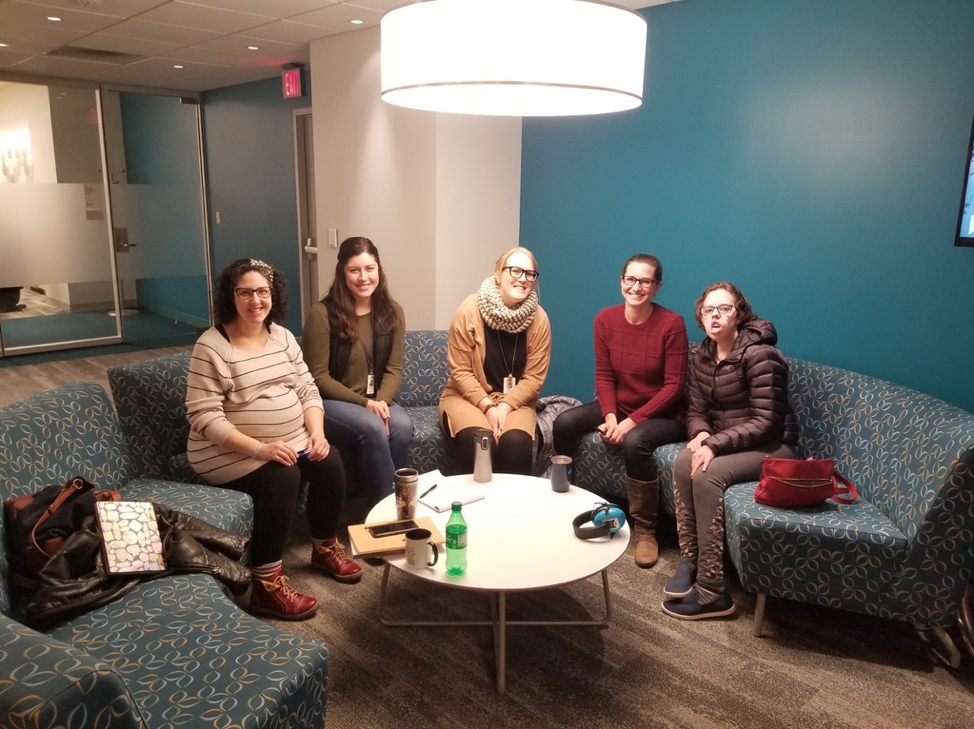
Finding Your People - Part 2 (2020) | with Anne and Ric

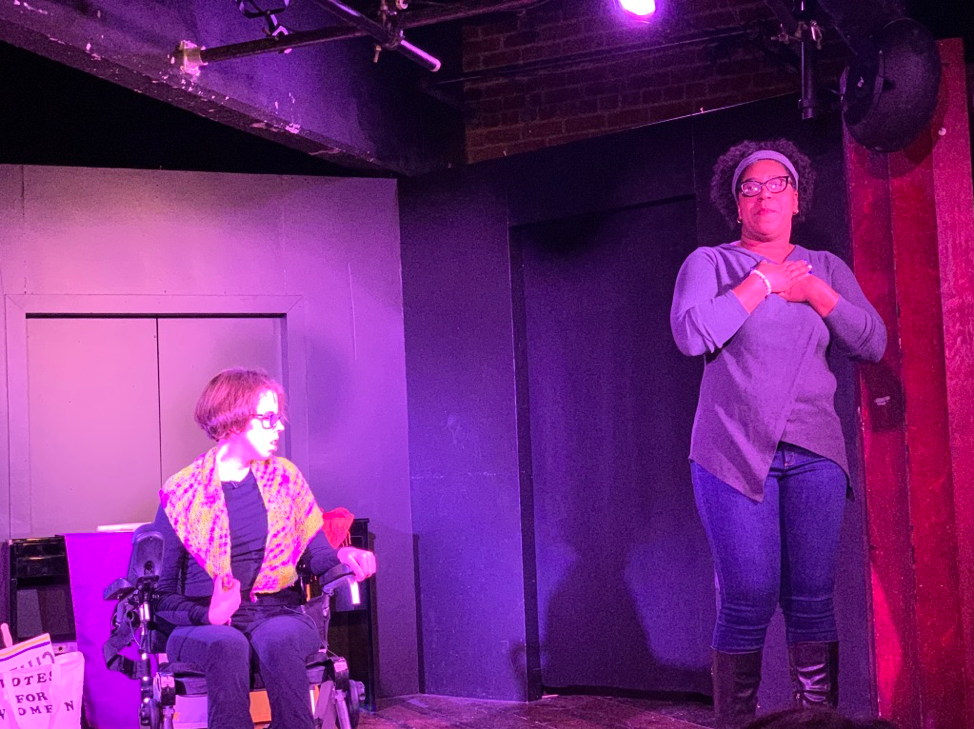
Zoom Call Crafts Club is one of the innovations that Anne and Ric brought to 2020. In this episode, you’ll learn about the ways Ric and Anne have designed community around the barriers a pandemic and social distancing bring.

Highlights:

  • Hear about how they’ve kept in touch with friends virtually

  • Reflect on the current events related to racial injustice and police brutality

  • Anne reads her poetry

  • Learn about a project they’re working on for greeting cards to isolated people

Listen to PART ONE to hear how they began their work together and made connections initially, pre-pandemic.

GET THE PODCAST



Screenshot (65).png

“Um, well, my poetry is very inspirational and very creative. I’ve been writing lots of poetry about what’s been going on in the pandemic right now.” —Anne

Katie B: Anne and Ric are cohosts of this next episode. This is part two, if you’d like to go back to listen to the first part recorded one year ago you can go back and do that. This is documentation of life during a pandemic. What does it look like to build community, design community, and connect with other artists in your neighborhood when there are social distancing rules and everything is virtual? So you’ll notice how some things change and some things stay the same. Anne also reads her poetry in this episode, so there’s lots packed in here. I hope you get a lot out of hearing from these two. They have so much wisdom to share around building community and making connections.

(1:01 – 4:40)

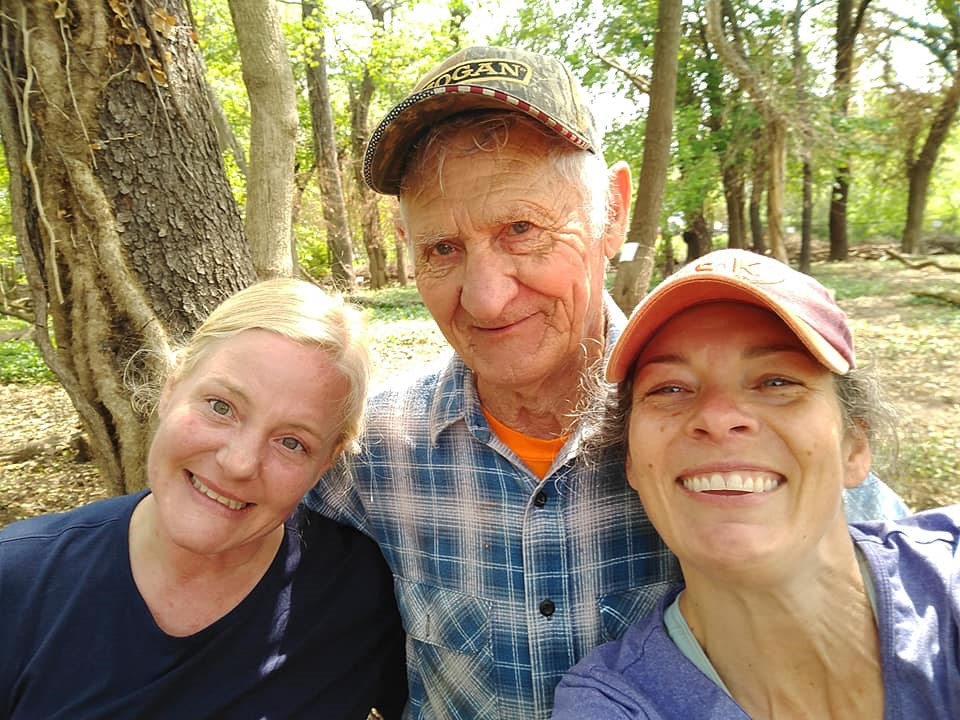
Ric: OK so we are rolling now, today is Tuesday August 18th 2020, my name is Ric James and I’m a community connector with Starfire

Anne: I’m Anne Elizabeth Gearhardt I’m almost 23 tomorrow. I am a poety and I’m also an artist

Ric: Indeed you are. Happy birthday to you! We are on Anne’s back porch right now, nice covered screened in pation and if you listen closely you might hear rain falling

Anne: And thunder

Ric: In spite of the rain it’s a beautiful day, and thank you Anne for sitting down for this interview today.

Anne: You’re welcome!

Ric: So we have been working one on one in the Starfire community connecting program for a couple years now. And as many people know if you’re listening to this we are in the middle of a global pandemic, which is kind of a big deal! It’s an interesting time to be alive, it’s also a scary time because we have a lot of anxiety and uncertainty about the future, but we have already discussed this, Anne, you and I, about how the pandemic is affecting things around the world. But the Starfire mission - to help create a more inclusive future – our mission isn’t changing, but our methods are changing. So today we just wanted to talk to you about what we’ve been doing to help you maintain your connections and friendships and help kind of deepen and strengthen the relationships in your community, and tell us about some of the people we’ve met together, some of the friends you’ve made, and how you’ve stayed connected during the pandemic.

Anne: Well I haven’t talked to my friends in a while because of what happened with the pandemic. They have businesses still shut down, I’ve been connecting with Maria and Trace from Luckman’s coffee shop

Ric: Yes Maria and Trace have been great friends to us as we’ve set up our unofficial headquarters, which we haven’t been able to go to since the pandemic, but our regular visits there definitely started to form a bond and a real friendship with those two. Maria recently joined your zoom call crafts club, correct?

Anne: That’s correct!

Ric: Let’s not get too far ahead, tell me about the zoom call crafts club

(4:40 – 11:55)

Anne: Well the Zoom Crafts Club is when you can get together and make your own personal art, all together, but you can do it online by zoom. And you can make other things on your own.

Ric: Yeah, this has been a really interesting experience for us to explore together because  before the pandemic, one of our things to do together was about once a month at your local branch of the library they had try it out Tuesday. A librarian there named John would host a crafts event and with a small group of people we would create something there. And once the pandemic shut things down a lot of their locations and their various programs they offer, you and I were looking for a way to continue making arts and crafts projects with the people that you met in the community, specifically Sherry Clink, who we met at the library. She has been a regular member and contributor to your zoom call crafts club. Tell us about Sherry.

Anne: She’s very fun, and very creative, and a great friend to have. Yeah, she’s a wonderful woman.

Ric: She really is, I found that when you and I came up with this idea together after we did a zoom call, we said well what if we did a zoom call where you bring whatever art supplies you want, so while we’re on the zoom call you can be drawing or sketching or painting. In your case Anne because you’re an artist and a poet you were also writing poetry, reading some of your poetry during the zoom call, and we were able to draft Sherry into that call right away. And to her credit she is a great creative thinker because she was enjoying our zoom call craft club right away, but she also had a suggestion for us to join in with this art class we did together where we did a vision board workshop, do you remember that?

Anne: Yeah

Ric: What did you think about that?

Anne: I think it was really fun! I already made my vision board, and it was really fun just to get extra creative

Ric: Exactly, I thought that was an interesting experience because if you’ll recall that was 2 weeks a row we were on a zoom call with a large group – 35 or 40 people. Most of them were just the audience and then there was the instructor. The first week she told us about a vision board and then the next week we got to talk about what we were working on with our vision board, and that was all Sherry’s idea. She brought that suggestion to the zoom call crafts club. So she’s not just a contributor in the zoom call crafts club, which I sometimes call the ZCC, wait its 3 Z’s, ZCCC, so we’ve done a couple of these virtual events together with Sherry and I think that’s done a great deal to help you and Sherry deepen and strengthen a friendship we started at the library late last year before this pandemic. So who is the newest member of the ZCCC?

Anne: Um that would be Maria

Ric: Correct, our favorite barista at Luckman Coffee on Beechmont. And in all fairness to Trace, maybe we should say Maria and Trace are tied for first. They have been so good to us for so long, you can tell every time we walk in there they really care about you. Didn’t you go there once with your mom so they could meet?

Anne: Yeah, we did.

Ric: Yeah, so our most recent crafts club meeting we were joined by Maria, and so now our group is up to four members and we have extended the invitation also to Trace at Luckman, so hopefully he will be able to join us soon and then I won’t be the only dude in the club anymore. But moving forward with the zoom call crafts club, what do you see there? What would you like to do as a group with Sherry and Maria?

Anne: Well I’ve been making lots of fun, creative bookmarks lately.

Ric: Bookmarks?

Anne: Yes.

Anne: And also poetry, and I want to combine them all together so I can talk about what has been going on with this pandemic and what’s happened to George Floyd.I don’t mean to get to overwhelmed about this story about George Floyd, but Derek Chauvin, he’s the one who killed him.

Ric: The officer?

Anne: The officer, yeah.

Anne: When Derek Chauvin did that to George Floyd I actually felt bad about what happened and I was scared the whole time and it made me feel angry about it and that’s how other people have been feeling about what happened, and yeah

Ric: I agree with you and I’m glad you feel free to speak your mind, as you should. You’re in your own home and you are entitled to your feelings, and during this interview you should speak freely as you see fit. And I agree with you, with George Floyd, murdered in cold blood, I know that most police officers are good, but there is a problem in this country and that is an extreme incident that has a lot of us taking a closer look at the racial inequalities in this country, you know systematic racism. And so you have a voice and you should be heard, and I think this is something, this is a theme I hear recurring every day, and that is basically you have a voice and you should own it and be proud of it and speak your mind. Tell us, if you don’t mind, just a little bit about your poetry, what it means to you, maybe what you’ve been working on lately.

(11:55 – 14:20)

Anne: Well my poetry is very inspirational and very creative, I’ve been writing a lot about the pandemic, what’s going on in the world right now.

Ric: Do you have any recent poems or something you’ve written that you’d like to share?

Anne: I do actually, I have one poem. Just for now.

Ric: Would you like to read it?

Anne: Yeah of course! Before I read it, this poem is for everybody who is listening to this recording right now. This poem is very very inspirational it’s for all of you guys. Okay, Poem of the Day:

You are beautiful just like you. 

That is you are 

just like in life.

am your voice, 

I am a woman, has a 

Heart

 just like you, 

if I was you, 

always right on your voice.

So that poem is all about who you are in life

Ric: You know it’s interesting to me because there is this theme of self empowerment that runs through your poetry and it’s very strong, very positive recurring theme in your poetry and I’m really impressed by that and it flows very naturally from you, that’s why I thought it was interesting that our new friend Sherry suggested the vision board workshop for the three of us because I think even though you met her not too long ago she already saw that this was something that might resonate with you. Because that was a similar kind of self empowerment exercise and self visualization, to actually put down in pictures and words your thoughts that you wanted to manifest in your future and so I thought that was interesting that Sherry could already see even though you’re friendship is pretty new that this was something that would resonate with you and I feel like you both really enjoyed that. 

(14:20 – 20:04)

Ric: There was one other thing that I wanted to mention because the zoom call crafts club that we started with Sherry and our newest member Maria was part of a conversation recently where the four of us were talking about bringing our energies together to create something for the community, and I thought it was interesting that basically you and Sherry came up with this idea that you could contribute poetry and the three of us, now four of us, with Maria joining and hopefully the group will include Trace, also very soon, who is a great artist, he used to draw with us now and then at the coffee shop. We are talking about as a group creating some sort of greeting cards or post cards that we would design together and then incorporate your poetry and to send these cards to local people who are feeling isolated right now because of the pandemic. We could send them to say senior citizens in retirement communities

Anne: We can also make some for my Kroger where I work

Ric: Mmhmm

Anne: Because I think my Kroger always needs something to brighten their day

Ric: Right

Anne: Whether they’re working at Kroger

Ric: That’s also a great idea that they would be something you could share with your coworkers. Once again Sherry Clink showed her great imagination and great creativity and just her intuition. She has already found a local group who does organize cards of encouragement and things like that for the local senior centers and retirement communities and things like that. So she’s already kind of taken that idea and ran with it and reported back with it. So with Sherry’s help we already have an organization we can work with, and we’re really at the beginning of this, we aren’t really sure how it’s going to go and where it’s going to take us, but I think it’s a great idea because you have written some great poetry and now we’ve started this zoom call crafts club to create art together and stay in touch with friends, to deepen and strengthen those friendships and now to create something together to give back to our community that are feeling isolated because of the pandemic. It’s very – I feel like it’s very uplifting and it’s very positive and I’m glad to be a part of this experience with you because we’ve found a way to take these sad circumstances but create something positive for people in the community with your art and poetry, it’s pretty amazing.

Anne: Thanks!

Ric: So I want to hear some more from you, though, just any more thoughts you’d like to share today.

Anne: Um I think I have everything for now

Ric: Did you have any more poetry that you’d like to read for our listeners while we’re recording? I don’t want to pressure you do read anything if you don’t feel prepared. Just thought I’d make that offer if you wanted to.

Anne: I think I have a perfect poetry to read.

Ric: Go ahead whenever you’re ready.

Anne:

I have the

Right to have a style

I need a 

Voice is my head

I am confident

It has a lyrics

Poetry

Is peaceful

Very

Poetry says

Something

About

Lyrics

As a poem in life

I can change

The very I am beautiful

Every poetry

Has feelings

Every story

About my confidence

Any poetry

Had lyrics it has music in my heart

Ric: Very good, thanks for sharing that

Anne: Thank you

Ric: And thanks everyone for listening, anything else to add?

Anne: Well just one quick short poem

Ric: You wanna read one more, I’d love that.

Anne: Every night as you feel on your voice in my head and right now God is telling you thank you so much for being here in life, thank you God for being here and we all love you, God is rest in peace in your heart.

Ric: That’s fantastic, I didn’t want to talk over the thunder, but listen to it it’s still rumbling

Anne: That thunder is God

Ric: That’s spectacular. Yes it is, He must have known we would be recording today.

podcasttimothyvogt
Finding Your People - Part 1 (2019) | with Anne and Ric

The next two episodes of More are going to be a little different.

You might be listening to this podcast because you’re a fan of Starfire’s work, or maybe you’re curious about how to build community in your own life. So in honor of that, the next two episodes are going to be hosted by Anne and Ric (Richard). These two have been designing community in Anne’s neighborhood for a while now.

You’ll learn how they began their process of designing community together. First, by learning about each other, over many conversations about art. Ric shares how he learned about Anne’s creativity and her love of poetry. Then, you’ll hear how they explored places in the city in order to find connections with people who share this interest.

Listen to PART TWO to hear about how they held onto these connections in 2020 pandemic mode.

GET THE PODCAST

 
Screenshot+%2815%29.jpg

FULL TRANSCRIPT

Anne: To me meeting new people is like inspiration to me because meeting new people is inspiration to me because I like talking to people and being with people. 

Katie B: You might be listening to this podcast because you are a fan of Starfire’s work or maybe you’re curious about how to build community in your own life. So in honor of that the next two episodes are going to be hosted by Anne and Ric. These two have been working together to build community in Anne’s neighborhood with a concentration in connecting artists to one another. You’re going to want to hang on and listen to part 2 because that is when ric and anne share the ways that they were able to maintain the connections that they made one year ago in anne’s neighborhood with other artists virtually during this global pandemic. So when you listen to this part one you’ll be introduced to a lot of the people who you’ll hear about again in part two, only in the second part it is going to be a little bit trickier to maintain these connections, and I think you’ll hear a lot of hope in both of these stories. 

(1:09 – 5:41) 

Ric: Okay my name is Richard and I work for Starfire Council in Cincinnati Ohio, I’m a community connector there and I’m here today to interview Anne Gerhart who I’ve been working with since February and today is June 12th, 2019. Anne do you want to say hello and tell us a little something about yourself? 

Anne:  Uh sure, hey everybody I’m from Cincinnati Area, I’m Anne Elizabeth Gerhart, I’m 21, and yeah I think that’s all I got so far. 

Ric: OK,  Anne and I started working together in February after I first met you and your mom for coffee, started talking about your various interests and it seems like creativity is the one thing that flows through. You are an artist a poet and you do lots of different kinds of art. What are some things that you do when you spend time making art? 

Anne: Well I like to paint, I also do canvas painting, sketching, I also draw and I also take pictures of really cool things. 

Ric: Theres a wide variety of different creative outlets that you enjoy. 

Anne: Yes. 

Ric: Different artistic media that you enjoy, you said painting and drawing, and you said photography, see I didn’t even know that one! So our idea was to work together to meet people who shared the same interest as you, try to make some connections in community, to build some new relationships and deepen and strengthen the friendships you already have in your life. And we started out kind of casting about around town to meet other people in the arts and crafts community. Did you want to mention any of the places we went together during that process? 

Anne: Yeah I can do that! We went to the art museum, went to look some art paintings there, we also went to arts shops, we went to indigo hippo the crafty place 

Ric: That’s right! Is that the place near Findlay market? 

Anne: Yes, we also went to Michaels. We got to learn something new and crafty, we went to the downtown library and went to the makerspace and got to make some buttons. Also we also went to luckman’s and talking about art work. 

Ric: I’m glad you mentioned the museum because when we first started out together, to get to know each other, to get more acquainted, to learn more about your interests since it became clear right away that your primary interest is art, we started out at the museum, the beautiful Cincinnati art museum, up in Mt. Adams we had a great convo that day and that feels like a place we might turn to for inspiration from time. But you’re right, from there we went to check out different art stores and we did pop into Michaels, I remember you buying something for your grandmother’s birthday. 

Anne: Yes I made her a cute necklace and I got her some fake flowers. They really don’t have a smell but she really likes it.  

Ric: Yeah that’s right, We found a jewelry making kit there too, it was in their clearance rack too, only a couple bucks! 

Anne: It was really hard to put jewels on it, it was really really hard to put them on 

Ric: MmHmm yea. That’s right 

 (5:41 – 7:29) 

Ric: We set up at Luckman’s as we often do, the coffee shop in your neck of the woods where we made friends with the barista there named Maria, we might even pop in there to say hi on our way home. Ad another guy there named Trace? Hes there fairly often 

Anne: Sometimes if we do go to Luckman’s we always see Ric’s buddy, We always see Simon! 

Ric: Simon’s another customer there, we end up talking to him about music, art and movies it turns out your family takes vacation to the same part of Florida where he visits his family in the summer 

Anne: Yes I remember that, it’s really fun down there, it’s cool. 

Ric: Anyways, We took that jewelry kit that we found real cheap to Luckman’s coffee shop. But you did a really good job at putting that necklace together. 

Anne: She loved it. 

Ric: She loved it? 

Anne: Yes, one time when we went to visit my grandma, she has been telling me my granpa has been telling me how nce it was that I would get my grandma fake flowers that don’t smell 

Ric: I think you also mentioned that we popped into Indigo Hippo, a thrift store downtown 

Anne: Yes, they have really old stuff 

Ric: Old stuff, repurposed stuff 

(7:29 – 9:00) 

Ric: I feel like we really struck gold when we discovered the hobby pop arts and crafts shop right there in your neighborhood where beth betcker is the owner ot the shop and her assistant Megan. They just embraced us right away. They said you come by any time and make art with us 

Anne: And it’s free you can take your art home with you 

Ric: You’re right, you can take the art home with you! 

Anne: For free. One time I made some thing really cool. I have a lot of crafting ideas. I made a dog canvas art. I mad Breezy Woods. Breezy woods is actually a dog in a movie. I got to make that on a canvas. 

Ric: Beth had some great suggestions along the way, and you two hit it off right away and we fouond as we were looking around town to meet people who are interested in arts and crafts, and more importantly  to make some new friends and build some connections in that community to try to work on new projects and goals together to make new friends in that community and then to work on projects together with them and it looks like we might have an opportunity to volunteer on a semi regular basis helping Beth and her assistant Megan at the shop. 

(9:00 – 11:05) 

Anne: I have a few questions for Ric. 

Ric: You have questions for me? 

Anne: Yeah! 

Ric: Oh okay! 

Anne: My main title for the questions is being with Ric has inspired me to do new things and I have two questions for Ric: 

My first question is what is your favorite thing that we did? 

Ric: Wow. Well my favorite thing we did, I’m really tempted to say it’s the day we discovered Beth Becker at hobby pop shop. 

Anne: She’s really cool. 

Ric: She is really cool and that felt like we had spent several weeks looking for her and we finally found her right in your back yard. So that’s a close second. I have to say my favorite thing was the day we were at Luckman coffee shop and you showed me your poems!  

Anne: Yes I’m actually a poet and I write my own poems. 

Ric: I didn’t know We had been working together for weeks and we had been talking about arts and crafts and drawing and painting and making jewelry, you’ve done all these creative things!     I think that you have this creative drive and artistry inside of you, you live to make stuff. It’s very beautiful that you make stuff and you give it away, like the card for your mom.  

Anne: Yes 

Ric: But the day you showed me your poetry that’s my favorite things because I was pleasantly surprised because there was this whole other creative side of you that I didn’t know about. And you had a whole notebook full of your poetry with you that day. 

Anne: Yes um I actually just finished my poems all this week. And I’m actually a songwriter, I write my own songs and I produce it to my piano. 

(11:05 – 12:22) 

Ric: So what do you think about this journey so far? 

Anne: Well um..what I do with Rick is really fun and being inspired by new things 

Ric: So what has it been like for you meeting people? You know like showing up to new places and meeting new people like Beth at the hobby pop? 

Anne: To me meeting new people is like inspiration for me because I love talking to people and being with people 

Ric: That’s great. What do you think looking into the future what are the possibilities that you can imagine for this journey as we move forward and what are the risks and challenges you see? 

Anne: I don’t see any challenges at all but I’m just trying to do my best and meet new people 

Ric: Yeah, I feel that about you too. I think you are a person with a great many gifts. Your perspective on the world is that you don’t even see challenges. You just get out in the world and meet people and make your art and by making your art and sharing with your friends and family you make the world a better place. 

(12:22 – 14:50) 

Anne: I have a last question for Ric 

Ric: I didn’t know you had any questions for me so this is a surprise 

Anne: My last question for Ric is name a time we talked about art. 

Ric: Wow, I would say between feb and jue of 2019 we have been talking about art nonstop. This conversation we are having right now started back in February and we are still talking about art. I guess i If I had to mention a highlight in there I know I already mentioned this, but finding out you were also a poet that was a big day for me and that first day too walking through the museum talking about what we saw there the kinds of art we enjoy, how the different paintings and sculptures and tings resonate with you that was a good day and again up at the hobby pop shop where we finally made some friends there that feels like another part of this conversation about art making and creativity that was a real highlight for me when we discovered them and found a way that not just that we appreciate what we’re doing there but we feel like they are a part of your tribe, like these are your people, they are part of your tribe of creative artsy people after looking for weeks around town. Very fun people to be around, right there in your neighborhood! 

Anne: Yes 

Ric: One of the first things we did together with Beth and Megan at the hobby pop show was paint rocks, do you remember that? 

Anne: Yeah I remember that 

Ric: And that was for a local, not really a fundraising, but They are raising awareness of a young girl who sadly passed away where they put a website and hashtag on the botton of the rock and then you paint it a colorful pattern and then you return it to the wild so someone will find it on a trail or a city sidewalk and when someone finds it they turn it over they will see the website and the hashtag. You remember that? 

Anne: I remember that, Yeah 

Ric: So art is where you find it and for you I think you are one of those people that art is everywhere you look, art is everywhere you go. 

(14:50 – 17:08) 

Anne: I just wanted to add something about art if that’s okay? 

Ric: Absolutely 

Anne: To me, art is like a passion to me because it’s like a gift 

Ric: It is isn’t it? And I really appreciate that about you.You said that a moment ago and you aren’t nervous. And I feel that about you, that this is just something you naturally do. It just flows out of you you don’t have to fake it, or worry about what other people think because you are who you are and your art is what it is and it’s just a natural extension of your personality. 

Anne: Yes. 

Ric: That’s a beautiful thing. 

Anne: Yes! And I was thinking that maybe I could sell my own artwork. I’ve never done that before and I’m very excited to do it, so I can make some money of my own. 

Ric: That would be nice wouldn’t it? 

Anne: Yeah and maybe I can show everybody my artwork! 

Ric: Yeah 

Anne: And if people are listening to this from the Cincinnati area right now if you have any art requests you can always let me know and I can come up with something for everybody who’s in Cincinnati 

Ric: That’s fantastic. Well I’m excited for you in this next chapter of your development as an artist. Many artist never find themselves in a place where they can create art and maybe even make a little money from it. So I do hope that works out for you, that’s exciting. 

Anne: Yeah 

Ric: Did you have anything else you wanted to say before we wrap it up? 

Anne: This is like an ending part if you want to say it with me? 

Ric: Ok sure 

Together: Wake Up USA! 

Anne: Thank you so much for listening 

podcasttimothyvogt
It May Not Happen Worldwide in Your Lifetime: Brave Steps Towards Community
neighbors at a socially distant space

Never did I imagine that the words: “Carol, you have permission to put Grayson’s disability on the back-burner” would be such a life changer, and not just for Grayson but for me, Briella, Charlie…our entire family, but here we are.  Along the way we (as a family) discovered so much about our own gifts and passions, and because we discovered all these cool things about each other and those around us, we began finding ways to share those gifts not just with each other but in our community.  And we have done some pretty cool things and met some really cool people.  But I won’t lie, it’s a process and it did not happen overnight. 

It was not easy at all, taking that first step towards meeting new people in our community, but for us as a family it was vital in making a good life for Grayson.  It is fun to think about the fact that when I first met Tim (my mentor/colleague, who introduced me to the concept of building community), I pushed back and more or less tried to call BS. But well, if you haven’t caught it yet, I lost that pushback and here I am - an irrationally passionate about all things family, community connections, and John McKnight-related, kinda person. 

One of the gifts I discovered along the way was my ability to see different perspectives, and because I am a people person I am always up for good conversation!  So, as I shift gears here, I want to share a quote from a mother and Starfire Board member, said during a conversation we were having around the vision of building the most inclusive world possible. This quote really inspired this moment of reflection for me…

“It may not happen worldwide in your lifetime Carol but it’s certainly happening now in Hamilton, and y’all did that.” 

~Kathleen Cail

This ah-ha came on top of the last two “Wednesday Walks” in my neighborhood, where I had been sharing bits and pieces of my work and family story with Byran, a fellow neighbor.  If you know me, you know that I could talk about family, community, and connections all day long… it’s that irrational passion I mentioned. 

Anyway, it got me thinking, that first step towards something a little more…a brave step towards meeting a neighbor or someone new in your community can be hard…scary in fact, and sometimes people just aren’t sure where to begin.  Sometimes, people don’t recognize that what they are doing actually is building a more inclusive community, helping others lead a good life, and helping them have a sense of belonging. 

I was posed with the question a few weeks ago, “What can I do, Carol, as a citizen?” The short answer, and for me the most important is: get to know your neighbors, get to know people in your community.  The long answer is a fun little list of ideas with some amazing people/stories behind them, this list is a tip of my hat to those amazing people and are just some fun things to get you thinking about what you (and your family) can do to start meeting new people in your neighborhood/community.

Here is that list!

·       Walk around your neighborhood…smile, nod, wave, say hello, or simply walk…become a regular

·       Visit the local shops- even window shopping can lead to meeting new people!

·       Walk around the “town square” and notice the history.  Does your town have flood markers? Time capsule? Any cool legends?

·       Compliment someone on their yard, their flowers, yard decorations

·       Share sidewalk chalk with friends, neighbors, people who pass by

·       Share your sidewalk chalk art with others- decorate random squares around your neighborhood

·       Connect with the local neighborhood/community volunteer group if your community has one- find and connect with people who are working to make their community a better place

·       Organize something fun…front yard splash party, bubble party, porch concerts, truck concerts

·       Learn a new skill at the park, invite others to join

·       Paint rocks with someone and hide them around town

·       Bring up your neighbor’s trash cans…this can be so helpful sometimes

·       Hold a monthly bonfire in your driveway…invite neighbors

·       Make a talking piece in your yard…a fairy garden, vegetable garden in the front, wildflowers- conversations starters lead to great things. 

·       Gather neighbors and start a community garden

·       Hold a monthly potluck

·       Share vegetables, goodies, things like that

·       Pick up the trash around your street, block, or go even bigger with the neighborhood- ask people to join you

·       Find ways to share your gifts, art, music, fixing things, technology

·       Connect with others who share your passion: birds, games, art, history, plants…community is not just limited to physical space

·       Learn something new from someone you know

·       Teach someone you know something new

·        Have virtual coffee- with a friend, an acquaintance, someone you just met

·        Listen to a local storyteller/musician

·       Tell a story to your family, a friend, or over zoom with a group of friends

·        Take a walk with someone

·       Share flowers/plants

·       ___________________your idea here


Wednesday Walks with Neighbors during COVID

First steps are scary, but if I have learned anything over the last three years, it is that we are better together.  COVID-19 has certainly thrown us all for a loop, but it has not changed the fact that we need one another. 

While everything in our world is telling us to lean out rather than lean in, I challenge each of you to think about ways you can lean in, maybe meet someone new, or discover your gift, maybe it’s simply dreaming about what you and your family will do when we reemerge from this, or maybe, just maybe something inspired you from this list. 

Sure, maybe movie night in the park may not be something we can safely do right now, but we certainly can plan for when it is safe.  Maybe potlucks are out but, what you could do is swap recipes with neighbors or try new dishes with your family for when potlucks are back in. 

I dream of a world that is inclusive, a world where everyone is seen for their gifts and abilities not labels and what is “wrong.”  I truly believe we are on the right track, each day I meet new people who share this vision with me, and what I have noticed more and more is it’s not just families that have loved ones with disabilities working to build connections, its people all over, from all backgrounds working to build connections and grow a good life, keep doing this friends and keep doing great things!

Dreaming Ordinary - with Mark, John & Connie Susa

It’s a narrative that often gets repeated to parents of young children with disabilities: the more services the better. But John and Connie found a different way early on with their son Mark. Their family’s dream was bigger. The vision they have for an ordinary life really gets to the heart of why this podcast started - to offer out ideas for families and people with disabilities to go after more in life than the expected route of disability services and segregated activities.

As founders of the Plan Institute in Rhode Island 15 years ago, the Susa family connected with Starfire to learn how to launch community projects. They said that this way of bringing people together, over a shared goal like a community garden, generates a certain magic - almost instantly.

If you are someone who wants to think seriously about how you and your loved ones spend your time, how to connect more deeply in community, and ways to make longterm relationships a reality, this episode is for you.


GET THE PODCAST


Trio@cookout.jpg
 

FULL TRANSCRIPT:

CONNIE: - I have heard speakers talk about this concept as a way of healing the world and as we’re in the midst of the COVID19 virus outbreak right now, I think the world could use a lot of healing, not only physically but also in terms of relationships. We have a new neighbor who shares that passion with us, and it has been such a joy to get to know one another, to have a real give and take. I can see how if this were multiplied throughout communities, and states and nations, the world would be a beautiful place.

KATIE: Beautiful.

JOHN - I’m John Susa. I think what moves me for a lot of this work is almost a therapeutic plan for me. I grew up very very isolated and I had very few interactions with anybody besides my family. And most people would have described me as being very introverted. When people asked me when you were a child, what did you want to be when you grew up? My answer was always the same. I wanted to be a long distance truck driver. So I could sit in that cab and not have any human interaction for days. And if left to myself that’s probably what would have happened. But instead I learned that if I pushed myself a little bit and started interacting with people and meeting people then I could change that desire to be a loner. And so I think the reason I’m so involved in all of this stuff is still mostly for myself to avoid falling back into be a loner. So I made pretty much a conscious decision that I was just going to change my behavior first. And of course after I changed my behavior for a while my attitude started to change.

Fast forwarding then to when you and Connie met, and you had children and you were - down the road, you know, deciding how to engage as a family in the community, what were some of the things that you had to consider first to be connected?

JOHN - I think for me the recognition that Mark developmentally was experiencing life differently than others made me realize it was going to be very helpful if I became more engaged in the disability advocacy world. I was kind of driven by two different quotes that were in my head that I learned while I was in the military. And they’re very a-typical but they’re very powerful. One is from Johann Goethe a German philosopher and he said, “Dream no small dreams for they have power insufficient to change the hearts of men.”

That’s been something that I’ve always come to recognize as a very powerful piece of instruction and advice. And I saw that there were people who were encouraging us in many ways to dream small, to be satisfied with what Mark is able to do, focus in on his disabilities, spend your time searching out services. In many ways that was dreaming small.

There were occasionally people who would say, “No, no, no don’t do that. Dream big. Dream like Mark’s future is limitless. Dream like if you just provide him with all the opportunities that life has to offer, you will be amazed at how much he is going to accomplish.” And that is what I took from Goethe, dream big. And we have ever since. And that really has kind of put us into contact with a lot of other big dreamers. It’s those big dreamers that really have changed the world works for people with disabilities.

KATIE - Beautiful.

MARK - Excellent.

CONNIE: - For me in terms of community building, I think one of the greatest advances has been our church. Mark turned three at the end of December.

MARK - Right.

CONNIE: And three-year-olds were supposed to begin in what most people would call “Junior Sunday School.” When Mark was three, we were still carrying him - cradling him in our arms. Did you know when you were three years old you couldn’t sit up by yourself?

MARK - No way, really?

CONNIE: Truly. Mark just kept attending our Sunday school classes with us and about two, three weeks into that sequence one of our friend’s who taught the three year old class, the Sunbeam class, came to us in the hallway and said, “Why hasn’t Mark been in my class?” And I said, “Edith - look.” As if seeing where Mark was at that moment meant everything. And she said, “Yes, but look at my role.” And Mark’s name was there, without x’s in the attendance boxes.

And she said, “We really need him in our class.”

And I said, “Edith he can’t even sit up independently.” She said, “Well we could get a highchair and we could put pillows all around it so that he can sit up.” And I said, “We’re not even sure that he can understand what you’re teaching the other kids.” And she said, “That doesn’t matter.”

She said, “The reason I need Mark in my class is because all the other kids have so much to learn from him.”

MARK - Really.

CONNIE: And while we had been working seriously on stimulations and Mark had gone through early intervention and we learned about you know sensory stuff and what have you. We were doing that once a week, in a group and the rest of the time at home. But what Edith had said really started Mark and us on the path to community. Mark now…well, tell Katie what you do at church.

MARK - A lot.

CONNIE: - Some things that you’re responsible for?

MARK - I’m secretary.


CONNIE: - Secretary for what?

MARK - For attendance.


CONNIE: - Yup, and you set up appointments for interviews.

MARK - Set up appointments for interviews.

CONNIE: - We were amazed, Mark was enfolded in the arms of these people who understood all about community because that fits the teachings that we have as Christians.

Going back to what Edith had said to you that you know, diversity and having different types of learning in a classroom is really really really important and once you accepted that invitation, what unfolded in that first year?

JOHN - What I remember is that it reinforced something that I came to realize, everybody became comfortable and it was now normal and accepted that Mark would be part of that congregation. Once people got to the point where they were comfortable because of exposure and experience they relaxed and they accepted Mark for who he was. And they didn’t feel the need to treat him any differently than they would any other child. It reminds me of another one of my kind of guiding principles and this comes from a guy, Rudolf Steiner, talking about early childhood. Rudolf Steiner is the founder of the Waldorf educational system. Are you familiar with that?

KATIE - Yes.

JOHN - He said that, “There is nothing more therapeutic than normalcy.”

That was a piece of advice that was given to us by a good friend, developmental pediatrician, when Mark was finally identified as having all these developmental challenges. The meeting at the end of the two-day evaluation process was nothing but a group of people who were very pessimistic about Mark. “He’s not going to walk. He’s not going to talk. He’s probably not going to be aware of you. He’s certainly not going to hear.”

A whole bunch of things, they all at the end say “Well, good luck, take him home and love him.” That was their advice, which is good advice but inadequate.

When they all left, their boss who was sitting at the back of the room observing asked us to go into his office because Connie was bawling. Sig closes the door and the first thing he says is, “Don’t believe a word of what those people said to you.” And I said, “Sig if you say that, why didn’t you stop them before they started?”

And he said, “You know all those people in that room were doing or could do is describe Mark now, as they see him. They could not possibly describe Mark in the future. I believe if you believe them, that future will happen. If you don’t believe and you adopt the approach that the best thing to do is to have Mark experience as much normalcy as possible he will become a different person. He will become more like the ‘normal kids’ whatever that may be. Every person will develop depending on how much they’re exposed to.”

So he said, “I’m not going to let them label him because that will result in other people reading the report and it will only help them treat him in a stereotypical way based on his label. I’m just going to say he’s developmentally delayed.”

And his advice was, “Take him home and love him but then help him have every normal experience as other children.” And that kind of guided our thinking really from then on.

KATIE - And you know, dreaming big in this instance is to dream ordinary, to dream normal.

JOHN - Exactly. Yeah.

KATIE - And sometimes ordinary is the biggest gift anyone can have.

JOHN - Right, right. It’s kind of counterintuitive because in the world of disabilities a lot of times people think that dreaming big means getting more services, the more the better, the more services the better. Steiner said think seriously about substituting every hour of normalcy with an hour of service because that hour of service is removing that person from normalcy. So it’s almost in the disability world it’s almost a flipping of thinking that that has to happen.

CONNIE: - Be concerned if you were just going to services.


JOHN - Be big in your thinking by vying for normalcy.

KATIE - Yes, so even in services are... they’re not normal. It’s interesting.

JOHN - They’re not normal.

CONNIE: - What’s more important is that Mark participated not only in that class but every subsequent class. And when Mark was eleven years old we took our school district to a due process hearing because they had adamantly fought us for two years in bringing Mark back into district from a segregated day placement that was anything but normal, because they were sure that Mark would not act appropriately in a classroom setting. They were sure that Mark would be a disruption to other students, they were sure that he might even be self injurious or injury other people,  because they were thinking in terms of stereotypes not in terms of who Mark is as an individual. And do you remember Jennifer Coats, Mark?

MARK – Yeah. The one with the power.

CONNIE: - She came to your hearing.

MARK - Right.

CONNIE: - And she told everybody just how you act in a classroom setting. That you raised your hand just like that, that you participated appropriately in singing time, that you sat with your class and no additional extra support. That you sang the songs that you answered questions, you gave talks.

MARK - Right. Yes I did.

KATIE - So it sounds like Jennifer had another piece of Mark and your family’s story along this journey to dream big, to live an ordinary life? She made an impact during that hearing.

I want to see if we can dip our toes briefly in the water of the day placement that you mentioned, that Mark was in, and how that was anything but normal. Can you explain how abnormal it was or what about it made it not ordinary?

CONNIE: - Sure, the very fact that there were multiple kids with multiple disabilities just ate up so much of the instruction time. What else do you remember about it?

JOHN - Everybody in Mark’s class was just like Mark. Six little kids, wheelchairs. So the biggest thing I believe happened when he left there and went into a regular classroom is that for the first time he started culturally and socially experiencing life as every other eleven, or twelve or fifteen year old does.

KATIE - You agree with that, Mark?

MARK - Yes, excellent.

KATIE - Yeah and I think that’s a good segway to the phrase ‘a good life’ that is something you hear a lot from Al Etmanski and Vickie Cammack. It’s a big part of the PLAN institute model and you all have been involved with PLAN at Rhode Island for quite some time.

So what ways has it helped?

CONNIE: - John first heard Al speak, he recognized the wisdom in their model that we always acknowledge how deeply we depend on the work. When we brought PLAN (Personal Lifetime Advocacy Network) to Rhode Island 15 years ago we knew that we were standing on the shoulders of giants. The two things that we have focused on in trying to replicate their model is we help parents put all their ducks in a row, plan for the time that they are no longer going to be there or able to enrich the lives of their sons and daughters out of the love and the family history, the precious relationships. The much more important part of what they did in Canada and what we did in Rhode Island is to build a personal support network around the member. The family joins on behalf of their son, daughter, brother, sister and they engage with a facilitator to build and maintain that support network so that it’s not just every individual having a relationship with a person at the center of the circle but it is all those people getting to know one another, to recognize one another’s strengths, to trust one another. Between all those group gatherings individuals will do things with the members at the center, with our loved ones. And as parents we try to do that early enough so that we can fill in the important parts of the history.


So the support network is really there to build a circle of support around a person, and yet also it’s not just about the person in the center it’s about everyone in the network joining together, being in relationships together, and in that way being in a community. Where are you now with the support network?

CONNIE: - Right. Mark has had a personal support network for the entire time that PLAN has been in existence in Rhode Island. It really does take some time for relationships to mature that if we had to step off the Earth the next week, this would go on.

MARK - Right.

CONNIE: - And that it would provide Mark with people that he could depend on, people who were real friends, who had proved that over time.

MARK - Right.

CONNIE: - People who enjoy spending time with him. And we feel secure.

In one of the questions that PLAN Institute seems to start with is what would happen to my loved one after I pass on, if I’m not around, if we’re not there to help what will happen? And so starting from a young age it sounds like you guys have done a lot of work to build that support network so that in a time of disaster or otherwise that there is somebody there for Mark?

JOHN - Right. When PLAN in Canada was first put together it was even before Al Etmanski, it was just a group of parents and they hired Al. They originally thought that they were preparing for their demise, the focus was on what’s going to happen? What they quickly discovered was that yes they were doing that but they were also starting to develop a stronger sense of security and the feeling that their son or daughter was safe. There were some very positive benefits to the parents while they were still alive. And they figured it out that it was the existence of this network that provided that sense of security. And not only the sense of it but the actual security.


KATIE - I love how you put that, that’s very clearly stated for me and I think it’s actually it starts as soon as you begin to community build: the benefits, the magic, the parts of it that are really just supportive feeling begin right away. And every parent needs that and we need to raise our children as a village.

You all as a family have taken the brave step being able to say well even though some experts are telling us otherwise we’re going to not believe that and in doing that we are going start this support network early and we’re going to build and the more people who have joined in along the way it sounds like the more momentum has build towards this?

Tell me about your family’s leadership in the community as it relates to your street, and how your support network, Mark, how they were involved in that process?

JOHN - So as we kind of navigate our life with Mark, I’m always looking for things that are in the way of him achieving greater independence. So this little project about looking at Warwick Avenue, Mark and his brother live about two and a half, three miles apart, they both require a wheelchair in Mark’s case or a scooter in Frank’s case. And so when Frank moved back here to Rhode Island we thought, “Wow wouldn’t it be nice if these two guys could get together once in a while without Mom and Dad having to be the go between.”

We started looking at this road and we recognized very quickly that this road was a problem. I’ve known that this road was a problem probably for at least fifteen years now, but I’ve not had a real strong reason for us to say, “Let’s do something about it.” So we naturally thought that this is going to be something that is much more powerful if we have a group involved. We had a group, we had Mark’s network, they all know him, they’re comfortable with him. So we posed the idea, the project, people thought this is great. And the fact is that there is appropriated money from the Department of Housing and Urban Development every year for infrastructure maintenance. But the fact is also is that many states use that money for something else besides not worrying about wheelchair accessibility.

So our complaint kind of brought this into the public eye and I’m pretty confident that we will be able to see some change and some action as we kind of work through the process. But it is also what ever you want to call it, karma, good luck whatever, that here we have our network and one of the powerful things about a network is the fact every member of that network has other connections with other people and within our little group we were able to identify somebody else who is not part of Mark’s network but is only peripherally connected, kind of, who is going to be very helpful in resolving. And you never know who you may know until you start talking and working and interacting in community. Every network is a little community and every little community has a lot more resources than we certainly had by ourselves.

Absolutely and maybe you can share how some of the other families you know in Rhode Island who have similar networks of support like you all do around Mark, how they’ve utilized their networks of support to do other projects in their communities with Starfire's facilitation support. What are a few of those other projects that have happened or sprung out of this collaboration?

JOHN - So in about a month or so another network is going to do a project that is to create a mosaic welcome sign to this little town’s community garden. It’s prompted by a family who have a son who has very significant disabilities but who is a very very talented artist who is really good at sketching and painting vegetables.

So they’re going to take his work and they’re going to create a mosaic welcome sign. This is a family I’ve known for quite a while, also been part of PLAN for a while, and they have dramatically really been able to bring their son like we did out of a special school into the real world and Sid has really blossomed as a result of that real world life experience.

Why do you think it’s important for families to lead efforts toward building community? And how do you think families are helping other people in the neighborhoods see the light of community building, the magic of community building?

CONNIE: - We’ve been told for years on end that certain federal programs are underfunded and that there may come a time that those things are no longer available or that their support and services get shrunken and Mark loves people, he’s a very social person.

MARK - I do.

CONNIE: - You do and you contribute in a lot of ways.

MARK - Right.

CONNIE: - And we’re very proud of that.

MARK - Right.

CONNIE: - So just in terms of politics alone it’s important that we give our sons and daughters opportunities to show that they can contribute to society.

JOHN - From our own experience and from the experience of a lot of people we know that the amount of community, acceptance and inclusion that people with disabilities experience is really very much influenced by how much their family is integrated and included in their community. Our experience was that after Mark started going to special private school we spent more and more and more time at that school helping them with fundraising, helping them with all kinds of stuff and we spent less and less time in our community.

We often meet family with children with disabilities and very quickly they’ll say, “Oh, but we don’t know anybody. We’re not engaged in our community.” And without spending a lot of time we recently were able to recognize that that was because they were spending their time in a different world than their community. So we really really strongly encourage people to become more engaged and more involved. One of the ways is get engaged in a community project and all of a sudden you know a bunch of people, not all of those people are going to become part of their son’s or daughter’s network but some will. And that’s because all of a sudden they know people who have common interests, there are all kinds of things that happen when you start doing things together. These projects are just ways people becoming engaged in their community, as a family, and then as time goes on for that family to be unique and having people have a relationship with that son or daughter who has a disability.

Absolutely. And maybe we’ll end with a quote here I think that is related to everything you just said. It's by Al Etmanski he says, “People are naturally ingenious when faced with adversity.” What ways do you think you all have managed to be ingenious?

CONNIE: - With the COVID19 crisis, Mark’s facilitator of Mark’s support network is putting out requests with two things. One to ensure them that Mark is no more susceptible to this virus than anyone else in the community is. More importantly, because Mark has benefited so much from his contact with all the members of his network, she is going to ask them to engage with him regularly remotely as long as they cannot engage with him personally. He reads and he can enjoy texts and answer emails and appreciates post cards and greeting cards and phone calls.

MARK - Right.

CONNIE: - That’s an adaptation that we’re making right now.

JOHN - We’ve learned that we really have to remain flexible. We have to depend on other people’s creativity and let them interact with Mark in their way. In the beginning when he was younger people would always ask us, “What does Mark like to do?” And a long time ago we basically came up with the same answer, “Well I don’t know, ask him.” Not only ask him but invite him. Mark surprises everybody with his ability to express his enthusiasm for things.

KATIE - I love how you turned a question into a way to mobilize community to be more involved and be more inclusive. It’s wonderful to meet and hear your story.

JOHN: As parents we’ve benefited from such wonderful and powerful messaged from guys like Tim (Vogt) and Al Etmanski and David Wehterow and John O’Brien. There’s a million of these messages that we’ve been lucky enough to try and hear and try and incorporate into what we’re trying to do for Mark. That’s what it’s all about we’re doing it for our family first - and hope that other families will see what we’ve done and will say, “Hey if those guys can do it so can we.” That’s the power of this movement.

KATIE: It’s actually moving, it’s doing something. That’s the exciting part of it. Thanks for being movers, so great to meet you.

MARK: Good-bye.


We used to do things like this | with Tasha and Safi
 
Safi_Tasha_fam.jpg

GET THE PODCAST


Remember when neighborhoods were connected? Looking for ideas to connect when it's safe to again? Listen to Tasha and Safi's story of how their neighborhood completely changed over the course of 3 hours.

Tasha and Safi are both doctors, and like so many families juggling careers and children, time is a precious commodity. When they started to build community on their block by planning a neighborhood carnival, they were at first skeptical: “the “why” killed me…” Safi said. But they soon discovered many neighbors also wanted to live in a connected neighborhood, and a few older residents shared memories of how this is the way things used to be. Their story shows how projects help us come back to the connected neighborhoods of the past but in a new, more inclusive way…

We’re all feeling the nostalgia for the way things used to be, before there was a pandemic to worry about. Maybe Tasha and Safi’s story will help you the listener imagine what you might do to connect in your neighborhood once we aren’t living in a climate of social distancing, and spark for you some plans to connect more with your neighbors when it’s safe to again.

And if you’re interested in joining families to build community in your own life, head over to our family page and sign up to learn more!

www.starfirecincy.org/families

FULL TRANSCRIPT:

TASHA: We did a project that involved our entire neighborhood in a carnival event. So our daughter Soraya, who is seven, has some issues when it comes to large crowds. She gets kind of over stimulated. One of the things that our kids love to do is go to the school carnival except for Soraya she has a hard time going to the school carnival. It’s one of the things that she misses out on because of the large crowds. This gave us the idea of doing something in our neighborhood that’s something that she would enjoy as well. And so what the idea was was trying to pick a date that we could always remember to kind of be able to do as an annual event. We decided to use the last day of school for our event. We tried to get each one of our neighbors involved by having kind of like a station or an event or a game on their front yard of their house. And so this was an outdoor event that involved inflatables, we had a beer truck, we had appetizers, we had food. And so pretty much every house in our neighborhood had a responsibility to have something in the front of the yard and those that couldn’t participate in that way we found other ways for them to participate. Whether it was a bag of ice, water bottles, and that was kind of the event. 

KATIE: Yeah so I love how you created a set of rules for this event that kind of you would have stations, you would have different activities going on at different people’s houses.

TASHA: And everybody could go wherever and can disperse. The one thing that we did do is have a game that required you to go to every station so that way we knew that people would have some motivation to leave one spot. So that kind of helped as far as mixing people up.

KATIE: So just describe the space to me, just describe the layout of what this all looked like. 

TASHA: Sure. We have.. We live in a cul de sac. The reason we wanted to have everyone, every house in the entire cul de sac involved but there was some limitations and some challenges that we ran into. Those being people that had to come in and out of work. And then we had one family that was actually moving and moving out of the country and they were moving that same week. So we had to kind of make some changes from the original plan of trying to involve everybody so really instead it was a span of eight houses that had an event and then there were still some empty houses but that was purposeful so that way people could kind of come and go without feeling stressed out like “Oh my gosh, they’re having a neighborhood carnival and we can’t get through.”

KATIE: So not everybody participated on the street and not everybody came?

TASHA: Correct, however really the only people who didn’t come were the people that were moving. We had over a hundred people. 

KATIE: Wow. That is a big.. That sounds like Halloween in May.

TASHA: Yes. 

KATIE: Bigger than Halloween. 

TASHA: It actually was bigger than Halloween. Halloween is also big in our neighborhood and it was way bigger than we expected. 

KATIE: Yeah. It reminds me a little bit of this idea that Priya Parker has. I’m not sure if you’re familiar with her book The Art of Gathering? 

TASHA: No. 

IMG_0477.jpg

KATIE: This being gathering as a way to connect people so not just gathering as a way to eat dinner and then leave and nobody really has meaningful conversations, but that it’s a space where as a host/hostess you’re extremely intentional about how people interact. One thing that she says is every gathering is an opportunity to create a temporary alternative world for those who enter it. So one of the ways to do that is by creating these rules and it sounds like having each house sort of host a different thing. These are all kinds of rules that are different from the norm of society that we live in, right? So you guys, did you feel like you kind of did that? Created this alternative space for three hours in your neighborhood?

TASHA: I’m not.. I mean I’m not just saying this because I’m talking to you.

I cannot explain to you in words what it felt like. I totally felt that way, I feel like I even look at my neighborhood differently now after the fact, but while I was in it totally felt like a different dimension and just watching people interact that I’ve never seen interact; meeting neighbors that I never knew I had. It definitely felt like a safe place where for whatever reason if I saw that same neighbor walking their dog I wouldn’t sit and chat with them but in this space it felt different. You could go up to anybody and everybody, and everybody was talking with one another. So I definitely, like when you said that it gave me chills because I can definitely relate to that feeling. That’s what it felt like. 

KATIE: Yeah, you know, one of the questions we get a lot is how to invite people in and create that space where people feel energized and motivated to kind of connect and be more than just like neighbors who pass each other in the, on the street and just wave when they’re walking their dog. It sounds like you got everybody engaged and interested in some ways, can you describe like what that looked like to create that space and energize people in this way? 

TASHA: As far as what I think got people to feel safe, is that what you mean?

KATIE: Yeah so I mean the other part of, yeah, the other part of this is when Priya Parker talks about a lot a lot, a large majority of the gathering happens before the gathering even happens, right? So it’s actually about preparing people for the gathering. So I guess that’s the question, is how did you prepare people for this gathering. Yeah.

TASHA: So I think that we started having monthly meetings in January. And I think the first meeting is kind of that long shot like, “Can we really make this happen?” The fact that there were people who showed up to the meeting was really exciting. Each time there was almost a scramble of people, some that were consistent, some that were not, and each time the group of people just got more comfortable with one another. And it was actually a lot of fun watching the relationships change per meeting, even though we were planning for a separate event it was by the last meeting that I told Safi, “You know it’s almost like even if there’s massive downpour and this event doesn’t happen or can’t happen like I already feel like things are building and things are changing and that in itself felt differently in the relationships.”

Like I had to get people’s cell phone numbers that I didn’t have just to communicate about when to meet, whose meeting what. And then we just became invested together to make things happen and then I thought I would be the only one just worried about the weather like, “OH my gosh this is going to be..” like our project and you know and I’m kind of the one who started this idea so you know I feel so much pressure but everybody felt that. Like, “Oh we’ve got to make sure the rain stays away what’s our plan, I just felt like everyone felt equally invested because they all put something into it. And that in itself felt differently than I would have imagined from the first meeting and I think that that build up is really what created the space not only for, I don’t want to say core, but kind of the core group. And each one of those cores knew like other families that I didn’t know. So they were sharing information with people that I never talked to, but because they had shared that and other people knew about it, it made them invested. And other people were like, “Oh we were praying for you because we know we got your email and you’ve been working so hard on it.” And it’s like I don’t even know who these people are but that’s awesome.

KATIE: Yeah so it makes me wonder, can you describe what your neighborhood was like, what were your connections like in your neighborhood before this process started?

TASHA: So we’ve been in this neighborhood for four years this summer. I think that there is. I don’t want to say, a divide maybe it kind of feels that way for those that have children and those that don’t and have older children. So I feel like the part of the neighborhood that I’m connected to is the people that have young children because we see each other at the bus stops, we see each other after school, we can relate at school events, we see each other we say hi to each other, you know, at school events or if our kids are riding bikes outside. I think with the other families that have older children and that are retired we don’t really get a chance to interact with them and maybe the only time that I would is when we’re trick-or-treating and the only time we have is when we go around and happen to see people. But then it’s like you trick-or-treat and you might say hi, it doesn’t really allow for a conversation that is meaningful that can kind of carry over so I really wouldn’t know anybody if they didn’t have a school age child. 

KATIE: So when you went to people in your neighborhood who you might not have typically talked to in the past, how did you come to them? What was your purpose, I guess? What did you tell them your purpose was?

TASHA: Well.. And our purpose kind of shifted. So the one thing that kind of took a life of its own in thinking about different ideas for different stations it came up that one of our neighbors who is in the classification of children that are older, children who have moved out of the house was recently diagnosed with ALS. And so one of the neighbors that was involved and kind of heavily through the first family meeting, she’s close with that family I didn’t even know this family's name and she said, “You know so and so was just diagnosed with ALS, can we do something for ALS at this carnival? Maybe we’ll raffle off prizes and all the money can go to the local ALS chapter.” And I’m like, “Yes, that sounds great, let’s go with it.” And what had happened was it became about how to get my own kids involved in the carnival, my daughter who loves raffle prizes really wanted to be the one to collect either donated items or sell the raffles. So her and her best friend went around and Safi went along with them. And I really think that was a pivotal point in this carnival because it made them stop at every house, have a conversation about a neighbor that we all.. I mean I care about him but I’ve never met him up until the carnival which is kind of crazy. But the fact that we were all coming around for him, even though I had never met him, and explaining that to our kids and going house to house, some of these neighbors really know this person really well. And that meant that they were really warm to us and each house was not like, “Here’s five dollars.” Each house was like, “Come in and let’s talk, we want to get to know you guys.” And Safi actually went along for that, and wanted to know more about that. But I think that really connected the younger families from the older families. 

KATIE: That’s amazing and I think going into it maybe looking at it like we’re going to do something fun we’re going to do a carnival and then unearthing this way to support your neighbors beyond something just that would be great and fun is a really critical piece of community, right? Because community isn’t all fun and games all the time. There is a lot of life in the community, so you were kind of confronted with a real life issue and you guys were able to incorporate that, that’s so beautiful. Yeah, Safi what was that like going door to door? Did you.. When you were invited into people’s houses did you stay long, were you kind of polite like, “I got to go” or how did those interactions go?

SAFI: Well, in like what is typical in our life there is an actual time limit that needed to be adhered to because we had one of the girls, her best friend had flute practice that she had to get to but we were like polite but it was actually fairly amazing because as we were going from door to door like a lot of these people I see them, I wave to them but it’s not like I actually have an established relationships with them. It was wonderful to have them come in. Like one of the neighbors was fostering some kittens and our daughter absolutely loves kittens. And she took me to the back with the kids. And oh my gosh they had this amazing backyard, she’s telling me about her grandkids, and like you and your wife thank you guys for doing this, this is really great, please come back at some point we’d love to have a glass of wine with you guys on our back porch. I mean they have an incredible back porch but it was like one of those things were you don’t know them but it was pretty awesome to see them not just taking care of the raffle ticket money it was more of “hey I’m going to be okay with investing in you a little bit” and I think that’s pretty cool. 

KATIE: Yeah, I mean it sounds like people were sort of waiting for that almost. Not waiting but the were just so ready for somebody to knock on their door and be…

SAFI: So I think a lot of the older couples, like the ones who have kids, they used to do all kinds of stuff like this in this neighborhood. Like they used to have these events, every October they have Oktoberfest and they’d have all kinds of stuff but as the kids grew up they kind of stopped doing it.

I think that in some ways this is rekindling some really good camaraderie that they had previously. It’s not like the neighbors didn’t like each other but it was more like they didn’t want to invest anymore because the kids are grown.

Like you end up doing a lot of investment when you’re kids are small because you know that’s their friends, that’s their good buddies, that’s their classmates or whatever. But like I think it’s great that it actually involved both the older and the younger couples in order to kind of come together for, not just for our neighbor who has ASL but I think people in general were waiting for an opportunity to come together not just a micro community. TASHA: That was a reoccurring thing that came up when I’d walk around and meet people that I hadn’t met, they’d say, “we used to do things like this, thanks for making this happen again. We used to do things like this and we want to do it again, thank you so much.” So that was actually a reoccurring statement that happened from a lot of people who I had just met that were retired and had older children. 

KATIE: Yeah, it just makes me think that there’s some gap that happened, you know, in between this generation of maybe there was activities that you could do in the community there was some gap that happened, in the 90’s were everybody just kind of went inside and started turning more inward toward your family and all of the things you said. You know one of the little girl that you went with had a practice she had to go to. Our schedules are really full and so making the time for this is possible but it’s a little bit maybe even more challenging than it was back when these neighbors, you said, were doing it. So I think in that way it’s great you're rekindling something and you’re also reinventing what that is and how it can happen. Were there any surprises that happened throughout this? Did anything come up that either was a kind of a roadblock or something that just really took you by surprise?

TASHA: I would say how much the ALS fundraiser took a life of its own. It really became almost a focus, a big part of it, which was almost, I mean it was awesome it was something that we didn’t foresee. I would say that, I would say the weather. We had a rain date that we set but then actually putting that into place and kind of cancelling things to redo them on another day was a surprise on how hard that was going to be. Then when we thought the weather had been clear enough and out of nowhere, we couldn’t plan for this, it was just complete downpour. And the forecast had said clearly for a couple hours and I was like, “ok we didn’t plan for this.” And all the food got destroyed because it wasn’t under a tent but what was really cool about that it was at least ten to twelve minutes of awful awful downpour and then everybody stayed. And that was really amazing, there was no food, it was all destroyed and people still stayed. 

SAFI: And like and during that, during the downpour it actually forces you to hang out with people who maybe you don’t normally do because there really wasn’t a choice. It was either that or absolutely get soaked to the bone. I mean it was like absolutely torrential rain.

TASHA: Because we only had a couple tents for certain kinds of events. So I think each time Safi and I were surprised that people were actually invested.

I mean I kept saying that the entire time like, “I cannot believe people are actually helping out and wanting to help out.”

KATIE: I love this idea that the neighborhood stuck around a torrential downpour. You never know when those are going to end, you know, you don’t know okay this is going to last fifteen minutes and so people hang around. What was it that… I want to kind of unearth what was inside of you that was being surprised, what was your expectation I guess or what were the experiences that you had had leading up to that that had caused you to be so surprised that people would be invested in the way that they were. 

IMG_0463.jpg

TASHA: One being we never had anything like this in our neighborhood. And I guess we’ve tried to do some social events with the couples that we are friends with that we try to do a progressive but even when we tried to do that a second year, like nobody really wanted to step up, nobody wanted to do it. And that was like something that was pretty easy. It was like every house had an appetizer that’s literally it. 

KATIE: And you go from house to house?

TASHA: Yeah.

KATIE: And everybody kind of hosts their own food and so a second year of that was not happening?

TASHA: It didn’t even happen. 

KATIE: Just knowing, yeah…

TASHA: There was another family that has a Christmas party every year and it’s kind of like super fun, we all go, but then last year none of the other neighbors went except Safi and I. And we couldn’t figure out why. I mean it’s just a party but so between those few experiences that we’ve had we were kind of like this is going to fizzle out. Like they might say they’re excited from the first meeting but then I just don’t see people like maintaining this like motivation to continue and that’s what was shocking.

What also gives me hope though was how excited people were during the event, after the event was over there were still people hanging out and even now there are still emails going back and forth with people who I don’t typically talk to, talking about the event. And how they want to do it next year and what we’ll do differently and let’s brainstorm for how we’re going to do this next year.

Oh the other surprising things, sorry I’m jumping back, this was really challenging for us everybody really wanted to know where the money came from. And I don’t know if Tim told you that for this event we were actually trying not to mention Starfire. We didn’t want any of the focus; we didn’t want any publicity around Starfire at this point. And that was actually challenging and I think that some of that has to do with there was some people that were spectacle like, “where did you get this community grant that would give, you know, kind of like an affluent area or neighborhood money to do something like that?” And so everybody wanted to know what the catch was, like what is the catch in this? That was also challenging, like literally up until the day of.. On set up day.

SAFI: On set up day. 

TASHA: On set up day we had one neighbor ask us three times like, “I’d really like to make signs at the tables it’d be wonderful to put a thank you to who gave the money. Now it’s the day I think you can tell us.” So long story short we ended up telling people after the event because they were still asking. They were like, “the events over” and I was like, “Fine. Starfire!” I’ll have to talk to the person on Monday about what to do now that I told everybody but I don’t even know how to like deal with this. But it was something that I could not believe, people’s curiosity would not let go of that, would not. 

KATIE: So is Starfire to you, like a very stigmatizing kind of way of presenting it, is that why you avoided it because it’s related to disability?

SAFI: Tim actually told us to do that. It wasn’t a matter of stigma it was more a matter of his experience was the second you say Starfire it becomes a disability project. Which is kind of the antithesis of what the concept is. So I actually completely agreed with him, the longer we cannot tell people the better because the focus should not be Soraya, I did not want to throw a carnival for Soraya, that wasn’t the point.

The point was we wanted to incorporate our micro-community here with our life and that would one day include Soraya but not because they need to but because they actually are incorporated in our life anyway. That to me was the more primary focus and I think that if we would have made this Starfire any earlier than it was done, the research and the google searches would have led them directly to the disability arm of Starfire and then all of a sudden the entire feeling and flavor of the carnival may have changed. And that would have made me sad because I think what we created was something much bigger than a carnival for Soraya.

I think that what we created was a real chance for this community which our local, our double courts and the street that brings us in to really get together and in this case for our neighbor who has ALS and I think that’s awesome. That's kind of the point, you know?

KATIE: Yeah, it’s beautiful. It’s beautiful and so well said. So one of the things that’s bringing up to me, when you’re saying that everyone kind of stuck around and was invested what I’m thinking about is how key to community gifts are. People’s gifts. Maybe the comparison between the progressive dinner and the carnival is that everybody was able to offer their gift in some way by being a host of a carnival activity. So was that piece do you think central, where any of your neighbors brought to life in a way that hadn’t been shown before that you didn’t know about them before? 

TASHA: All of them. Actually that was it. You already nailed it. Like to have one neighbor who nobody had spoken to except Safi that owns a pizzeria or multiple pizzerias and he single handedly donated all the pizzas for the entire carnival and met so many people. 

SAFI: And the other thing is, I think that story is actually worth while diving into is that he’s kind of enigma for the neighborhood. He works  a ton so we don’t see him very often. The house always kind of sort of seems to be empty but it’s not. It’s so like people have all kinds of mystery theories about him but the bottom line is he’s kind of a real stay mobile and he owns a bunch of pizzerias and so like he is constantly busy. Here is a guy that nobody knew that by the  middle of the night he was the place to go hang out. He offered, like we had to move the bounce house out of where we had it, he offered it no problem the front of his yard. I would have never picked his house to be the one to put the bounce house in and have all the kids essentially live like there’s so many great pictures of all the neighborhood boys sitting on his front porch. If you would have told me six months ago that that picture would’ve been taken I would have laughed, literally, like no way. 

TASHA: Like people didn’t even know his name. Nobody had ever really met him. 

SAFI: Even their next door neighbors whose really good friends with us, because I’ve lived here for three years and I didn’t really know him, they used to talk for like an hour and a half and the guy they were talking about, our neighbor the one that owns a pizzeria he came up to me at the end of it and he said listen, “I just wanted to thank you” he goes, “I have lived here for three years, I have always wanted to live in a neighborhood like this.” He’s like, “I got to speak with about everybody here and I actually got to know people and I really appreciate that, like that’s is fantastic.” And that to me kind of summed up the night because there’s the guy that literally is like a mystery, he’s like a ghost in the neighborhood and now not only does everyone know him but like he knows them. And I feel like that could be the beginning of him feeling like he could more incorporate himself and his family in this community. 

KATIE: I don’t want to put words in your mouth but it just sounds like this has changed something, like it’s a life change for you guys, it is a lifestyle change. 

TASHA: Now we want to know what happens next, you know, like where can we go from there. And that’s like something that we’ve talked about, what’s the best approach? But we don’t want it to stop now and so like thinking about how to make that happen that’s something we’ve been thinking about. Because I’m telling you it’s life altering and we will tell you this as a secret even though this is being recorded. Safi and I were so skeptical of this, we did not think it would work, I must be just a real pessimist. 

SAFI: No, no, I mean I…

TASHA: We really did not see this happening like this. We were shocked. Every time I looked at the e-vite I’d be like, “What?! People are coming to this and it’s a Thursday night.” I can’t even imagine. 

SAFI: I am extremely pragmatic surgeon by nature. So I look at things logistically and so I was very out set like this is never going to work, people are never going to do this, this doesn’t make any sense to me. Because how could… Why? The why killed me. Why would people invest in themselves when we’re all busy with our own lives, that’s what happens.

But it is remarkable to see the difference in when people actually feel like they want and they want to do this they’re willing to go a mile. We made a sign up genius in order, well we didn’t our neighbor did it, they made a sign up genius for essentially shifts to watch the bounce house or whatever. There were so many slots I was like, “this is never going to get filled.” Yeah, it got filled in like two weeks, every slot. 

KATIE: Oh wow. 

SAFI: These are people they live in our neighborhood, they’re willing to spend a half hour watching other people’s kids. It’s just unbelievable. Just because they… it just needed to get done. This is what I want, this is the neighborhood I want to live in now for good. It’s like a different feeling for me when I drive home it’s a different feeling when I drive into the neighborhood like this morning. I pulled the window down and chatted with one of our neighbors around seven o’clock when he was walking his dogs. I would not have done that. 

TASHA: He’s never done that before. 

SAFI: I would not have done that a week ago and I am a super friendly guy I think in general but it’s different though because there’s no context to put your window down and say, “Hey how’s it going?” It was actually pretty awesome. 

KATIE: Yeah, so yeah the contexts has totally changed where you guys live. You changed the context in a three hour time span carnival that was planned over time and now you guys have whatever comes from this I just want to say because you keep saying you want to know what’s next and I think what I’ve experienced and seen is that at least it evolves and it is just different now. Like what is next is that you guys have this neighborhood to live in and whether or not the carnival happens actually is kind of incidental but it’s you making that effort to wind down your window and say hi to a neighbor walking by with a dog that that’s going to be whatever the next phase is going to come from those types of interactions. What is you hope for people who want to build community but don’t know how?

TASHA: I mean even though it seems very unstructured I think just trust it because a lot of it I like don’t even know how to go about getting a meeting started. When you’re talking to people act like everyone’s coming, make it a real convenient time, try to kind of identify who your champion person is going to be, make sure they can make it. Talk to everybody else like everyone’s going to make it. Ok I did that, it worked.

So as much as you might have doubt and hesitation if you really follow what your intent is going to be for the project and you're passionate about that know that if you just take those little steps with each phase of the process know that this will happen. And kind of have faith in that. 

SAFI: Yeah, I think that as the process moves forward there are certain steps that are deliberate in terms of ok got to set up that first meeting, and you got to come up with this idea. And to me I was overwhelmed initially like how do you come up with the idea or a meeting. But the reality is trusting that particular process like Tash said I think is really important because you know it’s unconventional. It’s not what you normally think, at least for me it wasn’t, it’s not what I normally thought in terms of trying to bring people together but this concept, Starfire is on to something. This concept of incorporating life around say our child with disability the concept should not be really just the focus of disability but the concentration should be incorporating that person in that life around them that they already live anyways. I am a firm believer now. 

TASHA: I also think that if somebody said, “Here Tasha, here’s some money go plan a carnival.” And if I didn’t have the guidance of Starfire it would have looked totally different. Because in my mind I would have created something totally different, I would’ve said this is what I want and this is how it is going to be. One of the biggest things that Tim had kind of told me along the way is be flexible in how this is going to look because how you imagine it may not be how your neighbors imagine it. And let them take the lead on ideas that they have. That’s something that I probably would not have allowed and I would have been like, “No, no, no, no, no that’s not what I’m thinking, no we’re not doing any ALS fundraiser I want a carnival ok? I want a band, I want clowns.”

So, point being that it took the pressure off of me when I let people take on their own vision and it was actually really nice to have that kind of leadership where it was like somebody would mention something and I’d be like, “Great, go out and look into it and we’ll do it. That sounds awesome.” So that was a big take away as far as trying to plan an event like this and in the beginning of it it’s important to remember that it might take a life of its own and that’s ok. 

SAFI: Yep, and people tend to invest themselves I think in general in things that they have a say in and things that they have a vision in. Where in otherwise it’s not necessarily them. So in that case I felt like when I was walking around the carnival really I was seeing a bunch of different visions from all of our neighbors kind of put together in an organized fashion. And I think that that is very different than if Tash and I had our way with doing it because if we had we’re very like pragmatic, like this is how it’s going to be type people in terms of like trying to organize things.

But I think this way everybody can look around and see themselves in the carnival. And I think that that is exactly the point to be able to say not only do I want to be a part of this but I want to be a part of this because I helped build this.That’s awesome because that’s not what I had initially envisioned because I didn’t think people were capable honestly of doing it in terms of like doing it consistently for six months of planning and all this. But they did. 

TASHA: It was just beautiful how people chipped in. 

KATIE: Well and it’s some really solid advice and I think it’s also getting to something that maybe is at the core of why as Americans we are so lonely. And one of those reasons is that we’ve taken on this idea that we have to do it all ourselves and that we are independent and if we ask for help or if we wont let things be less than perfect in what we imagine it to be that we’re failing at something and so being able to offer that inclusivity of everybody’s gifts, everybody’s opinions, everybody’s ideas is counter cultural right now but it’s what we need and I think it’s what's proofing to you all that is what your neighbors needed as well. And it’s just such a beautiful story so I thank you guys for sharing it.


A Tale of Two Neighbors

2014:
 “What happened to Annie?”  I asked her, my feet still in the street, car door swung open.  I interrupted the walk they were trying to take before darkness overtook the sky.

“She died.”  Like being asked cream or sugar for one’s coffee, without hesitation or a hint of melancholy, she answered quickly.  The nonchalant response was disconcerting.

“I know that…” I trailed off, my eyes fixed on the For Sale sign in our yard, embarrassed that I wanted to know the specific details.  “I mean, what happened to her?”

Annie was my neighbor.  We borrowed her lawnmower one summer when the one we had finally died.  The rubber primer rotted to dry dusty pieces and the motor gave in to our negligence.  We hadn’t properly cared for it the last winter, tucking it haphazardly under the deck, leaving it exposed between wooden beams. 

When we also didn’t have gas in our garage and had to walk back across the street to use hers too, we offered twenty bucks.  I expected she wouldn’t accept it, after all it was an ‘it’s-the-thought-that-counts-gesture’, that neighbors do, but she did.  She took the $20 in exchange for what she insisted would be “unlimited mower use forever.” 

The next day I found a card in my mailbox from her with a coupon to Chipotle for buy one get one burritos.  She was funny like that.

When she wasn’t in her yard, I didn’t think much of it.  It was getting colder and an early snow had cancelled schools and caused delays early in November.  By the time I noticed, she had already been dead for 12 days.

Some weeks she was frenetic, picking clover and crabgrass out of her lawn and edging her sidewalk til thick stripes of soil framed the grass and bare spots dotted the lawn.

Other times, she’d be canvassing the street collecting trash with a plastic grocery bag and cordless phone in her hand, like she was awaiting an important call. 

But mostly, she was peculiar, peeking through her front window and quickly disappearing behind a curtain when I’d catch her looking.  At night, from my bedroom window, I’d see her standing in the corner of the shades, looking out.

Never raising her eyes from the dog she had tethered to the leash Sandy, my next door neighbor answered me.  “They thought suicide, but I think that’s unlikely.  She was real close to her family.  Probably was drugs.  She was on a lot of different meds.” 

I came home once to find a rosary enclosed in a gift bag tucked inside my screen door.  The note explained the rosary was blessed by Pope John Paul II on a trip she made to Italy years ago and she wanted my newborn daughter to have it so we could remember her when we moved.  A week later she was found dead in her home.  Sandy said she had been there at least three or four days before anyone found her.

Sandy’s dog pulled on the leash, signaling her intent to continue walking.  Her son tugged on his mother’s coat with his gloved hand.

“What are they gonna do with the house?”  he asked, bundled in a puffy blue coat and scarf.  A few wisps of snow had started to fall as we stood there.

The electricity was shut off and the house was nearly invisible at night, a silhouette lighted only by a streetlamp some doors down.  Fake candles in the window gave the impression that someone might have still lived there.  The batteries died about a week after they were put up and all that remained before we moved was the dark vacant skeleton of a home.  I looked out my bedroom window at night, holding my newborn daughter, and squinted my eyes, expecting to see the curtain move.

2019
We moved in 2015.  A bigger house a few blocks away. Same neighborhood, different neighbors.

Our first dinner together in 2016 was meatloaf.  The classic kind that German-descendants make around here with onions and ketchup and baked beef or pork smashed into a bread pan. There were garlic potatoes and white bread with butter and a little fold out table set in the middle of their dining room. It was familiar, like stepping back in time and eating dinner with our own grandmothers.

Todd pulled out his portfolio of drawings, pencil and charcoal sketches of landscapes, trains, Cincinnati landmarks, his children “Danny when he was 4”, his wife “this one here is Lydia in her wedding gown 1968.”  Lydia’s eyes met Todd’s across the folded table, and they smiled at each other.

Todd and Lydia had lived there for decades before we moved in. Todd, an older man who used a wheelchair, was a porch sitter, overlooking our street below. A nod became a wave, a wave became a “you got a minute?” and from there my children we were picking strawberries from their backyard, giving gifts of dandelion bouquets, and coloring pictures for them. Lydia watchfully eyeing the kids scootering back and forth down the sidewalk of our busy street, yelling from time to time to slow down!, get down!, or turn around!

They had grandkids of their own, at least 7 with more on the way, but it didn’t stop them from bringing back gifts from their vacations for mine – a collection of Disney characters once, coloring books another time.  A jumbo bucket of sidewalk chalk another.

When Annie died in 2014, we had no idea.  It was twelve days before we noticed.
When Todd died, we mourned. We saw the flashing lights, the fire truck, the coroner.

We walked next door the next day, and hugged Lydia on her porch. We bought a plant, wrote a card, and checked in on her weekly, invited her over for dinner, for a drink, even though we knew she didn’t drink at her age.  She declined, graciously, a widow in mourning at her own pace.

Our family room window upstairs looks down into Lydia’s living room below. Some nights, when her son Danny visits, my son, Rowan will see them, his striking resemblance to his father and say “Look Mama! Todd didn’t die!  He’s back.”

We talk about how everyone, eventually will die. And that no, Todd isn’t back.  We talk about our sweet neighbor Todd and how he used to watch the bees and get our mail the summer the mailman refused to walk past our hive. 

And then, we text Lydia and ask if she wants some left-over cake, needs anything from the store.

cincibilitytimothyvogt
The Worth of Small Things
Picture3.png

“His world has been so small.  He doesn’t see.  He doesn’t hear.  He doesn’t speak.”

We sat in our small group, listening.  The struggle she described was very different than the reflections others had shared around making introductions at a local sewing circle, or how to help someone remember a friends birthday coming up, how to collect more donations for the Humane Society and grow the project to include more people.

Bonnie was at a loss. 

She really didn’t know what might interest Ted.  He couldn’t tell her. He couldn’t hear what she might be suggesting. He’d had no spikes of achievement in his life to her knowledge, no big momentous occasions to celebrate over his 50 years of life, no celebrations that she was aware that might give her some ideas, a clue into what he might enjoy, no hobbies unique to him that anyone had ever mentioned in meetings or MyPlans.

Mostly, Bonnie said, she wasn’t sure where to even begin.

The group was quiet.  Reflecting on the depth of work that might be required to begin to explore what might make sense for Ted, what goodness the two of them could work on together if Ted himself couldn’t tell her.

Instead of suggesting ideas, we simply held the space that Ted was worthy of a good life.  And any small nudge in that direction in itself would be good. 

Just begin, the group agreed. Explore.  If Ted hadn’t had any experiences, the world of experiences was new and open to him – and wasn’t that an exciting problem to have?

Bonnie left the meeting with a bit more encouragement.  Knowing, that whatever small step was next for her and Ted, was worth doing.  That there was a worth in small things – going to one new place, meeting one new person, exploring one new hobby, having one day to start thinking on what a good life might look like.  And knowing that a good life, starts with doing one small thing at a time.

Attention Seeking

“She’s like a totally different person when she’s not in the group.” She remarked. “You know, she’s actually smart, and kinda funny. Not at all like when she’s driving me nuts on the workshop floor.”

For six months in 2019, Starfire’s team facilitated learning session with another Ohio organization.  Our aim was to help provide a vision and tactical steps to work their way out of a day program and sheltered workshop more frequently, to provide more individualized supports, and to launch a mini project in partnership with a person with a disability in the community. Our sessions were part brainstorm and part affirmation that this was new and difficult work to start to think of our roles outside of structured 9-3 program models.  The conversation shifted to be about one particular “client” served by the organization and the frustration a staff person had had with her that day in the program.

“She just wants attention.” Another staff worker chimed in.  “That’s all it’s about with her.  Attention.”

I nodded and told them the story of Melanie and her “attention seeking.”

In the days of the day program, Starfire U, when our building on any given weekday held over 120 people with developmental disabilities and dozens of staff leading outings and activities, Melanie attended our program.  Sweet natured and whip-smart, she’d flash a smile asking about your day, your kids, your weekend plans, your thoughts on recent movies, recipes, and just as quickly furrow her brow and be confused as to why someone would be mad at her for: kicking them on a Metro bus, slapping them on the cheek, for moving their stuff without their permission, for yelling at them, for pushing them, for telling them to shut up, for calling them names under her breath, for cursing at them.

I am not proud of it – but in a frustrating afternoon, after many requests from multiple staff for Melanie slow down, make better choices, leave the room, get a drink and take a breath, and on the cusp of having to write up another incident report about her “behavior” I put on my coordinator hat and printed out every single incident report ever written about Melanie that past year – January, January, February, , May, May, May, August, September, October, October, October...  A dozen or so, stacked up in succession.

Incidents documenting her behavior with other people with disabilities, towards staff, on the bus, in the program, and in more than one instance, her behavior bullying others from the day program online…  And I began to read them to her aloud:

“When Lena arrived Thursday morning around 8:15am she asked to speak with a staff member, John in private, voicing that she had been hit by another member (Melanie) at the bus stop the previous afternoon after leaving Starfire. She told staff that another member, Melanie had hit her unprovoked with a book while waiting for their next bus. Staff told Lena that they were concerned about the incident and would talk to Melanie immediately. When Melanie arrived at 8:00AM, staff member, John, pulled her aside and asked her to explain the incident that happened with Lena. She expressed that at the bus stop Tuesday afternoon Melanie had yelled at her multiple times before hitting her with an open hand in the collar bone area.”

Melanie cried, tears streaming down her face, and, I paused briefly, only to ask her ask her if I should continue.  Should I continue to read the way people see you? The way you treat them?  She said no that she’d try harder and better and we spent the next 25 minutes or so alone in a conference room chatting.  Me reassuring her that she was a good person and our actions don’t define who we are, but that we had to try better. Her smile was quick to reappear, the tears completely gone, her chipper self, returned.


I don’t remember what happened next.  I imagine a call was made home, a meeting might have happened with Melanie’s team and another incident would have occurred again repeating the same cycle.

The memories of the day program have since faded and the frustration of what those days felt like – the 9-3PM grind transportation drop off, attendance taking, doing art projects, baking projects, yoga, guest speakers about random topics – field trips to museums and zoos and Red’s Hall of Fame have also begun to fade.  I’m able to really process what these types of experiences meant and mean now that I hear them coming from the mouths of colleagues in other organizations.
 
Was Melanie attention seeking? Was she merely seeking connection? Isn’t all behavior attention seeking in some way or another?

Each incident report written about her, meant 1:1 time in an office with staff attention uninterrupted.  Sometimes it meant sitting next to an office person and helping with tasks: shredding paper, assembling outgoing mail.

The empty threats of phone calls home, new reports documenting “behavior” were another way that Melanie got some time outside of the group. Outside of the seminar of 15 people all learning about checking accounts, or healthy smoothies, or whatever else was put on the calendar to fill time, to build “life skills.”

“She just wants attention.”

“That’s all it’s about with her.”

“She’s like a totally different person when she’s not in the group.”

“She’s actually smart, and kinda funny. Not at all like when she’s driving us nuts on the workshop floor.”

Attention seeking behavior wants a response from others.  Validation, to be noticed.  Which leaves me asking, isn’t everything attention seeking?  Don’t we all want a response when we talk or ask a question?  Aren’t we all seeking validation that we’re doing okay, on the right path.  Don’t we want people to notice when we’re having rough days, when we’re excelling, when we just need some reassurance. 

Reading each incident report was shameful. It played into a power dynamic that I am not proud of.  That as coordinator of the day program, I had the authority over Melanie to make sure she understood she was “bad” and that if she couldn’t be “good” then we’d just have to do something about that.

A few years removed, I realize now that the attention she was seeking was in the small moments of reassuring her, she was a good person, that I saw her as such, and that, it’ll be okay.

It Is Not The End, It’s The Journey That Matters
Picture1.png

For the past year and a half, I have been looking at this beautiful illustration of a plan or “PATH” for Grace.  It has remained in its place of honor, in our kitchen—the heartbeat of our home, and hung proudly with some of my favorite oil paintings.  It is a work of art.  It is a work of love, friendship, and support.  It is not the creation of one artist, but many. It is the work of people who inspire me to continue to swim upstream, not to settle – people like Tim & Bridget Vogt, and Jo Krippenstapel.  Many other amazing artists contributed to it, Torie Wiggins, a beautiful human being and talented actor & director, Michelle Markert, an amazing musician and director of our church choir, Winnie Brubach and Joe Krumm, who are singers in the choir, and other artists whose work is based in the art of love, friendship, and community.  People like Gail Webb, Barb Elleman, Ellen Fain, Amy Bailes, Elizabeth Pierce, Kara Broderick and Erin Broderick, Margot Brunette and the most important artist, my daughter Grace, with her brother Ben, her father Jeff, and me, Grace’s mum.

I still remember sitting at my laptop thinking through the people in Grace’s life and in our family’s life.  I remember being hung up on the fact that we have so little family here, in Cincinnati, and what that meant to Grace’s life, our life.  I remember how nervous I was at extending that invitation to join us in thinking about Grace’s future. 

A life. 

That sounded so big, long, indefinite. 

I remember spinning about who to invite, who would say yes, how it would feel if no one accepted the invitation.  It was like being back in my 20s again, putting myself out there, with the experience of rejection in my past, and the potential for rejection again, hanging like an anvil over my head.  This time it wasn’t just about rejection of me, it was about the potential for people I know and like, rejecting Grace and my whole family.  That seemed like too much to risk.  Not knowing seemed easier to me. 

Envision ostrich with head in sand right now. 

Sometimes that is just easier.  My heart doesn’t break.  My dreams aren’t crushed.  My friendships remain unscathed. 

I spent a lot of time thinking about what the invitation should say.  I spent even more time, waiting to push SEND.  Once I pushed SEND, my heart sank.  I had put us all out there.  I had risked our rejection, heartbreak and disappointment. 

Given that you see the photo of Grace’s PATH, you know what happened.  Many people accepted our invitation and showed up.  Those that had to say no, did so because they simply couldn’t be there, and offered to show up in other ways.  It was a beautiful night and it has been a beautiful, enlightening, educational, and transformative journey. 

But. . . it wasn’t the journey I expected.

At Grace’s PATH, we unpacked what was important to Grace. If you know Grace, she is pretty clear about what she wants her life to look like.  It’s something like this, I want to have my own apartment, I’m not going to live with my parents forever.  I am going to be an actor on Broadway in NYC and I’m going to have a penthouse apartment in Time Square.  I am going to help make it possible for people who don’t have money to come to my shows.  I want to perform in shows and have some of that money go to building schools for girls who have been forced into marriages and are now out, but never had a chance to go to school.  This is my daughter.  I am so proud of her. 

I am so proud of the young woman she has become. 

By the end of that night we had a plan--Grace’s PATH.  Grace would put on a one-woman show, about women, at a theater.  We had individuals who stepped up to help her do research.  We had an acting coach.  We had ideas of who to connect with around the city. The goal was specific and measurable as all good goals should be.  We had objectives to achieve the goal.  As a businesswoman, I felt like we had clarity and we were on a trajectory, which I expected to be a straight line. 

Fast forward to January 2020.  Grace performed her one-woman show, “She Persisted” to two sold-out audiences at The Know Theatre, in Over-The-Rhine.  Through these performances, Grace raised just under $2,000 for the Malala Fund.  Brava Grace!

It’s interesting though, while Grace accomplished these goals and so many people showed up, helped out, and supported Grace, what has really mattered is the journey, itself.  We always talked about this as Grace’s PATH, but in some way it became our PATH.  The journey taught us to show up more often and in more places.  The journey of the PATH taught us that there are wonderful people who share Grace’s interests and really appreciate her thoughts and contributions.  It reminded us that there will always be people who can’t see beyond Grace’s disability, but there are far fewer of these people. We learned that it takes time, it takes commitment.  We learned that there are far more opportunities than we could have imagined.

We learned that it wasn’t all about achieving the goal.  It was about doing something, contributing in some way, along with other people.

We learned more about what motivates and inspires Grace.  Each one of us stretched. Jeff and I recognized that we needed and wanted to be part of this journey.  We gained so much from being involved in Grace’s interests and we met new people, some of whom have become family friends who include Grace and expect that our invitation to them includes her too. 

At first, I saw our PATH as very specific and probably with an end, vs. a PATH that is a spark to something potentially life long.  The process wasn’t perfect.  In terms of the one-woman show, it turned out that Grace and I didn’t do a good job bringing in the people who offered to help with research.  This was partly because Grace and I didn’t have something fully in mind.  It was also that I felt like, I shouldn’t ask for help, because I can help GraceWe worked just with Grace’s acting coach, Torie, and while we feel so lucky to have worked with her on this and will continue to work with her, it would have been better if I had asked her to involve more people.  I think it would have helped her, and it would have expanded Grace’s network of people.

With all that said, the journey wasn’t a straight line and that turned out to be just what we needed. 

Grace became increasingly interested in more than just putting on her show.  It is fortuitous that this is the 100th anniversary of women’s suffrage and there is a lot going on celebrating this milestone, around the region.  We were also fortunate that Bridget Vogt heard Grace’s interests in the suffrage movement and women’s issues in general. She (and later Katie Anderson) started bringing Grace to the main branch of the public library and letting us know about events happening.  Through Chris Smith at the library, Grace met Katherine Durack, a former women’s studies professor at Miami University, and a member of both the local and national women’s suffrage celebration committees.  Katherine has become a true friend to Grace and our family, and we to her and her husband.  Thanks to Katie Anderson, recognizing Grace’s feminist interests, Grace got connected with Sara and the other “Nerd Girls” who are working on a transcription project with the Library of Congress.  Grace’s interest in strong women who have made a difference, spurred her to ask her transition program (think practical life skills program), Pathways, to see about getting an “internship” at The Harriet Beecher Stowe House.  Thanks to people like Emily and Gwen at Cincinnati Museum Center, Grace is now part of the region’s planning committee for all things “women” and “suffrage” this year. 

Grace’s one-woman show was a complete success and she did an outstanding job.  We were moved by all the people who showed up those nights to support Grace and us.  Grace’s PATH turned into so much more than what we could have imagined.  A former Montessori teacher of Grace’s wrote to us and said that Grace has inspired the next generation of girls, as her daughter immediately began researching the women who Grace represented.  Grace is seen as an educator, as most people didn’t know all the women in Grace’s show.  Grace’s participation in our church choir has gained her recognition and when she isn’t there, she is missed.  The director of the Harriet Beecher Stowe House wrote us a note declaring that Grace is “an asset to the volunteer team.”  Elizabeth Pierce, the CEO of Cincinnati Museum Center, has called Grace, “our local history ambassador.”  John Faherty, Executive Director of The Mercantile Library wrote that Grace needs to stop by The Mercantile to see the books they have about women and said, “Grace is an endlessly impressive kid. And sneaky funny.”  Yes. These are some of the “movers & shakers” in Cincinnati and while it seems like name-dropping, it is really more about these people being immediately valued by what they do and taking notice of and valuing Grace and her contributions.  The people who have been in our lives over the years showed up again. They loved Grace’s performance.  They learned from her and were impressed with what she did.  They look at Grace differently now and probably value her more.  Friends, family, neighbors showed up to support me and Jeff too.

As I sit here on a Friday night, with a glass of wine, while Jeff makes our weekly homemade pizza and we are discussing Grace’s PATH, I don’t know if I will take down the PATH as a recognition that we did it or if I will keep it up as a reminder that it is ongoing.  What I thought was an end to itself, actually created the spark for many opportunities, discovery, and relationships.  Either way, Grace is on her path, connecting with people who share her interests.  Figuring out what motivates her, has Grace desiring to go out and contribute to various projects, as well as volunteering at museums.  A PATH is not without pitfalls and obstacles.  We have a way to go, before Grace can volunteer at Cincinnati Museum Center or The Harriet Beecher Stowe House on her own.  However, people who make those decisions are flexible and desirous of having Grace be successful in these roles.  We are so fortunate.  We are on a path with Grace and with it we are learning so much about building community and growing our relationships, about Cincinnati, strong women, and Grace, herself. 

Building the Muscle for Community | with Ashley Hart

This episode of the podcast, we talk with Ashley about what it looks like to move - after you’ve made the effort to build community in your neighborhood. Ashley talks about how moving to a new neighborhood does mean letting go of some relationships built, and starting over. But the good news is, building community is kind of like riding your bike: once you start doing it, you’ve build a muscle memory for it that you can take anywhere you go. She and her family believe that community is essential - vital - to their life and their daughters life.

You’ll learn about how they started a project in their former neighborhood by planting Christmas trees in their yard and opening it up to their neighbors as an annual event. Then, how they’ve taken that spirit to their new digs and “flipped the script” on their neighbors by being their own welcoming committee on their street.

And if you’re interested in joining families like Ashley to build community in your own life, head over to our family page and sign up to learn more!

www.starfirecincy.org/families


GET THE PODCAST


taylor-rooney-FbXu7ZF5EGs-unsplash.jpg


TRANSCRIPT:

Ashley: My name is Ashley Hart and our family did the growing Christmas tree in Goshen project.  

Katie: Alright so you worked on getting to know your neighbors last year through this project? And talk me through that year, what did it look like, what did it take for you guys to put all that together? 

Ashley: Well it started off with me getting really excited about creating something new. So I came up with a list to my mentor of all the fun ideas I had. Then evaluating how those ideas matched with the community that we lived in and what would be a gift to them and something that we could make memories together with them. So we kind of spent time connecting with neighbors in a different way than we had before. So we might go on a walk and stop over and say good evening to our neighbor or call them over and invite them over for dessert or whatever. And that kind of got the relationship frequency enough that we were able to have more conversations.  

Katie: Yeah, and were you bringing the idea of this Christmas tree project to them right away or how did you start on that path to get to that project idea? 

Ashley: So I think one of the things that I realized for myself and took that to the way I was connecting with our neighbors was that I in my own life wasn’t prepared for a big ask and so I didn’t want to throw a big ask at someone else. Really I was still putting feelers out to see if the idea that we had could even happen. So our neighbor happened to be a landscaper, so I didn’t even know if he would plant Christmas trees in December or not, or if that was like not going to work. If the trees were going to die or the ground would be too frozen or whatever. 

Katie: Because you guys did not have Christmas trees on your property when you started this? 

Ashley: Correct. 

Katie: But you had how many acres? 

Ashley: Eleven acres.  

Katie: Eleven acres and what are you going to do with it, how are you going to make that an asset to the community? 

Ashley: Right, and we had always kind of had a vision even on our wedding day we invited people to our property and invited people to spend time there. We wanted it to be a hospitable place but I don’t think we had the tools and the permission that we were given to make it kind of an official thing to start inviting people and doing something unique for the community.  

Katie: So it took some permission seeking? 

Ashley: I think so, which is weird, but yeah. I think someone saying here’s some support and here’s some encouragement and start dreaming. And I was desperate for the idea to be dreaming about something other than being concerned about what’s going on in our day to day experience.  

Katie: Right what was your main concern at that point, what were you worrying about? 

Ashley: I think I was really focused on ensuring that our daughter would be prepared to engage in her community and the way that I thought I was going about that was through therapy and appointments and things like that because that required so much energy I just didn’t think I had anymore energy to start something new. 

 Katie: So you were trying to pave the way for your daughter to be part of the community some day, but you weren’t really sure about how to go about it. And meanwhile you had other day to day appointments and things that you had to be doing that were taking up time, energy and effort and that that permission that you go to do something off the scope of the therapy list.  

Ashley: Oh yeah it was like it was such a gift. Yeah it was just you know you get stuck in the grind of doing what’s best and the idea to imagine creating something that intrinsically you already know what is good for you, and what is good for your family and what is good for the community. And just someone saying ‘Go for it’ it’s really.. I’ve talked about that you’re getting to lift your eyes off a problem or what is perceived as a problem and getting to lift your eyes to bringing beauty into your world and your community.  

Katie: Yes, so before you started this, was it a year long project, about? 

Ashley: Yeah.  

Katie: Ten months, year long project, before you started the year long project to plant Christmas trees in your yard and invite your neighbors to, can you explain actually a little bit more about what that Christmas tree project was in the end? 

Ashley: Yeah, so the goal was, we started the project in July, and because of the event, our event was in December. So we had to kind of move quickly once we decided what we were doing but the idea was to invite families in the community, so because it’s a rural community that’s a wide area, but invite community members to come and to plant a Christmas tree on our land. And we wanted it to be a healing experience to everyone who came so we talked through what’s healing for community and individuals. So we brought the five senses into the experience. So we had art, lighting, lumineers, paths through the fields and Christmas music and a  baker came and baked Christmas cookies that’s from Goshen and hot cocoa and a bonfire. So we tried to make it as memory making as we could by sealing in those five senses and then families are invited to come back each year and they can either take their Christmas tree if it’s tall enough for them or they can just check on it and take a picture with their family. So that’s been really fun to see families bewildered in the generosity. Families would call us and say, “ok so what are the rules around this?” or like ‘well how do we sign, and ensure that this is ours.” And so they’ve just been really surprised by the generosity.  

Katie: They also are seeking permission.  

Ashley: Yeah.

Katie: To just show up and have a Christmas tree party?  

Ashley: Right. Right.   

Katie: Yeah it kind of shows that we’ve lost a little bit of our muscle for community building. We don’t really know what to do in the face of something as ordinary and simply beautiful as this, it’s kind of like there’s a catch. Where’s the marketing here? 

Ashley: Right, exactly and we have a friend here at Starfire mention that really we’re just returning to our roots as rural people. Who used to sit on one another’s porches and play music and eat together, so we talked about that that evening that we want more of that. And we really got a sense from our neighbors that they did too. So people would come by and talk to me about it like, “Oh I have this idea or I have that idea.” So we’re hoping that fosters more and more of that.  

Katie: Did many people know your family who came to the event? How did you make connections and make that neighborliness happen?  

Ashley: So it was funny because several days before the event we had no one signed up for the event.  

Katie: Seven days before? 

Ashley: Several, several so like three or four days before. We had like signs up, we had advertised.  

Katie: So really quickly describe your neighborhood real quick because when you say you have signs and things up it’s at like the one library and maybe like… 

Ashley: One coffee shop.  

Katie: Yeah.  

Ashley: There’s one coffee shop, there’s like two fast food restaurants or three and two gas stations and a library. Otherwise it’s a very rural community. So we had posted things on Facebook, on the Goshen Facebook community page but then we had also put it in a coffee shop. So we really had no idea how many trees we needed so we picked thirty, I’m not sure why but it was crazy because somebody called like three or four days before and was like I know it’s really late but is there anyway our family could sign up? And I was like yeah we’ve got some room.  

Katie: You hang up and were like woo-hoo!  

Ashley: Yes totally, like we got one and her friend wanted to sign up too so that made two families and what we didn’t know which I think is really important is having people invested in the process, so our neighbor Dan brought him and everyone he knew to that event. He was excited about it because he had done so much in giving advice and shopping around for trees and going to get the trees, that he was invested enough to want it to be a good event and want his people to come and experience it.  

Katie: And is this the landscaper you had mentioned? So you had a neighbor, I mean you have eleven acres how many acres are around you? 

Ashley: We have one to our right and one to our left then we have one across the street, so yeah. Not a lot.  

Katie: So you have three neighbors in the vicinity of you and neighbor Dan was one of them. What a gem. 

Ashley: I know he is a gem.  

Katie: How did you meet him? Did you already know him? 

Ashley: Yeah, he has been friends with my husband’s parents who live right next door also. So he’s been a friend of their families for a while and you know in rural communities if there’s something wrong everyone shows up. But otherwise you kind of naturally keep to yourself and sometimes you might stop over and say hi but this just was really nice because we got to spend more time together and got to use one another’s gifts in a way that brought people together so that was great.   

Katie: Yeah. So this was not the first time that you’ve been part of a community in an intentional way. This experience that you had in your neighborhood with your family was sort of precluded by your own youth living in intentional community being part of living with a family, so you’ve tried community in various forms? 

Ashley: Yeah it’s always been important to me.  

Katie: Can you talk more about that? 

Ashley: I think I’ve always experienced more joy when I’m doing life with other people and yet when you’re doing life with more people it can be complicated too. So that’s just being with other people. 

Katie: That’s a good thing to know going into it.  

Ashley: Yeah I think so.  

Katie: You had seen some of the pitfalls of it but you had also lived some of the joys of it and knew I want this for my family now too?  

Ashley: Right and you know even having your own family that’s having a small community. So yeah I’ve experienced it in multiple different settings and really just treasured the gift of letting people be beyond the veils of their front doors and back doors and getting to spend real life with one another.  

Katie: Yeah so you’ve sought it out in that way. You’ve been seeking it. How were those experiences that you’ve had in the past in the intentional community that you have been different from the one that you experienced when you reached out to your neighbors and kind of had this project type experience where you’re connecting over a shared idea, a creation versus like all living together in the same house?   

Ashley: Yeah, well it’s nice because you have a goal and it’s accomplishable and you’re kind of bringing everyone in so that’s different I would say. Then just all doing life together. You have an event and then it’s done.  

Katie: Yeah, you’ve all achieved something together and like you said earlier and it’s a way for everyone to use their specific gifts like you had the baker that came, neighbor Dan brought the trees, there were other people who probably set up the decorates and had ideas around where to plant the trees. Even the people who showed up that day, their gifts were their presence and getting enthusiastic about what’s going on. And everybody can kind of have a role there and doing something that’s kind of out of the ordinary.  

Ashley: Very out of the ordinary for Goshen. Yeah we had one experience where it was like an art installation where we zig-zagged rope through the trees and everyone brought a little lantern out, different sizes of light lite lanterns so by the end they had created this beautiful art piece and we talked about you’ve all brought your gifts here tonight, just being together and this is just a display of what could be as we spend time together and do life together.  

Katie: Yeah I love that imagery. So we’re going to segue. To the time you decided to move away from this place. The moment you made the decision after all of this goodness had been created to say you know what we’re going to try a new neighborhood. Take me to some of the decision making and what was that like? Was it difficult? Where you anxious about leaving? Did you feel like what if we regret this because we’ve made all these connections. What was your motive there? 

Ashley: Sure, yeah well I think one important thing to talk about as far as the project goes is we were in the midst of deciding while we were doing the project. So I asked my mentor should we do it in Goshen? Should we do it where we think we’re going to go? And we kind of ended up deciding to do it now and do it where you are and I think there’s a lot of lessons in that. 

We don’t have to wait until we think everything is right to start building community and to start creating spaces of belonging for our neighbors and memory making moments for each other those are always good and always can be healing, so I’m glad we didn’t wait.   

Katie: And you also have a two year old, three year old? 

Ashley: Three year old now. 

Katie: A three year old. So as parents too it’s like well I’m going to wait until my kid gets older, things are less hectic. So doing it in the midst of all of it and what’s the value in that that you found at the end even when you guys were packing up your bags and deciding to leave? 

Ashley: Well I think the biggest take away for us was that we built the muscle to like we now have the muscle to build community. And I’m just naturally looking for it all the time going like ‘oh what could we do here?’ So we’ve done a couple of things in our new neighborhood not for any project per say but because we now have the muscle and we want community where we are.   

Katie: Yeah tell me what were some of the first few things that you did when you moved to the new neighborhood that maybe you didn’t do when you moved to your Goshen neighborhood? 

Ashley: Yeah, so our new neighborhood before we had actually bought the house but we were pretty sure that was where we were headed it was trick-or-treat so we were like ok how often are you invited to every single person’s house at the same time. Like this, we can’t miss this.  

Katie: Yeah that’s a good point.  

Ashley: Yeah like never.  

Katie: Yes please come knock on our door and we’ll give you things.   

Ashley: So we went to that neighborhood that night, just to introduce ourselves and said we are probably going to be living right there and we’re eager to connect with you guys.  

Katie: Wow so even before you put money down on the house, even before you closed on the house? 

Ashley: Yes, yes. 

Katie: Wow, ok. 

Ashley: Yeah, so we were excited about building community there and we really wanted to take what we were learning and not just leave it in Goshen, but bring it along with us for all of us. So that’s one thing that we did, that was in late October and then in February we made jars of hot cocoa and put our picture on them and our address and we said we’re your new neighbors and our daughter was in a little red wagon and just saying hello and that inspired lots of conversations and people coming to our house and bringing us stuff. So that kind of got the wheels spinning in the neighborhood I think.  

Katie: Were you writing down names after each one? 

Ashley: Yes, my husband actually was really intent too which was a fun dynamic to see him to start getting invested in the idea of community building because he didn’t grow up building community like I did as much.  

Katie: And he was the note taker he was the one, yeah? 

Ashley: Yeah, wanting to know his neighbors.  

Katie: So I think what you just touched on which is really important is we think sometimes we need to be the ones welcomed in and instead you guys were the welcomers to your new neighborhood to your new neighbors to say hey we’re here and we want to know you. So taking the first step doesn’t always have to come from the other person.  

Ashley: Right, and I think that’s kind of fun for the neighbors to be like ‘wait she flipped the switch, like what just happened there?’ Yeah, and it was totally fun for us so we said we would do it again in a heartbeat because we got to go in people’s houses and visit and people came in our house, it was nice.  

Katie: Yeah when you left your neighborhood behind did you have any lessons that you were taken from what you learned over that year with the Christmas tree project that you were like we’re going to do it differently this time. We tried it that way and now let’s try it this way. Was there anything that stood out where you’re like… 

Ashley: Lessons learned? 

Katie: Yeah.  

Ashley: Yeah, I think the big lesson, my big takeaway from growing Christmas trees in Goshen was with a new event, a new project no one knows what to expect so it’s really hard to get people invested unless they’re a part of the creation of the idea, and so we only had a couple people that were involved with the creation of the idea. And so that ends up meaning that you’re doing a lot of the creation and administration of the event, so my take away in the future is that I want our neighbors there with us like what should we do with our community what would be something that our community needs or wants that would be fun for everybody. So bringing everyone into the decision making piece.. 

Katie: From the beginning? 

Ashley: From the beginning. Now we’re trying to back track and go like maybe we do a Christmas planning in July so we get everybody to come together to start working towards the goal for the event. 

Katie: Yeah and it’s what you said before neighbor Dan was invested from the beginning and he was somebody who brought a lot of people with him, so the people who come it’s hard to sometimes invite the whole neighborhood if it’s just your family. But the more people who come, the more networks they have and everybody's networks kind of show up too. But also you’re saying just the excitement piece and getting it all together, it’s not all on you as a family to plan it all and dream it all up and there’s more shared ownership.   

Ashley: Right which means there’s more presence at the event too. There’s ten families that are excited about it and they’re bringing all their gifts and networks there. So that’s a big help, so I think that that would be if I was doing that again when we tried to do that but I think we’re all just learning as we go and I think we did it by inviting a group of people, we weren't good at explaining this is what we’re thinking about we just said come plan with us we’re going to do an event and they were like i have other things going on so.. 

Katie: Yeah, sounds like work.  

Ashley: Yeah, exactly, so eventually they came to the event and they’re definitely a part of our community but not bringing people in early to help ideate and create it.  

Katie: What about just in terms of knowing neighbors and interacting with them differently are their things that you do as part of your lifestyle now that maybe you didn’t do you know in your former neighborhood that know you can kind of.. I guess I’m asking that because you can reinvent yourself when you move somewhere, you can be a new person in a way. So there’s a benefit in showing up as this new neighbor and being like ok this is the type of neighbor I want to be now, I might not have been that in my neighborhood prior but now I can show up and nobody knows me and I can start new right? 

Ashley: Yeah I think the big thing that we’ve done differently is just at the outset let people know that we’re interested in being together. So a lot of people I’ve learned that in suburban neighborhoods like to play and do outdoor life in their backyard with their privacy fence and so we’ve spent a lot of time in our driveway and in the front yard and going for walks and interacting with people that way so some of it is just relearning how to be in a new environment too.  

Katie: Yeah I love that so you’re spending time in the front yard so that when people get home from work and they pull in their driveway you can be like ‘hey’! 

Ashley: Right.  

Katie: Privacy, there’s a value of privacy that we have as Americans. 

Ashley: For sure.  

 Katie: But we aren’t necessarily happy in our private lives we’d rather spend it with other people we just don’t know what that looks like any more.  So do you think that you have a different mindset than you started this with and in what way? 

Ashley: I definitely, I have a huge different mindset yeah. In so many different ways I mean it’s like so many different layers, my mindset during community building I’m still super excited about community building in our new neighborhood and I’m also so grateful that I now see people who are neighbors with their gifts. Like that I think is different than before which is surprising to me because I thought that I saw people that way always but I think you know as we were getting to know people in our new neighborhood we were like ‘oh my gosh this is amazing we have this person across the street that does this or that’s interested in that’ and before I think we were just trying to do our own thing and then relating to people as it happened where as now we’re much more intentional about making it happen that we connect with those people and creating spaces where we can do that together.  

Katie: So seeing those gifts as an avenue for ‘this is how we can connect with them, wow’ let’s learn from that person or is that the difference? 

Ashley: Yeah and I think even outside of our neighborhood I’m just learning how other people we’re connected with have their gifts and who they are, connect with us and vice versa.  

Katie: Like the common?  

Ashley: Commonality, yeah the things we share and care about. For example, my uncle is a musician and piano tuner and every time he and my daughter get together they just love doing music together. And so I asked can we do this quarterly even though you live two hours away, can we like break bread together and do music together and so we’ve been doing that for two and a half years since we started getting involved here. So I think just being more intentional and making it happen putting it on the calendar and dreaming in a different way.  

Katie: Yeah and you brought up your daughter and I think I want to bring it back to this idea that in the beginning you were like I need to prepare her to be part of the community. In what ways do you see her now as a part of the community and was there preparation in that or did it sort of did she, did she just get immersed in this way through gifts? 

Ashley: Yeah I think I’ve been really intentional about not putting her up on a stage to be engaged with but instead just being a part of our family and people engaging with us and with her. If that makes sense.  

Katie: Was that a shift for you to think of it that way? 

Ashley: I think possibly yeah I think I had an intrinsic sense of her belonging and her belonging in her community but I think I had to learn what things I want to bring our family around and to fuel and what things I want to invest in with our family, if that makes sense. 

Katie: Time-wise even? 

Ashley: Yeah. 

Katie: Where you’re spending your time? 

Ashley: Yeah, we did study with our congregation with families and the number one asset the number one deficit that they had was time. That’s your number one thing, right, you have to spend it where it counts and so for us we really decided that we look like being together as a family and being with our extended family and being with our neighbors.  

Katie: Yeah. I guess that part of it in the beginning you were looking at therapy and things to get her ready for people and now you’re just like you’re doing those things still.  

Ashley: Yeah, and I guess my answer is I always had a sense intrinsically that she belonged no matter what and I think that having conversations with my mentor affirmed my intrinsic sense of her belonging, does that make sense? 

Katie: Yes, do you think that hearing that from somebody who is in the disability field to say something as ordinary as like go get to know your neighbors, was that.. Because it’s playing into your instincts as a parent that you already know and it seems like most places aren’t playing into those instincts they’re telling you ‘we’re experts and this is what we know that you don’t’. And for someone to give you something that you already know as a way of life, you have taken that and it’s caught on so quickly and so rapidly. 

So I guess that was kind of part of my question was like in the beginning you were waiting maybe on ‘well we’ve got to get these things done, we’ve got to line this stuff up and then maybe we’ll find community or maybe there will be a way to be connected to people, maybe there will be a better time’ and then hearing from somebody who's in this role to say no it’s now, that you do it the best time is now.  

Ashley: Yeah, I think it was helpful that my mentor also was involved with their neighborhood, like they’re doing it, I’ve been involved in community and i know the fruits of it. It’s helpful to be reminded that it’s good and my eyes were just stuck on ensuring that I did everything that I thought I needed to do to support her. It was kind of like with blinders on just missing like the biggest piece of providing her abundant community now and making those connections.  

Katie: Well what I love about this too is that it’s a metaphor for most people’s lives, whatever that thing is that you’re trying to do the best at, do right at is preventing you from just living and usually that is all you need to be doing. But we’re going, we’re trying to succeed or we’re trying to reach these different heights that have these requirements and steps along the way. 

Ashley: And then we reach those and there’s more. Yeah, we’re on like the treadmill of the institution and instead of getting invited out of that and saying ok I’m also going to look for something outside of those boundaries to build my life on is huge.  

Katie: So what is at stake for you for your family if you don’t make an effort then to get off the treadmill? If you don’t make this effort to connect to the people around you? 

Ashley: My daughter being isolated as she gets older and I mean for a girl who is in my bones to know the joy of community that’s just not an option. So it makes me really sad to think of her facing isolation when it’s not in her bones either. 

Katie: Were you getting a glimpse of that already? I mean she’s really young, were you already feeling like that was part of your lives or becoming part of your lives? 

Ashley: Well interestingly I was going to a lot of different community things, events and stuff and we were the only ones there who had a child with a disability and I was like I know that’s that is not always the case but in the unique places that I was that was the case. So one I thought it was important that I was there and two I just hate that that’s the culture that that’s set out for families for anyone that's marginalized, right? 

 Katie: The culture being we don’t go to ordinary places in the community.  

 Ashley: Yeah being like, well the culture being you’re welcome if you are a certain way. 

Katie: Yes so the culture speaks more towards the families of and unwelcoming sense to say like there’s a group for that and it’s over there.  

Ashley: Yeah I think one thing was we belong and we’re going and she was really young so I mean when you go to a six month old story time it’s fine. Difference is more evident as kids age but I think so kids get older it probably would be more challenging to face that head on for the first time without having some understanding and foundation in kind of what do we believe about this what do we believe is true.  

Katie: As you grow into connections in your neighborhood do you think you’re kind of heading off that uncomfortable feeling in the community when you, as your daughter does get older?  

Ashley: Yeah it’s interesting because we have two or three intervention specialists in our neighborhood. So you can always tell when people have a predisposed idea and so you know you just meet those in conversation and bring to the conversations what you believe in small snippets over time. But yeah I think we have work to do and I think our daughter will lead the way in that with our support. So I think the biggest thing I think maybe it was a quote I read from Starfire, you guys were quoting someone that talked about when you toddle, have people who have known you since you’ve toddled. Do you remember that quote? 

Katie: David Pitonyak, “Who holds your story?”   

Ashley: They’ll be like that’s.. You know we know her, yeah? 

Katie: Yes. Ending on a piece of hope what is one hope that you have for your family in the next ten years that has to do with your community building work? 

Ashley: I hope that we establish rhythms with our neighbors that go on year after year and that we know one another’s stories. And when my neighbor is sick I know what to make him because I know what he likes, you know, just the good life of community. And if my daughter is out and she isn’t supposed to be out then they know me and they know where to bring her, or that she gets invited to the pool party across the street. Just the basic stuff, nothing extravagant but maybe extraordinary in this time, yeah.  

Katie: Yeah that is extraordinary, is there anything else you would want to say? 

Ashley: I don’t think so. 

Katie: Ok I love that, thank you.  


et tu, Vanier?

In June of 2019, I profiled Jean Vanier and his life of supporting people with disabilities in intentional communities, L’Arche.

This weekend, multiple news outlets including the New York Times, Washington Post, the BBC, and Catholic Telegraph report, “Jean Vanier, founder of the ecumenical L’Arche communities that provide group homes and spiritual support for people with intellectual disabilities, used his status to have "manipulative" sexual relationships with at least six women, concludes an internal investigation commissioned by the organization.”  The report is explicit that the inquiry did not find evidence of sexual abuse of people with developmental disabilities.

Starfire, like many organizations and groups who stand in support of people with developmental disabilities and their families, remain saddened by this news. As an organization that has shared Vanier’s work, we must now also reckon this complex history.


Et tu, Vanier?


What it reminds us and teaches us is a healthy skepticism of figurehead leaders, particularly of older men who seem to hold the sacred wisdom. To be aware of the allure of those who seem to know the answer to a complex, difficult question of “where do we belong?” and to resist elevating humans, systems, or programs towards sainthood, idolatry, and worship.

Instead, this unfortunate news reminds us that it is once again, the average, everyday work of people, families and communities that make a community whole. And, as an organization, we challenge ourselves to de-centralize Starfire as the authority, and instead, continue to work to center families’ voices, lived experiences and work at the forefront of this movement.

cincibilityJan Goings
In Support of Dissent

"The culture of power-over people with developmental disabilities is stubborn. Admonitions to respect the right to choice and dignity of risk are seldom sufficient to relax its grip. The dominant presumption that something about a person demands fixing or treatment hijacks thoughtful consideration of a whole person’s purposes, will and preference and empowers professional judgments about health and safety. The struggle to create the conditions to intentionally exercise power-with people continually challenges our practice.”

Recently, seven of our colleagues in inclusion from across the U.S. (Carol Blessing, Marcie Brost, Beth Gallagher, Kirk Hinkleman, Peter Leidy, Beth Mount & John O’Brien) published DISSENT FROM CONSENSUS: A Response to the Person-Centered Planning & Practice Interim Report.

The Practice Interim Report in question is a piece developed by a consulting company commission by the US Department of Health & Human Services to come to a consensus on defining person-centered planning for systems.

Our colleagues write passionately about the danger in “consensus” from human service professional and government entities around a practice and experience that has given birth to a variety of dreams, imagination, clarifying identities, competencies, and giftedness, and emerged a vision of newness for people with developmental disabilities, their families, and our communities. 

Starfire fully supports the Dissent opinion and rejects any effort to standardize, mechanize or otherwise systematize, a practice which has given life to numerous people with developmental disabilities, their families, and our communities.

Our colleagues’ writing reads to us, as a list of what people with disabilities and their families and the people who care about them are up against - in one concise and beautiful sentiment.  They make a case for the wisdom and usefulness in “chaotic self-organizing” allowing people themselves to design, experiment, plan, and dream alongside the support from family members, service providers and community members to bring to life the possibilities set forth. It is, at the heart, what person-centered planning has been designed for. 

Person-centered planning has had the most profound impact on Starfire’s work, radically shifting our understanding of our role in people’s lives and setting us in motion phase out of legacy and congregated models of group support.

Allowing people to come to get to dream, ideate, and set action steps together for what a good life can look like and can mean, they write, “person-centered planning as one disruptive element in a purposeful process of organizational and social change.”

This has been my experience in 100+ person centered plans that I have graphically facilitated and helped to host since 2010, representing 100+ unique people, stories, their families, and their dreams of what an inclusive, good life could and might look like with a little luck and some good work.

h.png

Admittedly, there were suggestions made in the 100+ during person-centered plans over the past decade that I have been in that I simply didn’t record.  Once, a suggestion that Beau would be happy in a nursing home (at age 23) because they had lots of activities and he could be kept busy. We were able to shift the conversation to what kind of business was important to Beau, and the conversation led to a dreaming around teaching kids to swim, volunteering at a local school and the idea of institutionalization fell to the wayside. Having something important to do was at the heart of the suggestion, and this uncomfortable pause with markers in hand, allowed the conversation space to breathe.  And it stopped “nursing home” from being Beau’s North Star.

Another time, a debate about scheduled laundry days was a part of a vision for a good life for JP. We were able to navigate the conversation to what a good home life looked like to JP and steered the conversation into autonomy around his days with his group home staff, setting up a schedule that worked for him and wasn’t regimented on rotating staff schedules that conflicted with his love of WWE Monday night raw events.

The Consensus report lists competencies and qualities required of a good facilitator, and many of which Starfire would agree with.  However, an exhaustive list wouldn’t cover the examples above – how to navigate a conversation back to the goodness and intentions of inclusion and assuming a facilitator holds the same values of inclusion. How to hold space and sit silently while a “bad” idea is proposed, how to assist the group to continue to remember the good things in life are not often found in services, strict schedules, congregated programs, disability-centric opportunities. While the competencies as a whole are a good list, it doesn’t encompass the intangible skills of allowing a conversation to flow and capturing the big idea, the good life idea, and sift through filler that is often not in the best interest of the focus person, not truly inclusive, and neither positive nor possible.


In 2010, Starfire began to fully invest in learning about person-centered planning, and about PATH planning specifically.  As I’ve written before, I was admittedly, skeptical. The idea of putting down to paper a vision for the future seemed ludicrous.  We practiced mini-PATHs for each other, and colleagues walked away hanging their posters above their cubicles. I recycled mine.

From Things Change and That’s the Way it Is Part 1:

Bridget learned about PATHs, and lead a staff training on it to bring us along…We did very small personal mini-PATH’s (the North Star conversation only on speed.)  I remember my North Star included buying a house, getting married, learning about bee keeping, starting a garden in my backyard, writing, and a few others that I can’t remember.  I was skeptical about the whole process, not buying into the hippie shit of drawing what you’re feeling and dreaming out loud, and all the other hokey stuff I thought I’d left behind from when I planned retreats.  At some point, I became embittered by it.  We gathered as a large group again, shared our North Stars and at the end of the afternoon, everyone rolled theirs up and took it to their desk.  “I’m going to keep this” someone said.  “I’d love to hang this above my desk as a reminder of what I could be. I’m embarrassed and ashamed now to say that I felt very differently.  I immediately crumpled it up and recycled it.  The idea of “writing something down and seeing it as an image makes it more probable to happen” was bullshit.  I was not an immediate believer in the process and wasn’t buying that this was something that would really change people’s lives.  And who cares about drawing pictures?  Was I ever going to really learn to keep bees?  Buying a house?  When I’d just graduated in 2007 with large amount of student loan debt and was paying out of pocket for graduate school?”

And yet, I did do all those things, which I later blogged about here, and here, and here.  And many people whose PATHs I was a part of have also gone on to accomplish their goals, bring to life their North Stars, on their own timeliness outside the bounds of a service system which mandates outcome reports, yearly MyPlans, skills assessments, billable hours, and the like.

"When we think of person centered planning, we think of specific faces, names and stories. As we read it, the Interim Report aims to meet health system demands that position person centered planning as an instrument of that system, bounding a universally defined process in meetings, specifying competencies to facilitate plans, and outlining system management processes to assure compliance in implementation."

Likewise, when I think of person-centered planning, I think of 100+ PATHS.  Conversations that were joyful, laughter filled remembering best moments, childhood stories, inside jokes and time spent in communion, tough and difficult (I want to move out/I want her to move out), conversations that led to new identities – docent, brewer, fashionistas.


Starfire will continue to incorporate person-centered planning into all that we do.  Not because it’s regulated and or perhaps required, but because its role in our work continues to hold importance and power for people with disabilities, their families, and our communities.  And because we’ve seen, what happens when we invest fully in what is positive and possible.

What We Don't Do as a Non-Profit: Or Why Traditional "Volunteer" Programs Have Only Driven Us Further Apart

Thanks for your interest in Starfire! We are always grateful when ordinary citizens such as yourself wants to find a meaningful way to get involved.  

First, we’re glad you found us. It goes to show that citizens realize the important role they can play in the life of a person with a developmental disability, and their own ability to change the culture that excludes them.

To start, here’s a brief primer on what we don’t do: 

1. We don’t host school groups, sororities and fraternities, or corporate give back days that are a “one and done” experience where groups of people can drop in and drop out of the life of a person with disability. If you’re looking for a place where you can fulfill a volunteer hour requirement of some sort, please look elsewhere. Your group would be welcomed at a variety of wonderful nonprofits who need a group of willing volunteers to get some work done in a few hours.

Starfire isn’t that place.

2. We don’t put disability on display for groups. We know that volunteer groups can sometimes have a takeaway after volunteering that is to feel better about themselves, or approach volunteering as a lesson in gratitude for what they have, to see someone else’s struggle and feel better about their own lives. We approach our work with 360 degrees of dignity and protect against putting people with disabilities or their families in an undignified role.

To be frank, inclusion requires a different kind of work than a traditional service model: one in which people are not in separate unequal groups of “volunteer” and “client” but instead, seen as equals as neighbors, coworkers, and collaborators. Traditional volunteering separates us from each other and creates a power dynamic where one party (the volunteer) is the benevolent good person and the other (the client) is the disadvantaged person in need of services. 

And while there are lots of nonprofits that could absolutely benefit from a large group of volunteers helping to paint walls, play music, pack lunches, bake cookies with, chaperone an event, or sort donated goods, we’re just not that type of place. 

One-and-done volunteering with Starfire does more harm than good. Especially in the lives of people with disabilities whose life experiences have been full of temporary people who don’t stay.

3. We don’t want to turn you away from being part of building inclusion!

We want people just like you – curious about how to make the culture more inviting and welcoming to people with disabilities and their families to dig in with us. 

If you’re interested in educating your corporate group, service class, or other group about disability issues, institutional injustices, then let’s start that conversation. 

friends_asset.jpg

4. We don’t think volunteering is not worthwhile or impossible to do at Starfire. In fact, if you really, really want to help Starfire here are a few things you can do: 

  • Become a megaphone for our message and help promote our work. Follow us on Facebook, Instagram, YouTube, and subscribe to our mailing list.

  • Donate. Seriously – if your company or group wants to give back to people with disabilities, invest in Starfire.

    We put grants in the hands of families of people with disabilities who decide how best to spend those dollars to work towards inclusion in their lives and neighborhoods.

    Donations helped projects like this, this, this, and this come to life.  By donating you are saying that you agree that families are the best stewards of resources to make their loved one’s life with a disability the most fulfilled.

  • Fundraise for us.  Get some friends together and host a happy hour or a give back dinner night at your local restaurant. Run a Facebook campaign in support of our work. If you’d like to know how to get started on that — contact us!

  • Be inclusive in your work/neighborhood/faith community/life.

    If you’d like to learn how to do this, a radically different approach than volunteering, then let’s talk.   

From Caregiving to Connecting | with Carole Workman and Katie Anderson

The dynamic between paid staff and a person with disabilities can be tenuous. When not taken seriously people with disabilities' days can wind up being centered around purposeless activities, meant to fill up time instead of making a person’s life full but if a staff person is thoughtful the support they give can be more. They can be a bridge to community and relationships that lasts beyond paid support. Carole and Katie have figured out such a dynamic. This episode is all about a window into the stories that have come from their work together, as a team, building community in the art and fashion world. The insights these two women share are potent for any learner interested in changing the way you, your family or perhaps an organization you run sets up care for people living with labels.


GET THE PODCAST


EPISODE TRANSCRIPT:

1:11 - 2:31 

Carole: My name is Carole and I’m passionate about Japanese fashion and hopefully bringing it into community.

Katie Anderson: My name is Katie, I am passionately working at this point to build community around fashion with Carole.

Katie B: So fashion but particularly Japanese fashion?

Carole: Mhm. 

Katie B: Tell me what type of Japanese fashion?

Carole: It’s Lolita. Lolita is inspired by the victorian European style era. Where they, you know like the ladies wear the poofy dresses, the over the top here, the styles they wear a lot of accessories jewelry. They wear petticoats under the dresses. It’s kind of like that. 

2:32 - 3:55

Katie B: Yeah and this was brought to Japan..

Carole: This was brought to Japan at the time where the women were supposed to look stereotypical, they had certain standard how they wanted the women to look but the women didn’t want to look like that anymore. They wanted to be themselves so they decided that they wanted to keep it and it was the opposite of what the Japan standard was. 

Katie B: So in some ways, this Japanese fashion Lolita is the anti-Japanese fashion?

Carole: Mhm.

Katie B: Ok, the Japanese fashion for rebels, rebel women?

Carole: Yeah.

Katie B: So tell me how you guys know each other, Katie how do you know Carole?

Katie A: Carole and I are connected through Starfire as a community building partnership, so we’ve been working together for probably a year and a half now. 

Carole: Yeah.

Katie B: What does that time look like?

Carole: We get together every Wednesday.

Katie A: Wednesday mornings. 

Carole: Wednesday mornings. Until noon and we go to coffee shops and we sit down a think about what is our next step of what we want to do in the community, with Lolita or something that has to do with my interests. 

3:56 - 5:56

Katie B: So you guys get together around something that you’re interested in and what was that in the beginning what did that look like in the beginning?

Carole: Well it was hard at first because I’m interested in art and so we tried to get together with some artists but that didn’t pan out so well, apparently artists like to be very.. Well either they’re very busy or they’re very shy to do anything with anybody else. They like to do their own thing. 

Katie B: More like introverts?

Carole: Yeah. 

Katie B: I guess the perception of artists is that they don’t necessarily want to hang out with each other but maybe in just the way that they hang out is in smaller groups and more intimate settings. So have you found people just that one on one connection to go and do art?

Carole: When I visit Rhoda, I go over to her house and she has this like garage, she has her art studio in there and I go and we do art in there and we have a meal too. She gives me advice on how to do.. What she thinks I should do with my art, like add a color or a hint of a design or something. 

Katie B: Tell me who Rahda is again, just kind of explain who she is.

Carole: Rahda is awesome. How do I explain her?

Katie A: What kind of art does she do?

Carole: She makes a lot of mandalas. Her artwork is all around the city. 

Katie A: You were recently involved with a project she did. 

Carole: Oh, we made prayer flags and she had them hung up at the Music Hall. 


Katie B: 
So drilling back in the time that you’re spending together is around your interests and that fit in with your interest in being connected to someone in the art world but then tell me how the fashion piece started to come into play. 

5:57 - 8:02

Carole: I had interest in the fashion since 2014 and I’ve always worn like little bows and things like that here and there. But I’ve really wanted to actually try it so I bought one of the little dress pieces and..

Katie B: This was just on your own, you just kind of went online and found what you wanted? 

Carole: Yeah I went online and I also had help from mom too. Yeah she helps make some of my stuff sometimes and I mean I help with the sewing too. I’ve always watched my mom sew and she taught me some things. 

Katie B: Yeah. When you guys first started what were your first initial attempts, what did that look like?

Katie A: Just from my conversations with Carole, and you can tell me if I’m wrong Carole, you enjoyed art but you kind of felt like that had run its course as far as creating a project. So our plan together would be to keep up those connections you had and start fresh with a new idea. Which we started doing cosplay, so we thought we’d meet some people around cosplay. 

Carole: Yeah, that didn’t really work out so well. Nobody really showed up. 

Katie B: At the cosplay meetings?

Carole: Yeah, after one meeting we had like a few people but then after that nobody else started coming so it kind of stopped. 

Katie B: How did that feel when something you tried didn’t work out?

Carole: I mean it hurts because you know you put your heart into it and passion and you take your time on making like these little arts and crafts that we had. 

Katie B: What were the arts and crafts?

Katie A: The idea was to have like when someone passed by they could just kind of join in and grab it real fast and make something without feeling like they had to be a major cosplayer.

Katie B: Were there things that you learned from that and you were like ok we got to do something different?

Carole: After that we just kind of figured well this is not going so well so..

8:03 - 11:12

Katie A: Then I think we just had some conversations around ok that’s not working, what else are you interested in? So it was just some more research and we had talked a lot about fashion. 

Carole: Yeah. 

Katie A: And we went to Facebook. 

Katie B: Oh yes. The Facebook.  

Carole: Then we went to Facebook. 

Katie B: What did you find there? What was..

Carole: There were like two Loltia groups for Ohio.

Katie A: And that was something that you were involved in separately from me. 

Carole: Yeah but I wasn’t like active, like I am now. 

Katie A: Yeah. 

Katie B: So you had already been a part of those groups on Facebook but not really actively posting on stuff. So you find them and you are like ok and you guys discover them together like hey this is something we could look into more and really at that point it’s just a random group of people that you don’t know in person, you just know they all like the same thing. How do you start to come up with an idea of how to meet them in person? Because the goal isn’t to stay digital it’s to have some sense of social connection that’s live. 

Carole: Well somebody had asked the group like if I set up a meeting, meet up in Cincinnati what would you want? So it was kind of set up already for us.

Katie A: Yeah there was a list of like thirty five things that people wanted, so we were like this is an opportunity, let’s choose one and let’s plan it. 

Carole: Yeah they wanted tea events, they wanted crafting events, they wanted it all. So we decided ok let’s have a tea event and also let’s have a crafting event at the tea event too. The first time we didn’t do any crafting but we had a few people come out to the tea event at Essention?

Katie A: Yeah, Essention Tea. 

Carole: Oh one of the Lolita’s we met at the cafe that we always go to, her name is Breanna. 

Katie B: And you met her how?

Carole: She came up to me because I was wearing Lolita that day, and we were working on finding like what to do with the Lolitas. And she was like, “Excuse me, are you wearing Lolita, or are you a Lolita? And I was like, “Yes.” And she was like, “Oh my gosh.”

Katie B: So she just randomly saw you sitting at the coffee shop and saw this woman over there, wearing this fashion that if I saw it I wouldn’t have a clue.. She obviously did and she came up and said, “Hey” she wanted to talk to you. 

Carole: Yeah. And she’s like “I wear Lolita too.” And she was very happy. And I was like huh, somebody else knows about Lolita besides me here? And she was like “I don’t really see anybody wearing it here but I saw you and I had to come rush over and get your number and then we started talking. 

Katie B: Ok, so the spark happened there. 

11:13 - 16:18

Katie B: Where you there when that happened Katie?

Katie A: I was there and it was like I didn’t exist, it was awesome. They just went into their Lolita language and they..

Katie B: What is Lolita language?

Carole: We talk about like petticoats and wrist cuffs.

Katie B: So then you have Breanna, and you have a Facebook group and you start with that premise of we’re going to do this because this is what people in the Facebook group are saying they want, in Cincinnati, and when you got to the tea party, when you got to that day tell me the steps leading up, what made it possible? What made it successful and what the day of like how did that feel when you got there?

Carole: We made a Facebook event and we invited all of the Lolita’s in the group and I think by the time like a day before, it was like five people who said they could come. It only ended up being me, Katie, Breanna, and two other girls but it was a big deal because people actually showed up. 

Katie B: Yes, people you invited came. 

Carole: Yeah, we were very worried other people wouldn’t be able to come because it was raining that day. It was raining and…

Katie B: Oh do Lolita’s not like to get wet?

Carole: No if we really want to go we’re going to go, it was just..

Katie A: You take an hour putting your dress on you’re not staying at home, right?

Carole: Yes, like today I got up at six and I didn’t get completely dressed, like everything together, until like 8. It takes forever to get together. So it started raining and I was like oh I wonder, and it was windy too, and I said oh I hope somebody wearing a petticoat, I hope they brought their umbrellas because it’s raining. But..

Katie B: See that was one of the things, everybody showed up and you were..

Carole: And we had a group picture and all that. 

Katie A: I think one of the important things too was, was Breanna like we had already had that initial conversation, one on one, like this would be really cool right to meet up and she had felt that personal connection to her relationship with Carole.

Carole: Oh yeah, because we had met before the event too. 

Katie B: I think that’s really important that you just pointed that out because there’s something about the personal invitation that makes people want to show up more than maybe with your original event, which was a cosplay event, and that was more of a like did you make a flyer for that and just invite people?

Carole: We made events, we made the whole nine yards.

Katie A: Right, but we hadn’t been able to meet anyone kind of like who you were really really connected with, which just happened and I feel like that’s how relationships are sometimes. And I think that’s part of Breanna’s struggle too is that she wasn’t able to find someone so when she found Carole she was like we are doing this, let’s plan some stuff and let’s find some people. Yeah. 

Carole: I’ll give you my number, we’ll text. So every now and then before we get new dresses or something we’ll text each other and be like hey it finally came and oh let me see. And then we’ll send a picture of the dress and be like “Oh this would cute with this accessory or this would be cute with this color or something. 

Katie B: Yeah and you’re pointing out that there’s a connection beyond just the day of the tea event there’s like stuff to talk about and things to text each other for so you have this friendship that formed. Which is awesome, and that couldn’t have been forced, right? Like you had a level of serendipity just being there and showing up in community to make this random connection turn into something like a friendship, there was no formula or path or steps A to B, except for continuing to get out there and try and not giving up after that first disappointment with the cosplay event not working out, right?

Carole: Yeah. 

Katie B: So time and..

Katie A: Bravery. 

Katie B: Bravery.

Carole: Because had it not worked out I don’t know what we’d be doing. 

Katie A: It’s almost easier to say, you know, this didn’t work and let’s just not do it anymore. 

Katie B: Right, what would you be doing do you think, if you had given up and stopped trying? What would you do instead? What are your other options?

Carole: I would have been at home right now, I would have gave all the way up because that’s what I did before when it didn’t work out but I’m happy it worked out this time because I get to get out and meet other people and do new things. Like there’s another event Sunday and they're having a brunch. The same Lolita that came to a couple of our tea events and her mom is doing Lolita now. 

16:19 - 18:49 

Katie B: So your first attempt to get something going in Cincinnati is now taken a life of its own

Carole: Yeah and now everybody wants to..

Katie B: And now you’re getting invited to those.

Carole: Yeah. 

Katie B: When you think about connecting Carole you know outside of agency settings, day programs, workshops and things like that do you think that is a way of you saying like these aren’t good enough?

Carole: I think what I’m trying to say is that they could do better. Like the way they’re doing it now is not helping anyone express themselves, I think. LIke a lot of the ways that most people or the person with a disability doesn’t have a choice. They are pretty much stuck in the box but I think if you give that person a chance to express themselves then you’d be surprised. 

Katie B: So there’s a limited options based on what the box defines as choice?

Carole: They don’t really give us a choice to decide anything. I think they figure because of what they see on the paper is how they should treat us but we’re more than just the paper. We’re human too. 

Katie B: Yeah, there’s options like going out to eat or going to the movies but getting into what your purpose is in life there isn’t much interest in exploring that. 

Carole: Yeah, there’s other.. people have other interests besides movie or Youtube. 

Katie B: Does that happen at day programs? Do you watch Youtube a lot?

Carole: Yes, we watch a lot of Youtube. We watch a lot of movies. We play video games or we draw. Not that I have a problem with drawing they have like open art, but I like to be told we’re doing charcoal, we’re doing sketching, and we don’t really do that. 

18:50 - 20:59

Katie B: Yeah, you’re more interested in deepening your skill set and learning more and getting.. being taken seriously when it comes to your art. And Rhoda provides that for you in a sense of what you were saying earlier she critiques your art and says why don’t you add a little color here or there, and you’re learning from here but in the day program setting it might just be something like here’s something to do. 

Carole: Here’s something to do. Like I don’t mind doing it but I want to learn not just here do this. Like if I go to a program I want to feel like I’m doing something I’m not just here to be babysat. 

Katie B: So do you feel other people that you know in the day program feel the same way? Because you’re an extremely articulate person when it comes to this topic and I always like having this conversation with you because you put it so well but I wonder if some people you know who may can’t articulate it this way, do they feel similarly? And how is that you know that or don’t?

Carole: I feel like I can always tell when someone is frustrated because of how the program is, or they want to do something but no one is listening. They’re trying to tell them but they can’t really tell them, I mean I can tell the staff about what they’re trying to do but programs period don’t really listen to the people there they just feel like you know well we have this client so we have to do this and make money. But people just want to feel like they’re heard, and they’re not heard a lot. And it’s frustrating because when we come to the program we have all these nice things but we aren’t getting to where we are supposed to be getting. 

Katie B: So it looks like a good program on the outside..

Carole: It looks like a good program on the outside but on the inside it’s different. 

21:00 - 21:44 

Katie B: Yeah, living it day to day is different, is what you’re saying? 

Carole: Yeah. It needs to change too because it’s kind of hurtful to the people who go there day to day but they not being listened to and they’re set up in this little box of everybody is on the same level. But everybody is on different levels and they think they should be on one, the staff thinks they should be on one level. And that frustrates people, that frustrates me sometimes. 


Katie B: Right and then..

Carole: And some people can’t say they don’t like it. If I try to stand up for myself or other people they feel like I’m trying to step on their toes. I’m.. no, I’m just trying to tell you how I want to be treated or how I want things to be done so it would make it easier for you it would make it easier for me and everybody else. 

21:45 - 26:45

Katie B: There are people being put into a group who all have varying needs varying interests varying different ways of showing up in the world and what you’re trying to deal with as Carole the woman who loves art and Lolita and fashion and Japanese culture is sort of like plain beige, you know, no options. And on top of that sometimes you’re feeling like you’re not heard and you’re not listened to and the people around you are not heard and are not being listened to and on the side of the staff, their challenge there is really really hard is to say somehow I have to provide a service that makes everyone in this room happy right now. And that makes everyone feel like they have an option or choice and while that’s impossible there are still programs out there who are saying that they do that, right? Do you have empathy for that, like sort of set up for people who are in that situation as a staff person trying to make it work because of course we’re not trying to paint this picture that everyone’s bad?

Carole: I feel like.. No, no, no not everybody is bad. I feel like you can do something good intentionally but sometimes it doesn’t show, it doesn’t show up the way you want it to. They feel like they’re doing what they’re supposed to be doing, I do feel for them because like they think they're doing good things but they’re missing some things. And so sometimes you have tell what.. I see what you’re doing, you’re doing a good job but here’s some things that could help you do things better. 

Katie B: I like that and Katie I want to bring you into this conversation too because I think there’s also a way to do the work that’s being done at Starfire now in a way that can either be you’re listening and you’re hearing and you’re one on one and you’re doing this great work and you’re in the community and there’s also the way of doing it that isn’t great. You could still be one on one but you could be going to a restaurant everyday. 

Carole: Yeah. 

Katie B: Or you could be kind of doing stuff that isn’t intentionally driving toward community building experience, right? So Katie what ways are you intentional in this role that you try and save guard from stepping into maybe a status quo type role?

Katie A: When I’m thinking about our time together it’s really thinking about Carole as the leader of our time together, so always thinking about planning things around her interest and planning for something that’s going to bring other people into what we’re doing. Like when we talk about the tea or we talk about other events, those things are always going to bring people, other people that are going to connect to Carole into our work together. So it’s not just me and Carole doing things, it’s me and Carole and someone else who is going to build on Carole’s interests and connection.. 

Katie B: Yeah so you, ok so you’re being the bridge? It reminds me of a quote from Janet Lee who is a woman out of Toronto whose life work has been about liberating people with disabilties from segregated settings and building around interests and connections and we’ve learned a lot from Janet Lee. One of the things she says is, she asks the question of people, “When you leave [because at some point Katie you might leave, you might quit Starfire right and Carole you’re nodding your head, like you’ve had a lot of different staff]..”

Carole: Yeah I have a lot of different staffs.

Katie B: At Starfire, yeah. So that’s an inevitability that we kind of face and we own up to in this work and so what she asks is, “When you leave are you a void [in Carole’s life] because you were her only friend? Or are there more people in your life [Carole now] because [Katie] someone was a bridge?” And I love that way of framing what you just said which is that Katie you said that the work that you do isn’t about you and Carole, it’s about you and Carole and somebody else always. Is that what you value about your time Carole or is there something about that that resonates with you Carole?

Carole: I think, I agree with the bridge because sometimes it takes a bridge to get things moving. Everybody has a way to connect with other people, even if Katie is not available I’m able to still go to like some of the meet ups with the other Lolita’s, if I know someone from our other tea event is going to be there. And I’ll go because I know them already. 

26:46 - 28:37

Katie A: I think the cool thing about our work is it’s teamwork. It’s scary to show up to something by yourself and I don’t necessarily have to be the Starfire support person I’m just a person who doesn’t know much about Lolita. 

Katie B: How do you show up as a team member without it being “I’m her staff” and making Carole look or feel different than everyone else because you’re there?

Katie A: I get to have the unique position of I don’t know much about Lolita so can you all educate me? And I am going to buy my first dress and..

Carole: Yeah, I helped pick out the dress, and Brianna helped her let her know that it was a good beginners dress. 

Katie B: So there’s a way that you are adapting to this lifestyle? You’re starting to blend in in a way and it doesn’t mean that that’s something that you’re going to take on for life but Katie is this more of a way for you to show up more intentionally so that you do blend in not as a staff person but..

Katie A: Right, right and it’s honoring Carole’s interest also. I think it’s important, I don’t know, it’s interesting to learn new things, I love learning new things. Carole has taught me lots. 

Carole: Plus I don’t want to introduce Katie as my staff. 

Katie B: How do you introduce her? 

Carole: My friend. Or this is Katie. 

Katie B: Yeah. 

Katie A: And I think we early on kind of made the agreement we met through volunteering because that really is what we’re doing, we’re working as a team to volunteer to build community..

Katie B: I love that. 

Carole: So that way they don’t feel like, “Oh well this is an event, but we have a staff here..”

Katie A: That’s not how I want to be seen either. You know, I want to be seen..

Carole: Just put a sticker that says Katie right there, staff member. 

Katie B: It would be a lot harder to make those natural connections. 

28:38 - 30:52
Katie B: And also Carole what you said before which is just so powerful is that Katie is so much a part of it in a way that is a catalyst, she helped get things moving by being a bridge. But if she stepped away tomorrow you’re still going on your own and people aren’t seeing Katie as essential to your presence.

Carole: Yeah. 

Katie B: Yeah, you can be there, and Katie you’ve stayed out of the way enough for Carole to really be the one making these relationships. They’re about her relationships not you, you’re not texting Brianna, are you, at night? 

Katie A: She’s not asking me for any advice.

Carole: No. 

Katie B: Well you guys this is such a beautiful story and thank you so much for sharing it I really appreciate it, you taking this time. What is your hope, let’s end with that, what is your hope for the next ten years Carole of building community around your interest?

Carole: My hope in the next ten years I hope that a lot of people that have built good relationships with and community with, being more friendships. We’re small we’re very small so I’m hoping also that we get bigger. And we start to see other people making their own Lolita communities inside of Cincinnati. 

Katie B: A ripple effect. What about you Katie?

Katie A: I would hope for Carole that you just keep making your voice heard, you have so many wonderful things to say and to bring to the community, you know.

Carole: I will do my best.

Katie B: I have no doubt, yeah. Well thank you guys. 

Carole: Thank you


Joy and discomfort
laura culbertson

Lauren Culbertson has been on a learning journey with Starfire over the past year. First, she spent a few days with us on assignment from Coburn Venture’s Community For Change (CFC) to learn about community, change, and innovation. Then she joined Starfire’s leadership event, alongside 15 other nonprofit seeking to making changes to the current disability service model. And again came to Starfire when we hosted Darcy Elks to learn about the power of image, connectedness and relationships.

This writing is an excerpt from her notes on what her learning has meant for her personally. We love sharing these notes because as a learner, Lauren is adding so much wisdom and experience to our work at Starfire. #letsgettoit

To say that Starfire is a nonprofit in Cincinnati that works with people who have disabilities is one of the greatest understatements of the decade. Yes, this is true stripped down to the most literal sense, but it is impossible to summarize Starfire by the people it serves and fully capture the spirit of the transformational work they are doing, breaking down artificial barriers and bridging the private and public life of neighbors.

Tim and Bridget Vogt started Starfire in 2003 out of their passion to see adults living with disabilities in the Cincinnati area live meaningful lives. So, they designed a program that was and still is a very popular model to address the challenge of people living with disabilities not being able to enjoy life like everyone else: day programs. Starfire originated as a center where adults with disabilities could come together each day and participate in activities like cooking, playing games, going on field trips around the city, or taking classes. People would be dropped off in the morning by their parents or whoever they were living with and then go back home and do it all over again the next day.

I distinctly remember the first time I met Tim and he told his story. He said the moment the lightbulb went off for him was when he realized that they were creating “parking lots” rather than “launching pads” for the people that were coming to the day program. All they were doing was keeping them in the boxes where society had put them. The model reinforced the stereotypes that people with developmental disabilities could only flourish when with other people with disabilities, or that they couldn’t make decisions for themselves about how they wanted to spend their time, or that they didn’t add much value to the rest of their communities. Tim and Bridget realized that the entire model upon which they had built this growing nonprofit over the last five or more years was not really doing much to help…at best, it was just keeping people right where they were and supporting negative stereotypes for the rest of the people around them. 

 So, Tim and Bridget did something that is really really hard for an entrepreneur of any kind: they admitted they made a mistake and that things needed to be radically changed.

They needed to let the Starfire that they had come to know die.

And today, Starfire IS radically different than the day program it once was. The model is much more decentralized (the building where the day program was once held is now rented out as office space to other nonprofits). The unit of participation (for lack of a better phrase) is no longer just people with disabilities, but entire families. Starfire’s core program today is giving sizable grants to families to do independent projects that work to integrate the family better in the community and build natural relationships between people who have a disability and people who don’t.

 It puts the power into the hands of families and local communities and says, “I trust that you know how to be the best stewards of this funding.”

The goal is to empower families to play a role in “artfully facilitating” relationships between their family, their family member who have a disability, and their local community. And what they are doing seems to be working now.

But this change made some families and funders who partnered with Starfire very uncomfortable…even angry. Some cut ties completely.

 The beliefs held by Tim and other Starfire leaders such that day programs should be abolished, that too often institutions are making decisions for people that they are fully capable of making themselves, or that the value of a person is not derived from their economic contribution to society, are still far from mainstream. As I witnessed in the conversation of some Starfire families and disability practitioners, these ideas completely go against the grain of traditional thinking of how we as a society can best help those with disabilities. It is not comfortable to start to wonder if the way you have thought about something – especially something directly related to the identity of a son, daughter, or patient – may not be what is for the best.

We have become a society conditioned for comfort. We struggle to sit on the train or wait in a line without scrolling through a newsfeed. We are obsessed with good-smelling candles and oils and set our thermostats to our exact preferred temperature. We like to surround ourselves with people who reaffirm our beliefs and who we can commiserate with, we surround ourselves with media that creates an echo chamber of what we are already thinking. We like to live around people who are just like us. We’ll do just about anything to stay comfortable and make sure that comfort is not disturbed.

But where is the joy in that?

During a break in one of the workshops I got to attend at Starfire, I stepped into an empty conference room to take a call. Soon after, a young woman whose name I later learned was Ann, walked into the room, leaning on another woman. I recognized them both from the audience. Ann is nonverbal and has limited mobility, and in full transparency, I don’t think I had ever had a conversation with someone who is nonverbal before. As I continued my phone call, Ann walked towards me, looking at me straight in the eye. The woman she was with smiled. In full transparency, I felt pretty uncomfortable. And I think it was only because of what I had learned those last few days at Starfire that after I hung up the phone, I smiled back and gently took Ann’s hand and said, “Hi, I’m Lauren, it’s nice to meet you.”

If it had been at any other time or context, I don’t think I would have talked with Ann.

Why?

Because I was uncomfortable with not knowing how Ann and I could communicate since we communicate differently, and I probably wouldn’t have wanted to lean into discomfort out of fear of making a fool of myself or offending or just doing something wrong. 

One of the things Starfire reinforced for me is that there comes a point where remaining in comfort is no longer productive.

 In his “Letter to a Birmingham Jail” at the height of the Civil Rights Movement, Martin Luther King Jr. talks about how tension – perhaps another term for “discomfort” – is imperative for progress as a society:

“Just as Socrates felt that it was necessary to create a tension in the mind so that individuals could rise from the bondage of myths and half-truths to the unfettered realm of creative analysis and objective appraisal, so must we see the need for nonviolent gadflies to create the kind of tension in society that will help men rise from the dark depths of prejudice and racism to the majestic heights of understanding and brotherhood.”

It is perhaps a societal construct that we need to avoid discomfort, that it is a bad thing. But when looking back upon the arc of human history, in retrospect, the greatest leaps and bounds society has made were preceded by eras of tension. Today more than ever, Western society holds us to an expectation to have an answer – and to be convicted in that answer – at all times. My time with Starfire has also reinforced the importance of allowing space for people to feel uncomfortable – even encouraged to feel uncomfortable - and feel supported in getting to a place where maybe they will say, 

“I am going to change my mind. Maybe there is a lot I don’t know, and I want to learn more.”

There is freedom and there is joy in being able to utter that statement without judgement and knowing that you have a community of people behind you. Without tension, we – and the rest of our communities – remain stagnant. We don’t progress. In my case, I would not have made a new friend. I don’t think we find joy just when we are comfortable…I think joy sometimes comes after (even during) periods of discomfort, periods that produce growth, progress, inclusion, even a greater sense of love.

How to Know if You're On the Right Track | A conversation with John McKnight (Part Two)

This is part two of Starfire’s conversation with John McKnight. He talks about his what he learned about community working alongside leaders in the disability rights movement, how he believes families working with Starfire are pioneers in this next generation of community builders, how to know if you’re on the right track, and his most urgent call to action.

If you haven’t heard the first part, you’ll want to go back and listen because John gives depth to what the gifts of community are, and how we can access the good things in life when we come together.


Download Starfire’s Pocketbook Guide to Building Community: www.starfirecincy.org/guidebook

About John McKnight:

John has spent a lifetime dedicated to the common good. He’s a Korean War veteran, who worked under John F Kennedy to create the affirmative action program, he was the Director of the Midwest office of the United States Commission on Civil Rights before leaving the government to work in communities. Among his many works, he is the author of The Careless Society – a critique of professionalized social services and celebration of communities’ ability to heal themselves from within. Alongside Peter Block, John is the Co-Founder of the Asset Based Community Development Institute housed at DePaul University and Senior Associate of the Kettering Foundation. And it also helps to mention that John trained a young President Obama in Chicago when he was a Community Organizer. He later wrote one of Obama’s letters of recommendation to help him enter Law School!


GET THE PODCAST


TRANSCRIPT:

Katie: Yeah so pivoting a little bit I’d like to talk about this idea that for people with disabilities especially because that’s what we care a lot about at Starfire, that this connection to social services usually means a disconnection from community life.

That it means a person getting kind of pulled off the path of community member and onto a path as a client. What can you say just initially about how that looks and how that works for people with disabilities?  

John: I learned a lot from people who are labeled disabled, I’m not the wise guy on this. My response is I’ve learned from people with the real experience. One of these people was a Canadian named Pat Worth. And Pat was a younger man when I first met him, maybe 25, rather tall. He had escaped from an institution for the developmentally disabled, big old fashioned institution. And he said to me, “You know I think, one of the things, not all but one of the thing we ought to do is to organize people who are labeled in local communities so they could have a strong voice. Not their parents, not the professionals, but them, me, right?” He said, “You know about organizing, will you come with me for a month across Canada and see if we can start little organizations in the major cities of people who could come together and become a voice for themselves?” And so we did that and we got started with a fair number of groups. They chose as a name People First. When we got done we ended up in Vancouver after a month Pat said to me, “Now I think you can finally understand that our problem is not that we are disabled, our problem is we are disorganized. And the answer for us is to be organized.” But he also recognized, “and become active in communities.” 

And I think initially that he had the idea that People First would be entry points into community life because they would be independent of agencies and systems.

Once we understand what Pat understood, that what we call and label a disability is really a name for a lack of power to join everyday life. The lack of power to join everyday life. And Pat had discovered how to make that power when he escaped from the  institution, right?

So one of the basic things I think about the movement is, is everyday life goal? Is being a citizen in connection with others the place in life that you’re trying to achieve? And Pat had that in mind when he formed the group, but he first thought we ought to get enough power to get free of people who were controlling us and then we would have the possibility of moving to the world where we were connected rather than disconnected, or disorganized.  

Another thing, one of my best friends, she passed away I think now three years ago, was another Canadian named Judith Snow. I think she was very famous in the United States too. And Judith was born so that she could only move her thumb and her face. And we became very, very close friends. She used to come and visit us for her vacation. And she told me one time she said, “You know it wasn’t until I was thirty years of age that I really understood who I was.” 

And she said, “I had spent so much of my life being labeled and accepting the label and fighting the label but that didn’t tell me who I was.” And then she said to me, “When I was thirty I had a revelation, and it is that I am exactly the person who God created me to be and therefore I have every reason in the world to participate in this world because I have God’s gifts.” 

Now you don’t have to put it in religious terms, you could say “I have gifts.” And so I think the relentless, relentless insistence that the critical question about somebody is not what’s wrong. It is, what’s their gift? And building a life out from their gift is the key to entering community.  

Katie: You know for listeners who don’t know who Judith Snow is she is a pioneer really in education, in training programs, she’s an author, she’s written a lot of things and I actually had pulled a quote of hers leading up to this because I knew of your friendship with her. 

“A gift is a personal quality that when it’s brought into relationships in a valued way allows opportunity to emerge.” - Judith Snow

John: Oh boy, that’s Judith. And Judith was a person who wanted to be a part of everyday life and I remember one time we have sort of a weekend home up in rural Wisconsin. She knew I was a fishermen and so she said to me, let’s go fishing. And I didn’t know about whether or not that was something that was going to be very good for her or if she’d really like it. But we went and the place we went to fish had some canoes and she said, well if I’m going to fish, I’ll have to be in a canoe. And she was in a wheelchair. You know and the idea of getting her into that canoe seemed to me a little perilous. But she had an aid and we got into the canoe. You know they’re a little tippy, I was very careful, a little afraid. And we went out together and I fished and she talked with me and watched and enjoyed the lake. And I caught more fish than I’ve ever caught before.

And I thought you know, she made me a real fishermen by taking her adventure, desire to discover, to be a part of it all. And she brought me into that world, and see what a benefit I got? 

Katie: And those are exactly the gifts that she’s talking about.  

John: Right.  

Katie: Yeah, I love the list that you share that she has, that she said the gifts that people with labeled with disability have. I’ll link to that in the show notes for people to see but it’s brilliant.   

One thing you mentioned when you were speaking about Pat’s story that I want to go back to is that sometimes parents, in the time that Pat was advocating and starting People First, parents were actually getting in the way of people with disabilities being part of community life. And now today, what we’re doing at Starfire is really putting families at the center of building community and we’re asking families and parents to participate alongside their children with or without disabilities to be a part of effective community change. So how do you know when you’re on the right track with that, as a parent, as a neighbor, as a connector, how do you know when you’re on the right track with building community? 

John: You know that very idea is pioneering. I’m looking forward to learning from these families what kind of things they did, sometimes it might not have worked, I’d like to know that too. So I think I would probably approach the question you’re asking the same way I would approach if you weren’t say, anybody involved happened to have a label. And I would say that a family might first examine themselves in two ways: number one what do we all care about? What common interest do we have? And the second is: what gifts do we have? Those answers to those two questions are the keys to opening your access into community life.

Because you’ll usually find that almost any interest that people have there is some group, club, or association that is focused around that. So if you can come to that part of the communities’ life with what makes the group work anyway, a common interest about the same thing, I think that’s a pretty clear path to becoming engaged. Now you’re not creating something anew but something new may grow out of that relationship, right? And the other possibility is your gifts as against your interests. Your gifts are key to your entry into community. So what do we have that we care about, and can share, can use as our key and if we have been great stewards of Christmas maybe we can bring more Christmas to the block than the block has had before. I think that’s happened with one of your groups. So they’re looking at what they have to offer as the starting point that would involve other people who are attracted to that. Now, there aren’t a lot of people sitting around thinking, “Gee, I’d like to have a better Christmas.” But when a group of people offer them a better Christmas, right? All of a sudden they’re attracted. And that’s what makes almost all groups work.

Natural groups, clubs, groups and associations in neighborhoods are groups of people who are together for one or two reasons or both. Number one they care about each other, number two they care about the same thing.

Very often the way you come to care about one another is you get together because you care about the same thing. And then your care for each other grows. So those are the avenues I think of, what’s the ramp into the community? And it’s interests and gifts. And your honest conviction that you have something to offer, and not that the community will solve your problems. 

You have something to offer. Everybody does. I’ve never met anybody who didn’t have something to offer.  

Katie: So it sounds like you’re on the right track as long as you are using gifts as your north star and you’re focusing on that and the minute you start to veer off into some other direction maybe around your empty half or the problems, or going toward the service to fix things then you’re kind of veering away from the path.  

 John: Yes, excellent summary.  

 Katie: One of the things that you worked on in Chicago was a project called Logan Square. You were the principal investigator in this what became a publication written by Mary O’Connell. And in this introduction Mary starts to describe the myths of the ideal of a small town past where “people sipped lemonade together on the front porch, watched out for the neighbors kids, shared the works of the town and the fruits of their gardens.” And I think there’s a common argument, especially today, we’re very aware of how the way things used to be is oftentimes mythologized, you know, things were way worse back then for people who were marginalized typically who are left out typically. People with disabilities, people of color, people who are part of the LGBTQ community, people who are typically just like I said left out of communities. So when we’re talking about community building are you trying to get back to the way things were, or how do you marry those two ideas? Because I know you worked a lot with civil rights in your career? 

John: Well I’m not sure they’re two things. I think people who are concerned about civil rights are concerned about equality and they’re overcoming formal ways of exclusion. So you can’t discriminate against me when I eat or when I’m in a restaurant or when I’m seeking housing. Those are formal ways of overcoming exclusion. But the law can’t reach to a local community that may be exclusive, right? You can’t pass a law saying you can’t be exclusive here folks. You’ve got to include everybody.

So I think our asset based development effort is always circumscribed by something that Judith said, and she was one of our best faculty members.

She said, “It’s our job to ensure that there's always a welcome at the edge. That exclusion is not what binds us together but invitation and welcome is what binds us together.”

 I think that the idea of “civil rights” works as a means of dealing with formal structures and systems - but it is invitation and inclusion that works in the space that isn’t the formal world.  

Katie: It’s so interesting how you just put that because it goes back to what you said about police officers, we need to generate safety in our own communities. They can’t be the only answer, and same with laws, laws can’t be the only answer in creating equality or inclusivity. We have to be the inviters and conveners.   

John: People of color, people with labels of any kind live in a world where the majority or at least a large number of people, do not respect them. And laws will not produce respect. But if somebody on a block says, I know this person who's been on the margin and they have something to offer, come on in, we need you and that gets shared. Then you begin to see respect. And it’s the building of respect I think that is very much a word that says, we want you because you are valued, we know you have something to offer.  

Katie: That’s beautiful. I’d like to just end with one final kind of question and it’s something that I like to end on usually is hope but I think too we need change and sometimes when you end on hope it doesn’t motivate people to do anything on their own. So I’d like to motivate people today with this question. What is the most urgent call to action that you think we have today as citizens? 

John: Know your neighbor. Start at home. Margaret Mead said that all change starts with small groups of people. It doesn’t start out there it starts in here. So just historically if you want to change things, go next door, start there. 

podcasttimothyvogt
The 6 Gifts of a Community | with John McKnight (Podcast Episode pt 1)

Having a big name in local community building seems to go against the rules. But my guest in this podcast, John McKnight is a big name in community building. In today’s conversation John talk about what exactly Asset Based Community Development is by definition, and the six assets or gifts he’s found people use in neighborhoods. This is just part one of our conversation - in the second half we dug a little more into the impact people with disabilities have had on John’s understanding of belonging in community, and what his take on the myth of that “small town past” circa 1950 America.

John has spent a lifetime dedicated to the common good. He’s a Korean War veteran, who worked under John F Kennedy to create the affirmative action program, he was the Director of the Midwest office of the United States Commission on Civil Rights before leaving the government to work in communities. Among his many works, he is the author of The Careless Society – a critique of professionalized social services and celebration of communities’ ability to heal themselves from within. Alongside Peter Block, John is the Co-Founder of the Asset Based Community Development Institute housed at DePaul University and Senior Associate of the Kettering Foundation. And it also helps to mention that John trained a young President Obama in Chicago when he was a Community Organizer. He later wrote one of Obama’s letters of recommendation to help him enter Law School!

I really hope this interview with John can help anyone on the path to building community in your own neighborhood!

Check out free trainings on how to be a connector at ABCD institute: https://resources.depaul.edu/abcd-institute/resources/Pages/tool-kit.aspx

Abundant Community Initiative in Edmonton, Canada: https://www.edmonton.ca/programs_services/for_communities/abundant-community-edmonton.aspx


GET THE PODCAST


TRANSCRIPT:

johnn mcknight.jpg

John: My name is John McKnight and I’ve been interested in I suppose local communities, because I was raised in several. And my mother was an Irish Catholic. She was a person dedicated to the idea of family and local community as being really important. So I think I first started with her values then built around them rather than making it up myself. So I had my mother’s interest in local community and then at the university I learned a more conceptual way and practical way too.  

Katie: What were some of your mom’s values that you carried forward? 

John: Well, that we had an obligation to each other. She was not big on individualism. Our good is a common good, not just individual good.

That idea she had stuck with me that the basic question of: the good part of society doesn’t have to do as much with what I individually do but with what commitment I have to do things together with others.

She and my father were both, I think a little unusually for people who are from small town Ohio, committed to inclusiveness. I was raised with the idea that excluding people or discriminating people, especially because of their race at the time, was a bad thing. So that was another value I think I carried forward from both of them.      

Katie: And your work and it sounds like your mom’s values and influence on you has impacted an entire movement of people around this idea of “asset based community development,” is that a phrase that you coined? 

John: Well I’ve always had, since I went to the University after I left the government a colleague named Jody Kretzmann. He and I worked with each other and jointly created that framework for understanding what’s in a community.  

Katie: I’ve heard a lot of different definitions of what asset-based community development is, I’ve heard Cormac Russell put it that it is not a model but a description of what happens when local people come together in relationship to make action.  

John: And I think that’s right. It isn’t basically for most people a paradigm shift so that they pay more attention to the full half of people and their communities than they do to the empty half. 

These needs and problems that you saw in people and neighborhoods was half the story - the empty half. You oughtta have a full half too.

So we, Jody and I decided that it would be a good thing if somebody did research that tried to identify what was there in neighborhoods.  

 Katie: As far as assets, as far as gifts? 

John: Yeah, what was there we called “assets.” And that was based on four years of talking to people and interviewing them in neighborhoods all across Canada and the United States. And it turned out we had a couple thousand stories but there were about six things that appeared in these stories that people used. Quickly, they were first that people used the gifts and talents of people in the neighborhood. Not their defects and problems. Second they used their own groups/organizations and clubs to get things done. The third thing is they had local institutions that they used, like a library for instance, or a small business. Or some kind of agency that they had created that was local, not those that were downtown. And the fourth thing is they used resources, the physical, the environment, the ecology as a resource. The fifth thing was they were constantly involved in connecting those other four, we call that exchange, they were connecting things, exchanging things. And the last thing is they were reflecting and developing a culture by telling stories. So stories are the way they captured what they knew, what they valued, what they wanted to do, and became a part of their culture. So those are the six things that people used in neighborhoods. So we have emphasized the role of people who understand what the local assets or resources or ingredients are and take action to form groups, or themselves make connections among those assets. So that’s what asset development is.  So that connecting has always been the central action. That’s different than leadership. A leader is at the front of the room, the connector is in the middle of the room, right?

Katie: And this is back to your mom’s value of a common good and also this differentiation between independence and interdependence, can you talk more about what you said with the leader is at the front of the room and a connector is at the middle of the room and how that comes into play? 

John: Well a leader is a definition but one way of thinking about them is they are the public voice of community determination or will. So often they are people who know how to speak, who are vigorous, who have some kind of charisma, people look to them as being good representatives. Now, if you went back to the Civil Rights Movement and say who was the leader of the Civil Rights Movement? Well it was Dr. King. But the Civil Rights Movement was created significantly before Dr. King became a spokesperson or visible. It was very clear that he wasn’t leading the thousands and thousands of groups all over the country that had coalesced into a movement. He was their voice, he wasn’t speaking for himself. So that’s one role of a leader.

A connector on the other hand, is somebody who understands and has knowledge of all of the resources in a local community. They know about the gifts of a lot of people they belong to a lot of clubs and groups. They are very much aware of who the librarian is and who the druggist is. And they can see that there are vacant lots that could become assets, and made into a community gardens right? And they tend to be good storytellers as well. They connect those things or get groups of people together who will make that kind of a connection. So a word that I would use for them, a classic word is host or hostess. If you're giving a party and you’re inviting a bunch of people a host or hostess, might stand at the front door and greet people as they come in. And then say, “well you know Mary you play the piano and there are two people here who are musicians I’d like to introduce you,” take you over and introduce you. And then they go back. But what they’re doing is they’re connecting, they don’t join the musicians’ discussion so much but what they’re doing is putting people and other resources together and not leading that but precipitating them into relationships that result in action. So it is a role that satisfies a lot of people but is a role that is usually not recognized, people don’t, if I said what is a connector they wouldn't exactly know. So it doesn’t get a lot of recognition so it has to be people who are satisfied with the role of host or hostess. They get a joy out of putting people together rather than standing in front of them. Both you need, both are legitimate.

But what really builds community is people who multiply connections because what makes things better is connecting assets and that doesn’t happen on its own, usually, somebody or some group has to do it.  

Katie: And the description that you gave of being at a dinner party and the host knowing enough about the guests coming in order to connect them is such a good way to describe how any of us can mobilize gifts in our neighborhood. You know whether that’s at a dinner party, or another type of an event that’s just the natural way and it seems like that could be an easy way to start, maybe? 

John: I would say one other thing that we know is you can’t train people to be connectors. However, I’ve never seen a block in North America where there are not at least two to three connectors. They’re there - but you have to identify that and in a sense enhance and enable them to do their work on a broader scale then they tend to do naturally. So finding connectors on a block is a way to start and often you can find them by knocking on doors talking to somebody who’s on that block and asking them is there anybody here that you know that most people respect or if you have a party who will pull them together or if there were somebody who knows about everybody else, is there somebody like that around here, right? And you’re liable to find that what you’ve got is a connector. The wonderful thing about connectors is they just love to bring people together and that’s what was required for asset based community development.  

Katie: Well and you just put voice to, not everybody is a connector, and so there are some people who might be best at finding the connectors. And the way that they do that is that - knocking on people’s doors and saying hey are you a connector? Or how would you say people approach that? 

 John: A city in North America that has gone furthest in this kind of development of connectors as the base for city life is Edmonton, Canada. And there one or two people began an initiative that they called the abundant community initiative. Because they knew about or were connectors, were good people to find... it takes one to know one, in a sense. So they were able by engaging people on another block to identify people who had this attribute and this became so popular, so many blocks and neighborhoods were interested in beginning to get people together that they hired half time a connector to be responsible for 50 blocks, finding local connectors on each block. And if you are really interested you can go to their website and they have a guide for connectors. How do they work? You’d find the best experience that anyone has ever had written down of how to go about finding and mobilizing local connectors.  

Katie: Wonderful. What do you think gets in the way of people wanting to start this work? I mean you gave a great resource there and people can go check that out. At the end of the day I think there are still some things people find that get in the way even if they know exactly what to do next. What are the things you see most common? 

John: Well, I think most common is a strange sort of hesitance or minor fear and that is to knock on the door of your neighbors. Usually you have to find somebody who is willing to go up to a neighbor’s door and knock on it and introduce themselves and begin to talk with them about their gifts and their talents, to invite them to maybe join them in talking to other neighbors about gifts and talents and what they could teach. And it is sometimes difficult to find a person who feels at ease just knocking on the door of their neighbors, they live on the block but still. That’s not a gift everybody has. So overcoming the kind of, I don’t like to use the word ‘fear’ but justifications people have for not knowing their neighbors, right. ‘I don’t want to interfere with their lives’ or ‘I don’t want to be turned down’ all those kinds of things are I think that the threshold limitation that you run into.  

Katie: The threshold limitation, that’s interesting, does that mean that once you get past that there’s no more excuses? 

John: Well I think that if you find a person or two who are willing to do that or willing to learn how to do that with your support, they are the starting point, they are the hosts and hostesses of the block. Some people call them the ‘block champion.’ In Edmonton they call them the block connector. But if you get that process going it breaks down fears that people have even of talking to somebody who comes to their front door. Because this is their neighbor and they see that their neighbor values them. 

So you begin to shift the culture of: close your door, be an individual - and begin to see that no, you could open your door and together you can do more than you can do by yourself. It’s pretty basic, it’s a culture shift. 

And it’s not.. It is all in action. It’s getting people together for a block party, it’s getting them to identify what they know that they would be willing to teach the young people on the block, it’s finding out what kinds of knowledge they have that they’d be willing to share or join together with others on the block to develop or enjoy. You might three or four people who walk for exercise. Well, why can’t they walk together, right? So a connector might find out first and know that somebody really enjoys walking and then introduces them to two other people on the block so they’re not each walking alone but they’re getting to know each other as they walk. And they become a node for which the connector can begin to ask people, do you exercise? Do you like to walk, you know there’s three people who start out every morning at seven o’clock, and let me connect you to them. That kind of a process. It’s people who are not thinking, I have something I’d like local people to do, I work for an agency or I’m in a program or I work for a government. It’s people who when they talk to somebody light up and say, “oh you know, you play the clarinet and I’ve just met four other people on the block who play different instruments, let’s get together and maybe we can have a block band.” So the joy isn’t in what they do, it’s what these people do. That’s a host or a hostess.  

Katie: Yes and there’s so much research coming out now about how important it is for us to have connections. And that it leads to better well-being and your example of getting together to go on a walk, you know something like that can motivate us to be more consistent to getting out and exercising if we know we have other people who are meeting us at seven in the morning. And the reason I bring that up is I think so many of us say that we’re too busy for this kind of commitment to be involved in the neighborhood in any way - but if it’s something that you already naturally do, which is this example you gave. You’re already going on a walk, why not do it together? 

John: Yeah, or why not play your instrument with others? Or if you spend too much of your time in childcare there are probably some other people on the block who feel the same way, maybe if we got together we could begin to split the load. Begin to think about how when I need some free time you can help me and vice versa. The reciprocal kind of relationship can grow from. Or a couple people are gardeners and they’re willing to teach kids in the local school and they’re willing to create a garden on a vacant lot in the neighborhood.

In a sense, if you really find out what gifts, skills, passions, knowledge people on the block have, they are waiting to share it.

And Edmonton has got more invitations going out than any other city in the United States or Canada. And that work they’re doing there has in a way revolutionized the city. The city now has as its community policy this initiative. We have seen so much more change, responsibility and creativity growing out of the connection of neighbors on a block that we couldn’t do anything with our programs or policies that would begin to match what they’re doing now.  

Katie: Right and this is not a conglomerate of a developmental organization, this is a group of neighbors is your point? 

John: That’s right.  

Katie: Yeah, you know another thing that I hear people say is that there’s too much crime in my neighborhood and back to your earlier point about the empty half, people tend to focus on that first and say this is too big of a hurdle. So do you think there is an answer to that?  

John: Well, if you get groups of people together any way and produce what scientists will call social capital these days, they are producing a kind of wealth and its measurable. So that you can compare people who are in active blocks with people in inactive blocks and say well what’s the difference in terms of major concerns people have? Just the fact that you are in a collective relationship of personal knowledge of each other produces much safer neighborhoods than the police can ever bring. And it goes that way with food, it goes that way with energy, it goes that way with children, it goes that way with care.

When we get together in small groups, locally and we do it not in programs somebody else is pushing from some institution but we do it because it grows out of our mutual interest, regardless of what the mutual interest is, we are going to be safer, healthier, wiser, and raise better children. So how would you like that? 

Katie: Yeah, I think we would all like that. Yeah.  

John: Right, so there’s all kind of evidence that the reason above all for getting people connected at the local level is that all good things in life are generated by their coming together.  

Katie: Yes, and another way of saying that that I’ve heard you put is that care is not something that can be managed it’s freely given from the heart. We’ve almost just delegated too much responsibility to social services and so for police officers, to expect them to keep an entire community safe when we ourselves are not knowing our neighbors.

John: And you know who would make that point these days more strongly than anyone else? Police Chiefs.  

Katie: Right.  

John: I mean I just read in this morning’s paper here in Chicago, the police chief talking about how they can do just so much. And then it’s up to whether people are organized in their local blocks…

What Families are Up Against

Among the barrage of back to school paperwork for a preschooler and a kindergarten there it is was. An unassuming invitation for after school dance classes. A description that says this particular program enrolls children who are at least 5 years old, live within the Cincinnati area, and are willing to attend class in dance appropriate clothing every week. And then, ever so subtly, an additional stipulation. In order to participate, they require that children “do not require special needs assistance for a physical or mental condition.”

And there it is. An explicit “You Are Not Welcome Here.” I’ve heard from families of people with developmental disabilities that this experience is a common one for them. The metaphorical door slammed in their faces. It happens at birth of their child – what is meant to be a joyous day, is met with avoided eye contact… It happens when looking for childcare – we can’t take your child given the circumstances... It happens when enrolling and advocating for a typical Kindergarten class… It happens for soccer teams and theater groups and summer camps and scouting groups and after school rec center activities... A variety of voices saying, “No.” “We just can’t...” “We won’t be able to…” “Surely you understand…”

This rejection can be explicit and in your face offensive, degrading, dehumanizing – someone calling a person “retarded.” I find however, that more often, they are the brief, and everyday occurrences that send the message verbally or otherwise that a person’s presence if disabled, isn’t welcomed, isn’t valued, and frankly, is inconvenient to everyone else. And in our folder, and in take home folders all across the school district, families of children with disabilities were also reading that flyer. It’s just a flyer for a children’s dance class, you may be thinking. Surely, there are other dance classes? Ones that children with disabilities can go to? Yes, it is just a flyer, and yes, it is just a dance class. And yes, there are other dances classes specifically for children with disabilities. What we are noticing is the instinct instead to separate, distance and push away, instead of asking “might there be a way to include everyone who wants to dance?” These rejections reinforce the explicit or implicit message you do not belong here. This isn’t for you.

That while we said children who are at least 5 years old, live in Cincinnati, and can wear their tap shoes and dance pants each week, we obviously didn’t mean those kinds of children. While it’s just a flyer and just a dance class now, it quickly becomes a classroom, an apartment or house, a job, community and friendship and love later. The rejection is cumulative, the isolation it is creating is compounded over time. When this rejection is constant, what does that do to you? Your family? What you start to believe about your community, your neighbors, your friends, your own family? I don’t know the gutting feeling of my child not being welcome, of hearing no over and over again. But I can certainly bring it to light and work against the culture that believes this to be okay. That some of us get opportunity, invitations, and welcomed and some of us just don’t, and won’t, and can’t isn’t okay.

At Starfire we’ve thought a lot about how to approach the work with an understanding of what people with disabilities and their families are up against. And, while my children have no interest in dance and we wouldn’t sign up anyway, and they don’t have disabilities so they wouldn’t be excluded had they wanted to, this is something that all other families would also receive in their take home folder. And just because it doesn’t affect my children, doesn’t mean it doesn’t affect our children.

7A541E89-1A03-467D-9CBD-F3A0F7EB6D4F.JPG
Primary and Secondary Purpose
old+chair.jpg

At a recent celebration of a past teacher of mine, a keynote speaker told a story of a purpose.

A city dweller had purchased land on a whim in the countryside and had forged a connection with the farmer next door. Knowing little about farming, but having an insatiable interest in growing things, he bought the land and got to it. It was hobby project, not his livelihood– a summer home of sorts, but one that brought him such joy to experiment in planting crops and flowers.  And as it happened, the farming adventure led to a friendship with a seasoned farmer next door who was willing to offer practical advice, lend tools and assistance, and guide the city dweller in his fantastical efforts.

Years passed and the farmer’s wife passed on as well. Now much older, unable to care for the land into his old age, or keep up with the maintenance of the farmhouse, and the farmer found himself preparing to move into an assisted living home in the coming weeks.  His beloved land was was being auctioned off as well as the farmhouse and most of its possessions.

The city dweller purchased some chairs from the auction and went one day to collect them from the house. The farmer, happy to see his friend before his move, remarked that he was grateful that someone he knew and cared about was taking the chairs. Surprised by this, the city dweller inquired why this was. They were nice, solid chairs, but certainly not heirlooms pieces.  What was it about the chairs?

The farmer said that the chairs primary purpose of course was for sitting and that they were very good and sturdy for that purpose, and that over many decades those chairs had served he and his wife well in that regard.  Sure, they had some knicks and scratches and marks from time, but their remaining days certainly outnumbered his own. Their significance was not in the primary purpose of the chairs, but their secondary purpose. And that was that they brought he and his wife together each night, to reflect on their days, which turned into weeks, which turned into years, and their lifetime together.  The chairs provided a space for togetherness, for pause and conversation over a lifetime.

He said the chairs held memories of his young pregnant wife, of her as a new mother nursing their children, of them watching storms dance across their fields together as a family. He said the chairs were where he became a grandpa, nestling a new grandchild and meeting each other for the first time, completely enamored.

The chairs held precocious children (and numerous more grandchildren) in pouty time-outs, and children nestled on grown up laps reading stories next to the Christmas tree, and children’s coloring books and crayons which often missed the pages and made their presence known on the wood. The chairs had been the backbone of forts and caves and castles through the years with linens and sheets and blankets and doilies strewn across the top. They’d been the trusty accomplice, a partner in crime to reach the top cabinets in the kitchen where the treats were hidden from sight. The chairs held the occasional household cat over the years – and stacks of books and magazines that were read or sometimes just collected upon them to keep the cats off.

The chairs, he said, had held friends, tipsy from summer porch beers and eyes wet from laughter, and sometimes held them safely until the next morning when they’d gather their senses and keys and head home. The chairs had held his wife, sick, with an afghan blanket around her as her remaining days dwindled. The chairs held visitors paying their respects after his wife died, friends who had travelled near and far to share a memory, and to hold his hand.

The farmer remarked that the chairs of course we’re just a place to sit, and that the city dweller would find them to be adequate for that use – sturdy, reliable. That was their primary purpose of course, sitting, but their secondary purpose was to gather and that they had served him well throughout his lifetime.

I listened the speaker telling this story, shifting uncomfortable in a folding plastic chair in a high school gymnasium and wondered about this notion of primary and secondary purpose. How many objects and things are utilitarian, and we miss the underlying secondary purpose of their everyday existence in our life? How many people are utilitarian, and we miss their underlying secondary purpose of their everyday existence in our life?

We talk a lot about the purpose of jobs and Starfire’s approach to helping people with developmental disabilities in becoming employed.  We’ve been successful in this work – helping well over thirty different people find unique jobs that fit their skillset and their limitations.  From IT to marketing to gardening and hospitality services.

The primary purpose of any job is to earn a paycheck and to fill up one’s time, to have something to do.  But the primary purpose of employment isn’t why we’ve supported people with disabilities in finding a job and working to help them keep it. The secondary purpose is the driving factor behind this work of finding work.  The secondary purpose of working for many people with developmental disabilities is more important than the primary. To fill one’s time is fine, necessary even, but not if that time is filled with meaningless, disrespectful, devalued tasks.

Do we find jobs just to find jobs?  The answer has always been a resounding no. The secondary purpose of work and Starfire’s work of finding employment has been in the nature and potential of relationships.  In becoming a coworker, having a role within a team, being needed, being known, making a contribution, and perhaps in some places, and perhaps over time becoming a friend.

Sure, a chair is a place to sit. But the farmers story tells us that its secondary, and perhaps true purpose, is providing a space for human connection.

Sure, a job is a place to earn money.  But perhaps its secondary- and true purpose in relation to our work of community building- is providing a space for connection as well.  An additional avenue for people with developmental disabilities to be known, be seen, be valued, be accepted, be challenged, be needed, be respected.

Guardian of the Light
1.jpg

-Campfire Girls Award ~ 1925

I found this proclamation at an antique store a few years back and immediately purchased it to bring home to the Starfire office. It isn’t widely known, but Starfire’s origins date back to Campfire Girls here in Cincinnati before our inception as “Starfire” in 1993. As our history tells, the scouting organization was inclusive to people with and without disability – a vision of inclusion we hold still today.
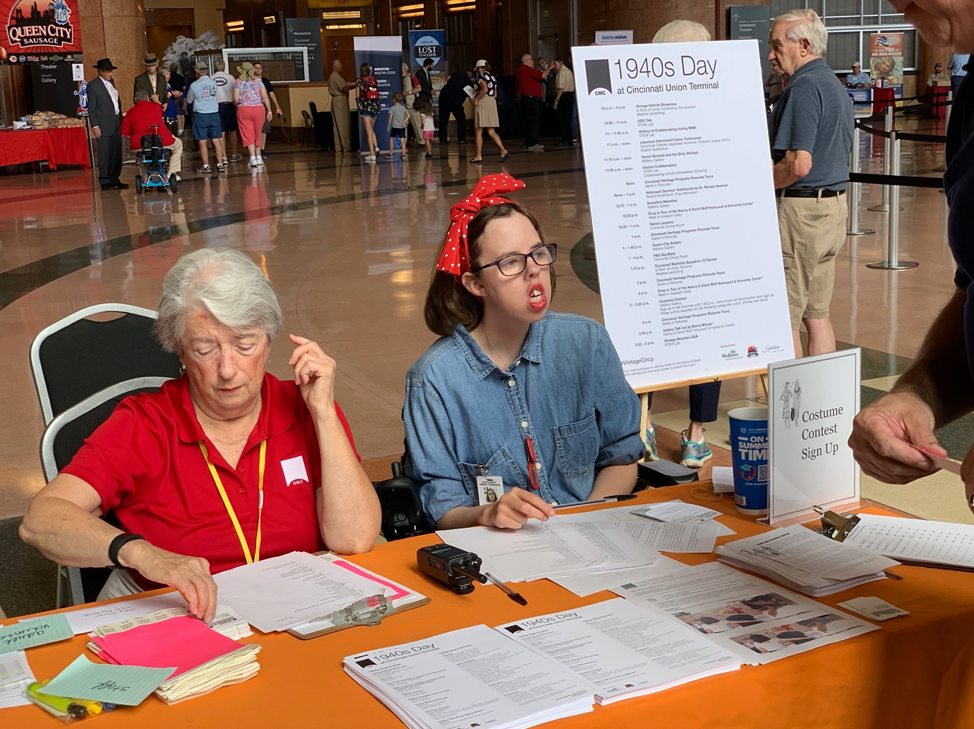
Through my investigation, it seems that the Guardian of the Fire award was given annually to a leader who exemplified the values above. And we love the wording and imagery it creates.

(We’ve subtly used the campfire as a central image of connectedness and goodness a few times, too.  Like in our video here)

Over the years, Starfire has given awards to recognize leaders of inclusion in Cincinnati.  These awards have been given to outstanding volunteers, paid staff, family members, and people who disabilities who have given back to the community in some extraordinary way. This year, we are proud to bestow the inaugural Guardian of the Light Award to recognize a person in the community who has furthered the work of inclusion, heightened the imagination of what’s possible in our communities, and lives these values through action.
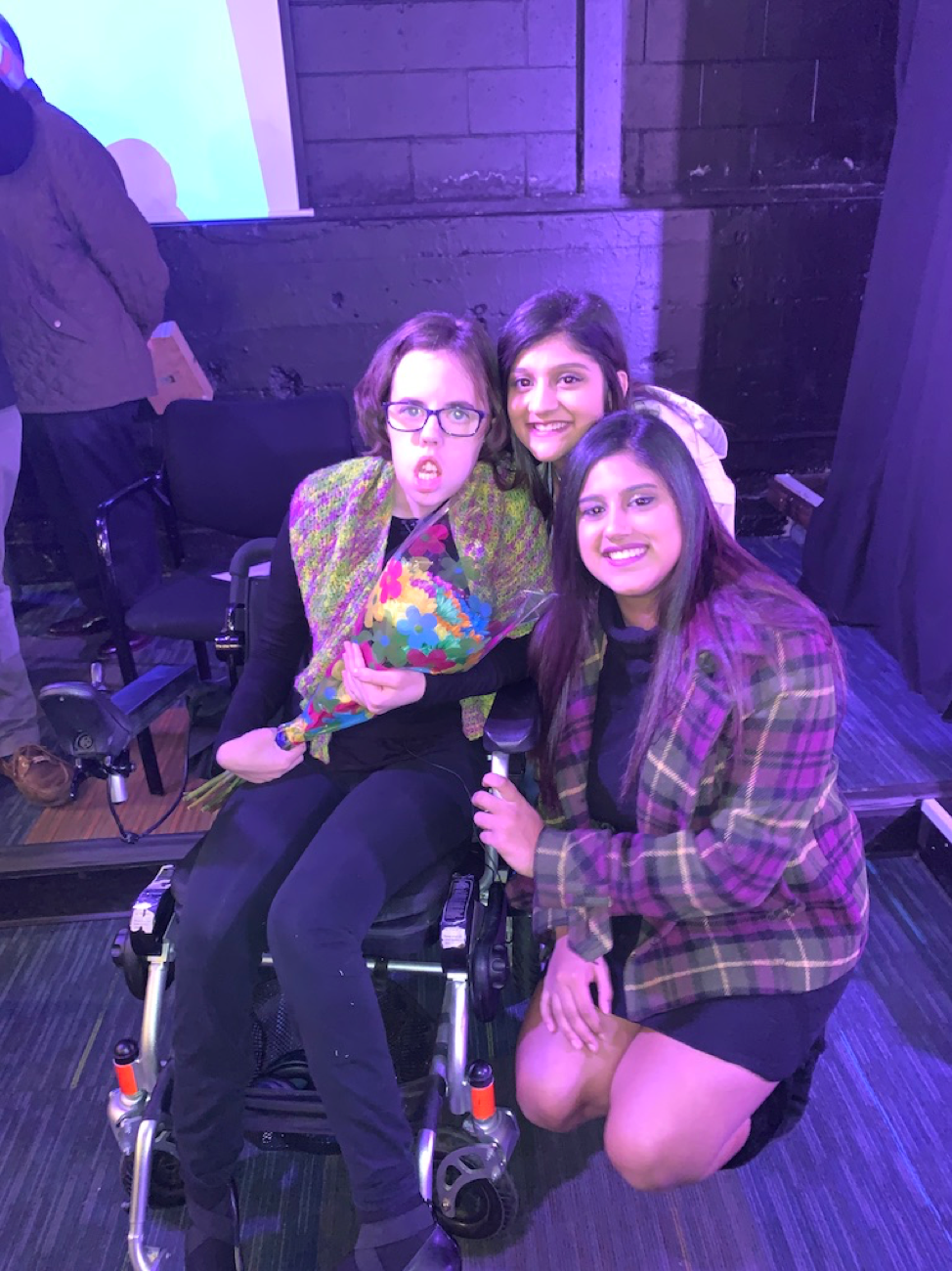
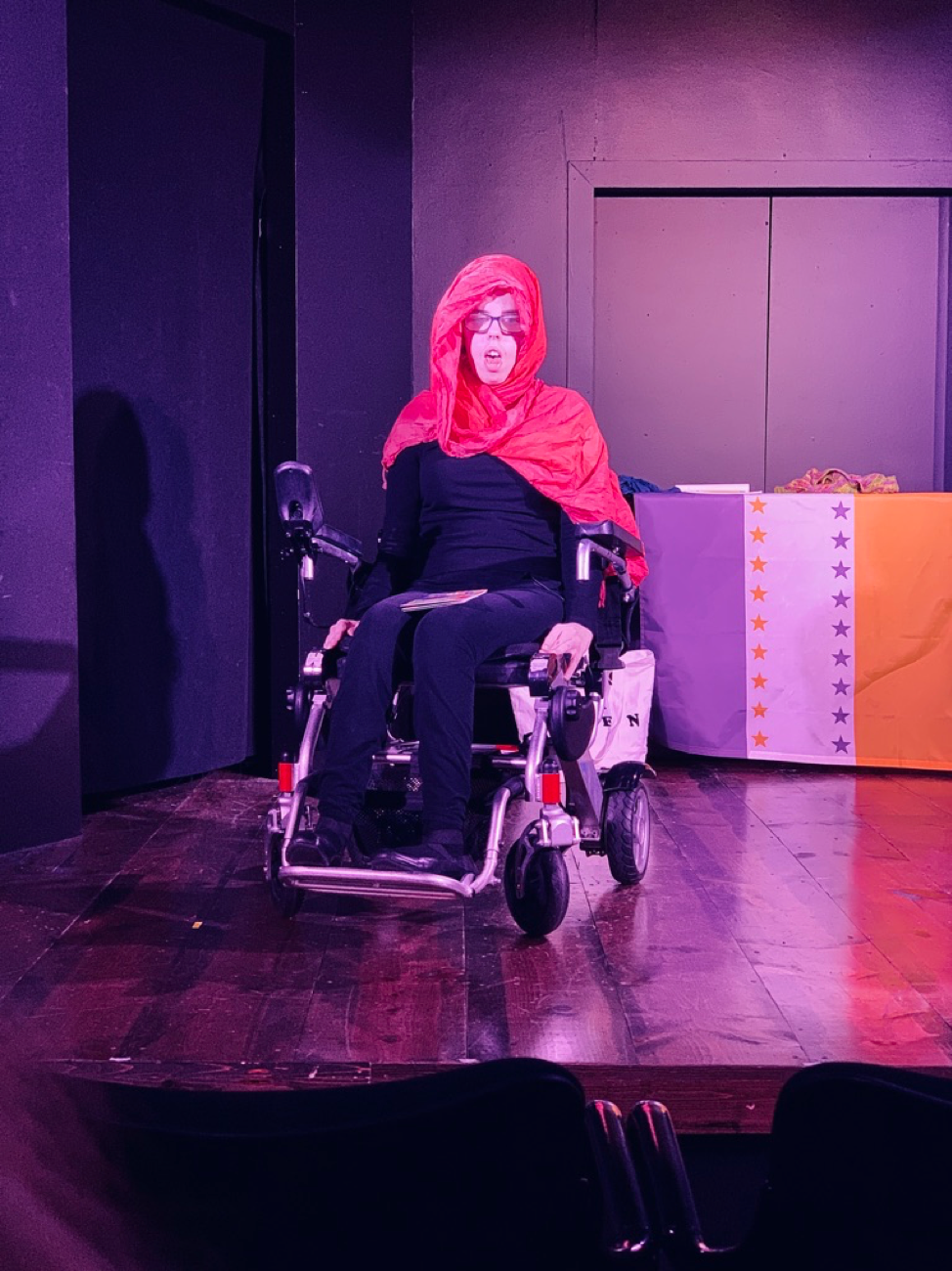
This year, Starfire will recognize Cary Brodie, who has shown a deep and consistent ethic of inclusion. Cary has been working to restore a half acre of woods in Madisonville that was given to the Park Board by Myron G. Johnson Jr. in 1972.  The land had fallen into disarray, overgrowth, and a de factor trash dump.  Cary, along with neighbors, spearheaded weekly cleanups, removal of invasive plant species, and land clearing to make it bird friendly again. In doing so, Cary has brought together dozens of neighbors from all walks of life – young and old all willing to work towards the vision of a beautiful restored space in the neighborhood.

Before and after photos of the changes in Johnson Woods.

Before and after photos of the changes in Johnson Woods.

It is because of her vision, and her hard work and inclusive spirit, that Starfire bestows the Guardian of the Light Award:

It shall be thy task to keep the newly kindled fire alight;
To know the earth, the sea, the stars above; 
Hold happiness; seek beauty; follow right; 
Offer a friendly hand to all who ask; 
And, day by day, 
Lead sister feet along the golden way—
The road that leads to work and health and love.

Join Starfire at our 2019 Annual Celebration Friday, September 20, as we honor Cary and all those who have built inclusion this past year!

Buy tickets (kids free!) to our 2019 Annual Celebration >>

All photos courtesy of Johnson Woods Bird Sanctuary on Facebook