
Secret Standards No One Told Us About or Things Others Knew and Kept to Themselves

I remember a year or so back, Tim had a meeting with someone important.  He was explaining our work of including people in service and decision making, advocating for choices, all the goodness we’ve blogged about for the past couple of years, and what we have to be proud of.  He talked of people growing over the past few years and helping people be known for valued roles.  The person remarked, snarkily, “well, welcome to the party.”

I remember Tim returning from the meeting red-faced with anger and frustration.  “Welcome to the party?”  I can’t remember one-hundred percent, but I think Tim said he said in the meeting, “well thanks for inviting us” in that respectful, but seriously disappointed and angered tone that only he could have done with this person.  I remember the “welcome to the party” story often, and it doesn’t make me any less annoyed.

We find ourselves running in circles sometimes with those that set secret standards and then don’t tell others about it.  You can read about Tim’s frustration with Janet Klees when we were in Louisville in 2009 –Some people have collected the wisdom and kept it to themselves.  I’ve had the experience myself a few times, most recently in Savannah.  Tom Kohler offhandedly remarked when we were meeting with him, “you do segregation really well.”  I remained composed, though inevitably blushing I’m sure (as I do whenever I’m stressed/upset/nervous/laughing too much/tired/drinking bourbon/or anytime it’s 3 o’clock for some reason), and talked deeply about people’s capstones, (including Nikki who travelled with us as you’ll recall), internships with a soon-to-be Cincinnati City Council member, hospitals, United Way, a museum, the Girl Scouts (whose headquarters are in Savannah); I briefed him on the hundreds of community partnerships and the like.  He remarked that people in Savannah would love something to do, that there aren’t good options, and that he meant no offense. 

We didn’t get to go deeper due to our company and our unexpected filmmaker in tow, but I felt that deep pang of defensiveness, embarrassment, and anger.  I can recognize the shortfalls of a program as well as the next person.  I know what we do is not ideal, but our world does not operate in the ideal either.  It’s why we’ve asked for help from Tom and others.  It’s a heavy load to carry alone, and thankfully, others have invested time and cups of coffee in us.  We struggled with balancing what we know to be right and true with others who don’t know any better, don’t care to, or aren’t even aware that there’s a problem.

I’m biased, of course, but I like to think we’ve intently avoided becoming one of those people that set the bar high but look down their noses and snub the doings of what others think is good work.  But if we’re honest, we are all those people from time to time. 

We received a Christmas card recently from an agency whose pictures reeked of devaluation.  It came from a place of wanting to share in the Christmas spirit, I’m sure, but instead, it showed dozens of unflattering pictures of grown adults in elf or Santa costumes that all live in the same group home.  Most people in the photo card didn’t smile.  Actually, I don’t remember anyone smiling.  Some looked pissed off.  No one’s names were used.  It was essentially, a card full of anonymous people that could have been anyone angered and saddened by the holiday season, and it could have been a card of people that no one would have wanted to know given the way they all looked.  However, this was a Christmas card with people that Gio, Bridget, Lauren, and Tim, among others, did know.  And this was not a representation of their best selves.  Maybe we could have sent an email to the person making the card with a polite thank you for the Christmas cheer and a by the way did you know this card makes people look awful, scary, sickly, and childish?  Perhaps that’s still possible.  Perhaps it’s what Tom Kohler did for at the coffeeshop for me.  You do segregation well. 

It still stings, but it’s also why we’ve been working so hard.  It’s why we’re trying to understand our language around “members” and “membership” to mean everyone, why we’ve recreated our forms to be universal, why we’re meeting tomorrow to understand why certain staff talk to only people with the label of a disability to get involved, and why others talk to only people who don’t have disabilities.  It’s why capstones have paved the way to understand what our work can be and is about, it’s why a lot of us spend more of our time being curious about other people talking to friends’ girlfriends about being a nurse third shift and how she’d love to teach sometime at Starfire U, inquiring about the men you’ve gotten your haircut next to for the past three years about what they’re passionate about;  it’s why we ask an artist to meet Lawanda over coffee and watch her start to understand what it is we do and why she wants to get involved too, it’s why I was talking to a volunteer for a trap-neuter-return rescue effort for an hour in a bar on a Friday night even though I’m allergic to and sincerely hate cats, it’s why we make that leap and ask to meet up with them later for coffee, or Facebook them with a message “you should meet my friend Ashley and Sarah,” it’s why helping young people explore what they’re good at is so important, and why we’ve got to get more people involved in all of this.  And it’s why people like Tom says what he says or why Jo Krippenstapel keeps meeting with us and nodding with a smile or asking seriously “say more about that” when we’ve gone astray in our thinking.

I was at a meeting a few months ago at Starfire for a local community organization committed to revitalizing Madisonville with a business district, housing and other goodness.  I had offered to host it as I was beginning to get involved in their mission as a Madisonville resident and Starfire’s building is beginning to be seen as a community building, instead of segregated disability place.  The guest for the evening was an expert of community building in Chicago, in town to consult with those heading the project.  (I’ll have to remember to blog about my discomfort and eye-roll reaction with a “community expert” from Chicago coming into Cincinnati to tell us how to be neighborly amd build community, but that’s an aside….)

Joseph helped lead people into the building and give a brief tour to those visiting for the first time.  I gave an intro welcoming them to Starfire citing our usual work: connecting people based on interests and talents, helping others be known for their gifts, community, inclusion, etc.  The expert nodded knowingly and begins to tell the tables of Madisonville residents about his mentally disabled daughter, Betsy and how they looked for a place that would take care of her, and about his son– the lawyer.

I often wonder why people feel the need to do that.  Why introduce their son or daughter (or anyone for that matter) in a way that immediately focuses on something understood by others to be a deficit?  I talked about this at length with Jordan and we joked about the ridiculous, negative, and all true ways his parents could introduce him if that was the standard.  I’ll spare him the examples we came  up with.

You could introduce anyone deficit first.  My chronically lazy daughter.  My useless and distant husband.  My clinically depressed sister.  My financially inept cousins. Oh look!  There’s my infertile best friend, and her husband, the one who was fired last week.  Over there is my brother, you know, the one who dropped out of college and impregnated his now ex-girlfriend. There’s my niece, the one who still owes me $200 and never visits family when she’s in town.  There’s the uncle that was addicted to painkillers… you get the point.  None of the absurd examples tell us anything.   Neither does “my mentally disabled daughter.”  I wonder what Betsy cares about, what she’s interested in?  What’s the funniest joke she’s heard in a while?  What was her 16th birthday like?  What’s her style?  I’m really less interested in the fact she has a disability.  It matters, of course, especially to her and her family, but it doesn’t have to be that which defines her–especially if her brother is “the lawyer” and she’s “mentally disabled.”  Brenda said it best once, and I’ll have to paraphrase,  when someone is 50, they’ll still have a disability, but they’ll also have their inner self, things they care about, things they’re proud of, valuable roles, self-esteem.

There are secret standards, ones we’re still trying to figure out and do better by, and then there are standards that should apply across the board, disability or not.  You don’t introduce your daughter Betsy, to a group of strangers as your “mentally disabled daughter.”  But again, people don’t know, and it’s why Kathy is beginning to think about how we engage people earlier in learning with us, and it’s why Tim and Kathy Wenning are thinking of ways to stitch together the parents and our staff. 

It’s why really, all of us care about this.  “Welcome to the party,” the Christmas card, doing segregation well, Betsy– it’s all related.  It’s pointing to a need of being able to better express what’s important and why we believe it’s important, and not letting the silly stuff that’s less important get in the way of helping all of us grow in friendship, be loveable and loved, have a safe and welcoming home, a supportive family, a vibrant community, and a recognition that we are valuable.
timothyvogt
Carpe Diem

There is something about a moment.

Fleeting, intangible, insignificant in the grand scheme, yet a moment when “great” has the energy to be without end, to live on in us and through the people we touch.  A great moment has the power to create itself, yet can never be recreated.  Rather than garnering the intentions and desires of a human design, a great moment is stripped down, it holds little baggage. It is beyond our scope, it is other-worldly.  And if we are fortunate enough, great moments collect as we age, and as we age we reflect on this ever-growing collection of great moments, a treasure trove of beautiful, life-giving experiences.

No one writes down “great moment” on their calendar, planning for the time when one will happen again…

Moments unfold and great moments emerge.

For people who are not engaged in the community, do not have close friends or family, or lack opportunities to be in valued social roles, great moments can be rare… This holds true for people with the label of disability, who without social integration have been separated from ordinary social opportunities, aka: the stuff that great moments are made of.

John O’Brien puts it like this:

Many people with developmental disabilities continue to lack connections beyond their relationships with their families and other people in the human service settings they attend. This reflects a history of discrimination against people with developmental disabilities which is expressed in multiple barriers to social integration…(THEREFORE) Social integration is a form of work that people with developmental disabilities and the non-disabled people in their networks, associations, and friendships can only do with each other. It is work in the sense that any relationship is work: people have to reach out to engage others, act in ways that satisfy each other’s expectations, and maintain trust with one another,” (O’Brien, “Perspectives On ‘Most Integrated’ Services for People with Developmental Disabilities”).

Last week, in front of a crowded bar, a group of friends announced their brain-child: the Cincy Story Mural. This project was formed out of a relationship built between Starfire U member Krista and Aaron of DIY Printing, and has since grown to include Public Allies of Cincinnati, Cincy.com, and a group of dedicated artists and photographers willing to see the project through. It was a great moment for two great friends.

“All these people came, which is kind of a feather in Krista’s hat,” said Dan, Krista’s father. “She’s involved with these organizations that I didn’t even know existed. And they all treat her as an equal, which is really nice.”

The ties being built are in the ordinary, public places outside of Krista’s family life and away from the Starfire building. These relationships prove that barriers to social integration are only stepping stones toward shared positive experiences: “which give rise to an appreciation of what there is to enjoy in a person’s company and what the person can contribute to our common life,” (John O’Brien, “Most Integrated”).

“KBs keeping me busy we’re doing awesome work together we are looking forward to doing these mural projects,” said Aaron of DIY Printing. “Without KB, I wouldn’t be smiling this big, she’s got my heart.”

“Aaron is my good friend. He’s on my side,” added Krista.

Stay tuned to the   www.cincystorymural.org  website or go to Facebook  for updates on the project !!

timothyvogt
Parking Lots

At Thursday meeting last week Tim and Meghan talked about how stranger danger is great for kids. We obviously don’t want little kids walking up and talking to every person they meet, getting and giving out personal information. However, a lot of us have got stuck in this stranger danger mindset and never grow out of it. We avoid eye contact with people we don’t know, focus intently on our grocery selections, pump gas quickly and appear very busy at the bank while waiting in line. We find library flyers intensely interesting while waiting to make a photocopy. We also talked about being “creepy” and “weird” at the meeting, especially when it comes to connecting to people for classes, personal connections, experiences.

I’ve gotten pretty good at being “weird” over the past couple of years. Emailing perfect strangers to have coffee with me, meet me in their neighborhood, and come in for a tour, or the good, “I’d like to tell you about what we’re doing” without really identifying who “we” are and what “what” is. And, it’s been wonderful and not at all creepy. In fact, most people are flattered and excited to be singled out, asking to meet over coffee. (On a side note, I did get turned down once by a woman doing a personal experiment. She wanted to see how “certifiably friendly” Cincinnati was. I offered to meet up in a public place and talk about Cincinnati and she declined saying that it wouldn’t be safe. But that’s another story—but come on, I wasn’t asking her to get in my van to help find my lost kitten…)

“You want to talk to me about things I already care about?” is usually the puzzling question, I sometimes get. The answer, “yes.”

“You mean, you want me to come in and teach a class about what I already love to do?”

“Yes.”

“You want me to share information about an issue that’s important to me?”

“Yes.”

Sure, it’s a strange thing to think about. Meeting people for the sake of getting to know them, with the hopes of helping them meet people who like the stuff they do. But it’s lovely, wonderful, mind boggling, frustrating, connect-the-dots, kind of work. I wasn’t always okay with the idea of just talking to people. In fact, sitting and talking were two of my least favorite things to do as a child. My grandmother would sit in IGA’s parking lot (now Fresh Market on Madison Road) with her van window rolled down talking. We’d go there for provisions, ground beef, milk, eggs, noodles, cheese, coffee creamer, and stay there for hours on end.

Having already finished with grocery shopping, she’d inevitably run into someone she knew—and there we’d be- stranded with the van turned off in a parking lot as she talked. (Or on the off chance she knew the car passing us on the street; she’d stop, put the hazard lights on, put the van in park, windows rolled down). I like to think that my grandmother knew all of these people well. I don’t know that for sure. If she didn’t, you certainly couldn’t tell by the way she’d talk—talk while the milk got warm, and the frozen meats started thawing. At the time it was embarrassing. It was annoying, and it was really hot in the un-air-conditioned jalopy of van; alternatively, it was below freezing in a van whose heat had been turned off as we sat in park in a cold parking lot in January. How much longer? I’d think, and I’d throw myself into the seat—laying down now as she talked, or drawing on the windows with my breath–a form of entertainment I’d inevitably be yelled at for later. After awhile and when I just couldn’t take it anymore, I’d muster up the courage and tap her on the shoulder. “Grandmaaaa….” I’d whisper with more than a hint of impatience in my voice, “Can we go now?” She was crafty, never letting on that she’d heard you. So crafty, that’d you’d begin to doubt that you’d even said anything at all.

Oh, she was good. A few more throwing myself against the seats, a dozen or so more loud drawn out sighs, and she’d turn the key in the ignition, and a cloud of blue smoke with rise up from the exhaust. The sound, and toxic smell of freedom. But the talking, gossiping, did you knows, would continue. The funny thing is, as much as my grandmother talked, she equally complained and fussed right up until someone came to the window. “Oh, what the hell does she want? Hurry, hurry, get in the van.” You’d think we were hurrying away from parking lot used car salesmen the way she’d slid the sliding van door closed and skittered into the front seat. But of course, when someone familiar face would call out “Margaret!” she’d pause, roll down the window, put in her teeth, and there we’d sit, milk getting warmer, meats defrosting. It’s wonderful to think that all my time being trapped in the van surrounded by IGA bags was training for me to be as chatty, inquisitive, and prepared for random conversation as I am today. That in sitting through probably hundreds of parking lot meetings, my grandmother was in fact training me for the work I do today.

timothyvogt
The Beloved Community

“The beloved community is not a utopia, but a place where the barriers between people gradually come down and where the citizens make a constant effort to address even the most difficult problems of ordinary people. It is above all else an idealistic community.”
-Jim Lawson

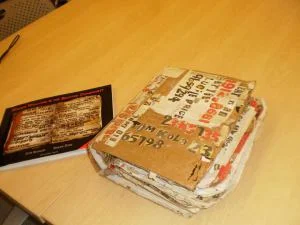
Ms. Addie Reeves' phone book. "After my death, please give this book to Mr. Tom Kohler"

“This phone book was Ms. Addie’s beloved community,” Tom said, as we sat at a small table in a backroom at the Telfair Museum in downtown historic Savannah.  A curator had retrieved the phone book from their archives, and there it sat, out of its preservation box, for us to page through as if we were unwrapping a delicate piece of fine china from tissue paper.  We wore blue latex gloves and tried to appreciate its meaning in the greater context and learn from her wisdom, professionally preserved.  Tom stood over us nervously advising us to be careful, and sharing small anecdotes of Ms. Reeve’s personality, decoding her, and the book a little.  “Gene wasn’t Jane Fishman’s nephew.  They weren’t even related, but Ms. Reeves wouldn’t listen.”  Then he’d smile.

I suppose it’d be easy to forget that the people in Waddie Welcome and the Beloved Community were actually people.  It’d be easy to refer to them as “characters” that follow some sort of well-written plot devised by Tom Kohler and Ms. Susan Earl.  But, it is in this remembering, that things were hard, messy, difficult, frustrating, without direction, that the story becomes less of a story and becomes something greater– “real” as Nikki said.  It is in the retelling (and retelling and retelling) that we discover the realness of people, the reality of hospitality, and the power of Tom’s question again, “what can people come to mean to one another?”  It is in the “blending and blurring of boundaries” as Tom calls it, that we begin to glimpse the profoundly simple and powerful meaning of the beloved community.

The photos in this entry are part of a greater “story”, as Mr. Lester Johnson reminded us at his office, “the road we travel sometimes is not the one we initiate.”

Mr. Lester Johnson in Ms. Addie Reeves' phone book

Nikki meets with Mr. Lester Johnson in his law office

In two days, Nikki, Leah, and I got a glimpse of the road Lester Johnson spoke of.  We met with Susan Earl, and what Nikki interpreted as her “trying not to cry” I saw as deeply guarded respect to the story Nikki was asking her to tell.  “What’s the story behind the story?” Nikki asked.  (Her questions both Tom and Susan remarked afterward were hard and complicated.)  There was no tearing up as she thought and as she responded to each of Nikki’s questions.  She stopped speaking at times to reconsider perhaps, what words were best to be said, and what might have been better left unsaid.  It’s what we all do when we speak of someone, or rather what we ought to do when we’re speaking about someone not in their presence.  She told us of how circle members would leave meetings frustrated, their feelings hurt, and often didn’t know what that “next step” was supposed to be.  It’s this piece of the story that I take most to heart, and appreciate.  In our own story in Cincinnati, we’ve tried to be honest in the telling, but we could get better, and that’s why this space and format is so important.  Things often are not as we planned, or not as well-planned, or are as we planned, but not as others carry out.  Ms. Earl’s pauses were a reflection of those stories we’d rather not tell (the feelings getting hurt, the frustration over what can be done next, perhaps the thinking back on time we’d just as soon forgotten).  It’s those stories that need the most telling.  There is humanness in respecting it, getting it out there, and honoring it.

Susan Earl in Ms. Addie Reeves' phone book

Waddie Welcome in Ms. Addie Reeves' phone book, right

We met with a man named Mr. Tom Lamar at his apartment in Savannah, and he again demonstrated the power of hospitality, allowing us to enter into his home, actually, his bedroom, and question, listen.  Mr. Lamar was a member of the Storytellers group, and a friend of Mr. Welcome’s.  He described their meetings, and his own life, graduating school as a pharmacist and being discriminated again in finding employment.  His story pieced together briefly over our one hour visit.  His apartment pieced together other parts, too.  The walls of his bedroom were papered with various phone numbers, addresses, calendar appointments.  Some were, he explained, people who help him out with things that need done.  Others were friends, and family (Tom’s living room was a testament to family — not an inch of the entertainment center and bookshelves had space due to the photos of children, formal wedding photos, candid shots of his relatives, one of people gathered around him, smiling.)  Tom Kohler described Mr. Lamar’s bedroom as a great piece of “jazz music” and it garnered a large smile from Mr. Lamar.  Above his bed was a large print of the “Our Father.”  As Mr. Lamar lay in bed, above his right shoulder I could read “as we forgive those who trespass against us.”

On the way in to Mr. Lamar’s apartment, Tom paused in front of another neighbors door which was decorated with roses, crucifixes and religious cards and mementos.  He pointed out this door, an obvious home and sacred space to someone, and then pointed down the hall with its self-same doors, monotone lighting, and conservative (read: lack of) decor.  An obvious metaphor between fulfillment, and emptiness.

Waddie Welcome, Deborah Selman in Ms. Addie Reeves' phone book, top left

Nikki and Tom stand before Mr. Waddie Welcome's grave site at Laurel Grove Cemetery

Tom drove us to Mr. Welcome’s grave site, where Nikki and he stood with book in hand.  She opened to the page of his internment and could see the trees those in attendance stood under.  Tom explained that there were actually two graveside services.  One, the actual burial, and about a year later when enough money had been gathered to purchase Mr. Welcome his headstone.

Our last visit was with Ms. Mary Welcome Williams, and her two sons, Antonio and Mario.  We learned of her family’s life in the Cuyler-Brownsville neighborhood of Savannah.  Nikki asked about how she and her family felt about the celebrity surrounding her uncle’s story.  Mary replied, “I have a famous uncle!” and smiled.  She followed up with laughter and remarked how wonderful it is that people still care about him, still think about him, and that his voice and life were part of something greater than himself.  “Waddie’s living was not in vain.  He did a lot of living before he died,” said Mary.  “He made a difference.”

I wrote quickly in the coffee shop what it would mean to have everyone’s story told as respectfully and as intentionally as Mr. Welcome’s.  What could it mean for others to see each other’s lives as important chapters in a greater story?

Mary Welcome Williams, Mr. Welcome's niece, and Mario and Antonio, Mr. Welcome's great-nephews

The “beloved community” is not utopia, in that it has to be a part of our world, and where we live now, and the way we live now.  I think, when we’re all as worn, and frayed, and barely stitched together as Ms. Reeves’ phone book, what will matter is the community we’ve created and the others we’ve invited to join us.

timothyvogt
Oh, Please…

Dear Prudence,
I’m a twentysomething woman living in an apartment complex. In my building, there’s a mildly retarded young man about my age who lives with his mother. I’d guess his mental age is about 8. He’s taken a liking to me. He seems to know my routine, and I constantly find him hanging around wanting to talk to me. I’m sure he’s harmless, he’s kind of sweet actually, but it’s getting annoying! I find myself taking roundabout routes to avoid him. Sometimes I think I should just indulge him because he doesn’t know any better. Other times I think he ought to learn not to hover around driving people crazy. I’d consider saying something to his mother, but I’d feel bad and she doesn’t speak much English. Should I just accept that for as long as I live in this building, little chats with him will be part of my routine?

—The Girl Next Door

Dear Girl,
It’s understandable that you want to be able to go in and out of your building without having to engage with “Pete,” but when you live in an apartment, chatting briefly with others is part of the price you pay for not having to mow your lawn. Pete may like you, but he’s probably hanging around a lot, trying to engage anyone coming in and out. When you have time, talk with him for a few minutes. When you can’t talk, politely explain: “Pete I’m in a rush. I will catch up with you another time.” It sounds as if Pete’s mother is not aware that he may be eligible for free activities for the intellectually disabled. Maybe a group of fellow apartment dwellers could explain to the mother that she may be missing out on helpful programs for her son. Let me also note that the mental health community wants to banish the phrase “mentally retarded.” I agree with my erstwhile 
Slate colleague Jack Shafer, who wrote that “mentally retarded” can be used in a respectful, clinical sense and that the preferred term “people with intellectual disabilities” is bound eventually to become offensive itself. Nonetheless, it’s best to be sensitive to the wishes of those within a particular group.

—Prudie

My original title of this post was written about a month ago when Lauren, our grant writing guru here, sent me this.  I’ve never been able to post about it, until now.  It’s from an advice column on some website she gets blurbs from.  I can’t help but roll my eyes at “Prudie” and “Girl” but after spending two days with Nikki Booker, Tom Kohler, and Leah Addison here in Savannah, I still roll my eyes, but have some better questions and thoughts about this.  My response, a month ago would have been more condescending (justly so) but in spending time with Tom and Leah and Nikki, I’m still learning that that’s not the way to go about changing things.  I had to delete some of my haughty inclusion-snob sentences, and re-examine what this article means in the context of our past two days learning with Tom.  I have a hunch I’ll need to re-learn this lesson, resisting the urge to be cynical, critical, annoyed but those who “don’t get it” a lot.  None of us get it, Tim and Bridget, Leah and I talked about last night.  And we’re all at different stages of this journey and learning how to be better people to one another. 

I wish Prudie had questioned as Tom does of people, “What can people come to mean to one another?” instead of “it’s understandable that you want to be able to go in and out of your building without having to engage with “Pete,” but when you live in an apartment, chatting briefly with others is part of the price you pay for not having to mow your lawn.”  The former is much more productive, and respectful, and useful than the latter. 

What can people come to mean to one another?

In the past two days I can see that people mean a lot to each other, that’s apparent, and none of it has to do with “the price you pay for not having to mow your lawn.”  Tom was asked, how many people he has matched with each other, how many people he has helped find each other in 30+ years.  He answered modestly, 750.  Seven-hundred and fifty people have been able to grow in relationship with each other because of the question. 

Oh, there’s a lot wrong with this Dear Prudie and Girl Q&A.  First, since when did being polite to one’s neighbors when coming and going become optional?  Secondly, there’s the immediate referal to services (“It sounds as if Pete’s mother is not aware that he may be eligible for free activities for the intellectually disabled. Maybe a group of fellow apartment dwellers could explain to the mother that she may be missing out on helpful programs for her son.”) instead of referal to friendship, community, and acknowledgment.  I won’t get on my soapbox on that, but rather, address the real issue here with “Pete.”  The real problem with Prudie’s response is that she fails to address Pete’s annoying behavior of trying to talk to people, is probably because he is lonely, and probably because he has no one to talk to and with.  Sure, we all need to learn boundaries, and respect each other’s need for space and silence, but, a hello, a extension of friendship, a neighborly exchange, would probably make a difference in small ways, and in big ways we can never fully appreciate.  More on this, later.

timothyvogt
Up for interpretation…

At this moment, millions of people around the world are uploading, updating, and sharing their stories across sites like Youtube, Facebook, Flickr, Blogger, Twitter, etc. etc. ad infinitum etc(!). There is a template to fit any mood, image, or tagline. Each of these stories are jam-packed with information. Some tell it right, others, maybe not as much. Photos, videos, comments, friends, followers, personal bios, apps… collectively, this is the stuff that stories are made of. All said, the story being told today isn’t linear. Point A? Point B? They don’t exist. Instead, each photo, comment, status update, is like a circle filling an even greater circle until something like a mosaic takes shape, the story formed, but still open for interpretation.

It has taken a certain level of restraint, balanced by a deliberate letting go, all the while being coached by the lessons from SRV, to try and start telling the story of Starfire. To collect the images, the quotes, the kind of data that will do its best to get the message out right, that’s my job. How will the mosaic of Starfire being interpreted?

Given the amount of tremendous work being done by the members and staff here, and the depth at which this work is being carried out on a daily basis, I owe the story much justice. But in real time, the story doesn’t wait, it doesn’t hesitate, and it is updated rapidly with no warning. At times I wonder how to keep up with the full picture without missing out on the intricacies.

So the night before returning to work after a week off for my wedding/honeymoon, I had a dream that seemed to put this task into perspective:

Standing in a field of tall grass, I bend down to pick up something clumpy and fragile hidden in the ground below. Straightening my legs and lifting my hands, I look down to inspect my find. Bees swarm into view, flying back and forth from their hive, now cradled in my hand. Drawing it away from my face, I gain a better view and catch a glimpse of the pure gold honey dripping out among the busy workers. Slowly it rolls out of its home, now a collapsing hive, and down my arm into the grassy unknown. The threat of a thousand stings somehow focuses me instead of frazzling, and I begin to walk slowly forward, carrying the hive to show others what I have found. I taste the honey and it is sweet. Suddenly, a sense of urgency sets in as the honey continues to drip out of its hive, while the reality of what I am holding becomes clearer. I have to rush, but calmly, so as not to upset the bees. The threat makes me empathetic, knowing the bees must feel exposed. But every drop is worth collecting and sharing, every drop lost seems a tragedy. I wake up.

Maybe a dream book would say differently, but in my mind honeybees are a metaphor for dedication and hard work, the honey a diamond in the rough, a precious find, and the risk of getting stung the feeling that comes with any kind of balancing act.

Thinking back, it’s easy to make that metaphor fit with my job description as well. The hive: Starfire’s building. The bees: the staff and members. The honey: stories. However long it may take to tell the story, however slowly, carefully, we manage to collect it, it is a great task to be given– and definitely nothing to get frazzled about.


timothyvogt
“What do you do?”

We’ve been struggling a lot lately with how to answer the question “What does Starfire do?”  It’s not as easy to explain as it once was, given our journey over the past few years.

It’s different for every person, it’s often serendipitous, and it’s never complete.

So it’s best told in stories, and here’s one for ya:

If you read this post, you’ll meet Mike Holmes.  In one of my most treasured books, David Schwartz would say that on that day, Mike “crossed the river” from the land of “clienthood”  into the land of “citizenship” in my view of him.  What I came to understand that day was that Mike was not my “client,” “consumer,” “individual,” or “little buddy,” or any other word that is typically used to describe people with disabilities.

He was my best friend, who made a tough day a little better.  It was a big day for me, in so many ways.

Another big day was on the day of Mike’s PATH.  It was sometime in the spring of 2010.  I was there, along with Mike’s mom, dad and sister.  Candice and a few other Starfire staff, and a few of Mike’s good friends from Starfire were invited as well.  (As an aside, all of those friends had labels of disabilities).

As soon as we sat down, I realized how right (at least in spirit) Janet Klees had been about the issues with friendships (you can read about that at the end of this post.)  Here we were, sitting down to talk about Mike’s life…his greatest hopes and dreams for the future!…and the only people in the room were his family, paid staff, and other people with disabilities.

It’s not that those people are not valuable or important to Mike.  Quite the contrary!  But there is an especially valuable opportunity if we can find connections with unpaid, unrelated citizens who can be a part of Mike’s life.

I couldn’t help but think of all the people Mike and I had spent time with over the past few years:  Smitty, Adam, Jill, Sally….All of them seemed like missed opportunities.

At that moment, I understood that my friendship with Mike, while very wonderful,  mutual, and valuable to us both, had become an end instead of a beginning.  I started to comprehend that while Mike and I were out having fun (always guaranteed when we hit the town), we could have also been intentionally building more friendships with other people.  We could have used our relationship as a conduit to others.  Another big lesson, huh?

Mike’s PATH conversation was still terrific, as we knew it would be.  And his goals were pretty succinct:  Mike wanted to get involved in business, coaching, and volunteering.  There were many things mentioned, but Mike was pretty clear about those three things.

So we went to work:

Each year, Mike and I would be asked to speak on behalf of United Way.  We’d both dress up nicely and tell people how much we appreciated United Way and what it meant to us.  Mike was always the highlight, and I was usually along merely for chauffeur duties.  At one of the biggest speeches we gave, Mike brought a room full of the top brass of PNC Bank to a standing ovation in the Cincinnati Club.

Afterward, we asked Sally, who worked at United Way and had invited us to speak, if they ever had a need for an intern down at United Way’s offices.  She said sure, and within a month, Mike had secured a weekly internship at United Way, working on training materials and a Powerpoint presentation for their outreach programs.

timothyvogt
A Stitch In Time Saves Nine

“A stitch in time saves nine” is an old idiom that really has little to do sewing, but has more to do with mending what is wrong now instead of waiting until you have a larger problem.  If there’s a tear in your shirt, a few small stitches now, mean less toil and thread later.  It’s a good saying that applies to a lot of the conversation we’ve had here lately about strategic planning, and how we change and create while mending what’s not right about what we’re doing currently.  And there’s a lot of change around here lately, and the need for more stitching.

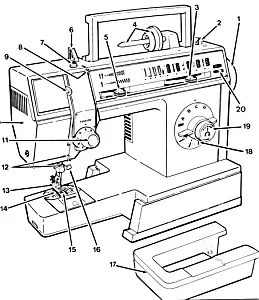
Two years ago, I asked for a sewing machine for Christmas, something that I could learn on, create with.  On Christmas morning, I unwrapped a box to find a white sewing machine with all the basic bells and whistles.  That weekend, I opened it up, read the manual and attempted to thread the bobbin and thread the needle.  I plugged in the foot pedal, turned on the light that illuminated the needle, and turned on the machine.  Instantly, the thread snapped, the bobbing pulled tightly and there was a tangled knot of yellow thread on an old piece of cloth.  I cursed, tried again, only to have the same results.  I reconsulted the manual and the numbers and small lines pointing to different areas on the machine, labeling pieces with words I’ve never heard of.  What the hell was a “bobbin winder?”  A “stop latch?”  A “tension regulating thumb nut?”  The manual picture, similar to the one below was useless. 

Frustrated, and annoyed, I packed up the machine, it’s colorful set of threads and boxed it back up.  In my linen closet it sat for two years.

About a month ago, I stumbled upon a gorgeous craft idea—jute twine with burlap pennants sewn together to create a festive banner.  It was the perfect complement to the wedding I’d spent the year planning.  Jordan and I had chosen not to get married in a church, but on a farm instead.  Having no central alter as a church would, or focal point that another venue might have, we decide we would exchange our vows under two trees.   It seemed to be a wonderful idea –I would make the handmade pennant banner to string between the two October trees creating canopy of sorts above us.  The only problem being that—two years ago I had completely failed, and therefore loathed the machine.

The idea itself was important to me.  This was the place where we would stand in front of our family and friends and each other, and say yes to each other.  Having cared very little about the entire planning process (just pick a dress, just pick some food, just wear any black dress you want for the bridesmaids, any black suit you already own for the groomsmen) the small details of making the actual day beautiful were important.  It was  enough, that I figured it out. 

Reading the manual again (which still proved to be little help), I began to just do it.  I tried threading the bobbin, the needle and just sewing.  The thread would break, so I’d reexamine where the tension was and correct the thread.  Eventually, it worked as a machine ought to. 

I stitched together an idea, and made it happen with my own frustration and work.  It is beautiful and imperfect.  The stitches are loose in some places, but they’re attached enough.   I had to rip out a few seams and throw away a bit of burlap that was too far gone to use, and had to tie knots on some of the twine to connect when it got tangled in a needle and I had to cut it apart.  It was difficult.  Some pennants are uneven, smaller than others.  Some have loose threads on the back where no one will see.  I ran out of white thread mid-way through and had to switch to yellow.  Still, it’s lovely, and looks pretty damn close to the original inspiration.

It’s symbolic, really, of a lot of the work we do here.  A lot of this is trial and error, and a lot of error, a lot of loose threads and unsightly knots.  Our work is stitching and threading together beautiful, imperfect people to create something new.  Our work is changing, and it’s difficult, sometimes resulting in cursing ourselves, as my first attempt at sewing caused.  I’m sure there are many of us how go home thinking, why can’t we just figure this out?  It can’t be that difficult!  What’s the point of even trying if it’s going to be so laborious?  But, we don’t have to reupholster the entire system, and we’re not making alterations on the people themselves.  Really, it’s starting with a few small and meaningful projects, and working on them until they are connected, quilted in the fabric of others’ lives.  Sure, the seams still show on a few things we do, and the stiches aren’t tight enough on some other things we’ve created.  Maybe we’re trying to stop making things we used to be known for, and we’ll need to rethread our needle and learn how to sew differently.  And we’ll need a lot of help since it will never be finished.  There’s definitely no manual for any of this, and if there were, it would probably be as helpful as the manual I had for my machine– a chart, some labels that are meaningless, some jargon that others don’t understand and some numbers.  (In fact, we’ve probably seen “manuals” exactly like this about people!)

The good thing about all of this is I’m not an expert sewer, and I’m not expert at connecting either.  I’m likely to get my finger under the needle and feel as much pain and frustration as the next person.  I’m likely to get tangled and stuck, and will need to rip it all out and try again.  It’s helpful however, that others are sewing with me, helping to stitch and embroider together a city that’s better, more meaningful, more personal and understands that there’s no one whose gifts and voice, and hands and heart, and thread and fabric, we do not need.

timothyvogt
Hot Potato (pt. II)

Ok, so in order for this post to make sense, you’re going to have to jump in the Cincibility Time Machine and travel back to June, 2010 and read this post.

Are you back?  Ok, Good!

I’ve been meaning to follow up on this for a while, but keep forgetting.  I had a friend who read that post last year and was challenged by it.  So she sent me this email, which I’m sharing here because I get this same line of questions at least twice a week:

On Saturday night, I went to a “hootenanny” and played freeze
tag with the kids for a long time.  I loved it.  I was the only
parent who played.  They didn’t need me to play, but I had a great time.

I probably looked ridiculous…But is it really bad to enjoy something that is different from everyone else?  I don’t think…”Hot Potato” [is all that fun], but what if someone asks?   Okay, so if Hot Potato is not appropriate, is Uno or Jenga?

Are we trying to normalize [people with disabilities]?  Is
it [them] or the community that needs to change?

Great questions, right?   Who are we to tell people they can’t play childish games if they want?  Why can’t we all be accepted for who we are and live our lives the way we want?  Where do we draw the line?  What is “normal?” Who gets to decide?

Tough issues, no easy answers, but here is my response:

First of all, thank you for thinking on this with me.  This is exactly the same kinds of thought processes we have had at Starfire for the past few months, and the same things I’ve been wrestling with for the past two years.  It’s good to chew on this, and it’s good to have your thoughts.

let me start with a story:

Today, [a young man] who is a Junior at Starfire U, played dodgeball with a group of kids.  Most people would consider dodgeball a kid’s game and compare it to Hot Potato.  The difference, though, is the context in which he played that game of Dodgeball and the role he occupied while playing it.  The Juniors are spending a week with teens and young adults from the Mayerson Student Project volunteering all over the city.  Today, they were at a summer camp for kids, and our members and the students from Mayerson were acting as Counselors.  So he was in the respected role of summer camp counselor, and in the valued role as volunteer.  He was in charge of making sure all the kids followed the rules and no one got hurt.  He also got to play dodgeball!

If his (or anyone’s) passion or interest was to play Hot Potato, I hope that we…would be willing to take the extra step of thinking of ways they could do so in an adult, valued way.  This is what our staff do everyday:  “Where can an adult play Hot Potato?”  Well, you pointed one out:  a birthday party for children!  There’s nothing wrong with being silly with kids, is there?  Lots of people do that.  What about volunteering at a daycare or preschool?  What about telling stories at the library?

There are lots of ways that adults can play Hot Potato that we just need to think about…“OK, now where in the community is that valued?”…..Where do other adults who like party games go?  Is it just Hot Potato, is it other party games , like Catch Phrase, which is essentially Hot Potato for adults (We actually played that two nights in Louisville with about 10 of our staff and 3 members, and we all loved it!)

Another difference between your instance of playing freeze tag and our members playing Hot Potato is that you’ve got “status to spare.”  People with disabilities, whether we like it or not, are discriminated against and judged everyday.

They are looked at as an eternal child (if you’re like me, you get asked “How are the kids at Starfire?” all the time, even though no one here is under 13 and most are over 20!).

So we have to think of ways to fight that stereotype, by bending over backward and avoiding things that may reinforce that image in people’s minds.  If you play freeze tag, people think you’re a cool, free-spirited mom who is acting silly for a minute, but then you step back into the role of valued adult.  It’s endearing.

If a group of adults with disabilities play freeze tag, everyone who sees it walks away thinking that adults with disabilities enjoy childish games and end up treating them as such.

We know that it’s true that in some cases, adults with disabilities like to play Hot Potato, right?  But if that stereotype is holding people back from getting jobs, getting married, ordering their own beer, being asked what they think about decisions in their lives, and living wonderful adult lives, do we have to help perpetuate it?

And where do we draw the line?  Is Hot Potato too childish?  Freeze Tag?  Hide n Seek?  What about “Ring Around the Rosie” or “Duck Duck Goose”?

It’s about saying:  “OK, that’s good….What could be better?”

Essentially it boils down to:  Honor the person, find valued ways to help support their interests, understand that being seen as a childish adult can hurt their image and lead to other problems.  It took me a while to understand this.  My questions were hers as well.

This is tough stuff to think about, but good questions and good thinking always lead to good results.

And lest anyone think I’m “all uppity” or “holier than thou”…..au contraire, mon frere:  Here’s a picture of me in a Santa suit at a big dance for adults with disabilities!

Yikes!  So you can see that these lessons are hard won.  I’ve earned the right to reconsider my past poor decisions.  They are my mistakes and they are precious to me.

Share

timothyvogt
The Moment

“And we will be ready, at the end of every day will be ready, will not say no to anything, will try to stay awake while everyone is sleeping, will not sleep, will make the shoes with the elves, will breathe deeply all the time, breathe in all the air full of glass and nails and blood, will breathe it and drink it, so rich, so when it comes we will not be angry, will be content, tired enough to go, gratefully, will shake hands with everyone, bye, bye, and then pack a bag, some snacks, and go to the volcano.” –Dave Eggers, A Heartbreaking Work of Staggering Genius

There is a moment before you find out something awful.  We’ve all known this time.  A moment of pause, clarity, and serenity.  Things are as they should be.  Things are as they’ve always been.  It’s almost as if you’re watching an old family film, slow motion, no sound.  People are smiling, laughing, talking.  You see yourself, younger, healthier, and brighter.  The camera is shaky, but the intention is real, the love seen on film is raw and endless.  There’s that moment of what was, before what is to come.


Of course, you don’t know this, and no one in the old film knows it either.  The reel continues and everyone is oblivious, ignorant, and better off for it.  You don’t know to appreciate that moment, to hug the person next to you, smile til your cheeks hurt, zoom in our your mom, dad, grandma, and capture a few still images in your memory.  You don’t know that at any minute someone will walk into the room, utter a few meaningless words, and crush you.

I’ve felt this two times before in my life.  Once in February of 2002 someone said those words to me, and once in May of 2010, I said those words to a group of friends of mine.  After the words, there’s the silence.  The suspended noise.  And then there it is: the new reality, the nonsense of the present, the confusion and disbelief.  There is death.

There is a delicacy of life and relationships that you’d think I’d have learned by now.  I know there’s a fragility of what one holds as truth, of what one thinks they know, of the reliance on others.  Today, a friend of ours learned that her mother unexpectedly died, and I can remember perfectly, and with unfortunate detail, exactly what the moment afterhearing those words feels like.

I’ve thought lately of the idea of how as we grow, we become older versions of ourselves, and how sometimes, this older version of me, I don’t quite recognize.  I’ve always had this love/hate relationship with birthdays.  Each passing year I get further and further away from that younger me, the one who had no idea about any of this.  Somewhere in the passage of time, we lose people– both through death uncontrollable, and through negligence, and of our own choosing.  We don’t return a phone call, we don’t swallow our pride, our stubborn natures refuse to apologize.

A few months ago I ran into one of my best friends from high school at the Northside Tavern.  There was an awkward stare, a smile, and then we shared a drink.  I joked, “You’ve got five minutes to tell me what you’ve been doing for the past seven years!  Go!”  And he did; the abbreviated, edited version, of course.

The older version of Phil met the older version of Candice that night.  And fast forward a few months of hanging out again, calling, and reconnecting, it feels like no time at all has passed in our friendship.  It has, of course.  We don’t spend our Friday nights at Bogart’s listening to bad music from high school Battle of the Band Challenges.  We don’t drive around aimlessly in the city laughing.  We might, if gas were still $1.75/gallon.  We didn’t know a lot then, but we were invincible, purely indestructible, as all seventeen year olds are.

The funny thing is, I don’t even remember why we stopped talking to begin with.  But, we know better now.  And we know a lot more now that seven or eight years has aged us into people who talk about health insurance, taxes, and get excited about home renovations.  We know now about marriage and the difficulty and wondrous power of relationships, he knows about raising children, and we know now that our mothers in fact weren’t crazy then, and we appreciate them more than our seventeen year old self ever would.

There’s no way to get the moment before destruction back.  The continuation of time serves one comforting purpose though, as the days go by, so does the pain, it distances itself, slowly moving out of your chest, bones, eyes.  And miraculously,
one day, you laugh, smile through tears.  And you don’t feel guilty for doing it.

timothyvogt
Treasures of Cincinnati

Before I get started here, I felt the need to point out the new skyline we got last week!  The tiara on top of the Great American Tower was lit and it looks terrific. 

It’s one of the new “treasures” of Cincinnati!  (You may not realize it, but that was one heck of a segue…keep reading!)

Tomorrow night, November 16th, Prairie Studio in Northside will host the “Treasures of Northside,” the fourth in a series of conversations about our neighborhoods here in the Queen City.

The first one was held in Westwood last spring, followed by Madisonville and Oakley.  I’ve also heard of plans to host “Treasures” conversations in Clifton, Deer Park, Pleasant Ridge and Kennedy Heights. 

Basically, these are nights held in the neighborhood where three to five people step up and tell the stories of their passions.  We’ve heard from artists, football coaches, social activists, and knitters.  They’ve had Cincinnati names like the Ronckers, Rosenthals and Aglamesis present, but most of the people telling their stories are ordinary people doing extraordinary things by following their passions. 

This is part of the movement to shine a light on people’s strengths…to highlight what’s wonderful instead of what’s wrong.  It doesn’t sugarcoat the problems we face in our city, though.  In fact, many of the presenters have been people who have confronted poverty, exclusion, division and crime in their neighborhoods in creative and compelling ways.

If you have the time, head down to Prairie tomorrow night and check it out.  You won’t regret it!

And perhaps I need to get a “Treasures of Bellevue” going.  Who would tell the stories in your neighborhood?

timothyvogt
Sr. Helen’s prayer

Tonight I got to see Sr. Helen Prejean at St. Susanna Church in Mason.  (I was told by Fr. Bob Farrell that a video will be on their website here soon!)

The evening was an incredible gift and left me with a lot to think about.  Afterward, I was talking to some friends I ran into.  As most of my conversations go, we talked way too long, and before we knew it, it was getting late.  I wanted to buy copies of Sr. Prejean’s book, which she was signing, and ended up being the last one in line.  As I approached the table where she sat, I could hear her asking everyone else to tell her their story. 

I started getting nervous:  “What on Earth am I going to talk to Sr. Prejean about?…I should thank her for her work and passion…I could tell her about Starfire and the life and spirit that fills the hearts of everyone there…Should I ask her for some wisdom or advice on staying strong in the face of fears and insecurities?”  I was searching and I finally decided that I would ask her to pray for my friend Andrew, who has had a rough time of late, and the people in his life that are helping make it easier. 

When I got to the table, she said “So you’re the last of the Mohicans, huh?”  I said “Yes, Sister.  How are you holding up?”  She said “Oh, I’m fine.  This gives you life, doing this kind of work.”  I agreed with her and she continued:  “You know, I was in Denver a few years back and there were a couple of big guys like you at the end of the line.  I noticed that they were talking and seemed to be enjoying each other’s company.  When they got to the table, I said to them ‘I’ve had my eye on you guys for a while now.  What’s your deal?  Are you best friends, used car salesmen?  Why are you so friendly?’  One of the men said ‘Well, Sister.  My son killed his son.’  They were fathers from the tragedy at Columbine.”

I was speechless.  I looked at her and saw tears well up in her eyes and felt them coming to mine.   She held my hand and I said “Amen.”

timothyvogt
Thank You, Grace!

A few months back I found a name on one of the many listservs I subscribe.  Her name was Grace, and she was teaching something eco-friendly, yoga-spirited at Park+Vine in Over-the-Rhine.  Our schedule didn’t accommodate her time frame at Park+Vine so I asked Grace to coffee to chat.

We met close to her Downtown office and had a wonderful conversation about, well… I can’t recall details, but it was fluid, their was laughter, and we both got to know each other a bit better.  She, a transplant to Cincinnati, had a full-time “day job” and was teaching yoga, art and craftiness to keep her centered.  I asked her if she’d be willing to teach yoga once or twice at Starfire to our new freshmen class.  She said yes hesitantly, not sure how much of a committment she could make, or perhaps not quite sold on the idea of Starfire yet.  (This happens, and I allow people to learn for themselves the power of community, and the beauty of what we here already know.)

Grace has her own blog which you can find here: http://www.frontporchyoga.com.  It’s a wonderfully written account of one person’s life and experiences.  I’ve included Grace’s most recent post in it’s entirety below.  Thank you, Grace for sharing your light with us, too 


________________________________________________

Starfire Love

So I am continually reminded of our one-ness.  You know, the fact that we are all so intertwined and connected and the SAME?  It’s so hard to recognize sometimes.  We speak differently with unique accents, we look differently with various skin tones, we praise differently with our spiritual paths, we move differently with various body sizes and shapes, and we love differently with handshakes or enfolding humongous hugs.  But what I am learning this year is that love is love is love– no matter how it is expressed or by whom.  If we could all just tap into that true, pure love, we’d feel the oneness, and experience it in our very core. 

2010 has been a year of awakening for me.  I watched “Autism: The Musical” and followed these lovely autistic kids on a brave and sometimes difficult journey to be creative and let their light shine in a public theatrical performance.  I started reading Kelle Hampton’s inspiring online journal called Enjoying the Small Things about raising her beautiful girls, one who is gifted with Down Syndrome.  All important reminders that we are all one. 

And more recently I have been painfully reminded of the fear and separation that resides in the hearts of so many people from the  teenage suicides caused by bullying.  But I can’t help but be encouraged by the incredibly honest and open responses to these tragedies with all the supportive ”it gets better” stories peppering the online community. 

On a personal note, I was given the opportunity a few months ago to teach yoga to an amazing group of students at Starfire U.  Their mission: “To enrich the lives of teens and adults with developmental disabilities through unlimited opportunities that build independence and community inclusion.”  I’ll admit here that I didn’t know how they would respond to yoga, since most of them had never tried it before, and I was unsure what their level of fitness would be or where to even begin.  But it has been one of the most amazing experiences I have ever had, and it has taught me so much about ONEness that I want to share my feelings with all of you…

I am bursting to write about my teaching experience at Starfire.  I am absolutely giddy when I leave their facility after teaching- my cup is so FULL, and I can’t stop smiling the whole time I am teaching these precious students.  The students are so sweet, welcoming, honest, and true.  I am overwhelmed by their fearlessness and enthusiasm to try something new.  They are so respectful and such great listeners- keeping quiet and attentive through the whole hour classes (which impresses me because there are definitely distractions since we practice in a “common area” and not a room with a closed door).  They might not have as much muscle control or spacial understanding as some other students I teach, but I approach the class in a playful way and hope that they are inspired to be curious about how their bodies move and know that their breath can help them calm down anytime they are upset.  I feel so blessed to have the opportunity to teach them!  Every time they say “Welcome to Starfire!” or shake my hand, I am so moved.  My gratitude is overflowing for the angels at Starfire…

Do you see that the light in me is a reflection of the light in you, and vice versa?

timothyvogt
So about what I said….

I like to read “lifestyle” and “fashion” blogs from time to time and even have my own blogof such (not to shamelessly plug or anything….).

Anyway, I stumbled across a similar blog by a girl with disabilities, named Melissa. She’s a great writer; very compelling and honest about living with disabilities and how that might influence her wants and needs. She’s also a fellow Midwesterner!

Check out Melissa’s blog So about what I said…. here!

Jan Goings
Mashed Potatoes

My birthday is on July 25th (make a note!) 

When I started working at Starfire, I met Steve, whose birthday is on July 26th. 

We started a tradition of celebrating our birthdays together.  It’s terrific because we spend the three months leading up to our birthdays reminding everyone about when our birthday is.  In fact, we basically celebrate our birthdays until mid-August, and then we start talking about it again in March.  There’s no shame in it, just birthday brotherhood!

The first year we celebrated, we decided to get together for lunch.  I asked Steve where he wanted to go and he said “KFC.”  I asked him if he was sure and named about 20 other restaurants that were much nicer and more deserving of our inaugural birthday meal.  He stuck to his guns, and so on July 26th, 2002, I picked Steve up from his group home and we went to lunch at the KFC in Western Hills.  We got the lunch buffet and Steve came back with a giant plate of mashed potatoes.  He had a biscuit and one chicken leg, but the plate was mostly mashed potatoes.  He sat down and talked about how much he loved mashed potatoes, I told him that fact was apparent, and we had lunch. 

I remember taking him home that day.  I pulled up and walked him in the door and he told the staff at the home that he had mashed potatoes and I made a comment about how it was a big helping, intending it as a joke.  The staff there told me that he had wrecked his diet, and that Steve was supposed to be restricted to a half cup of mashed potatoes (I think he probably had about 4 half cups of mashed potatoes at lunch!)  I was so happy that Steve ate those mashed potatoes. 

Here’s a picture of us this year at the Reds game. 

We went on the Friday after our birthdays, and Steve said it was OK to bring my son (who ruined our pic with his silliness) with us, since he’s into baseball, too.  We didn’t have any mashed potatoes, just a diet pop and a hot dog.    But we didn’t get home until midnight because the game went into extra innings (they lost!)  I called at 9:30 to let Steve’s home know that he wanted to stay for the whole thing and they complained about a shift change, but couldn’t dissuade us from our mission.

It seems we’re always getting into some kind of trouble on our birthdays.  It’s probably not the trouble that most people would even consider being a problem, but Steve lives by a different set of rules that limit his mashed potato intake and how late he stays out.   Next year, maybe we’ll go to a sports bar and get a beer (GASP!!!)

timothyvogt
Hats

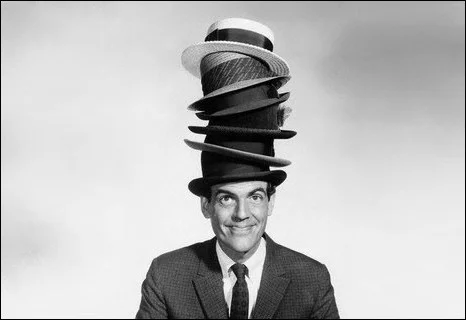
I recently read the following on a Yahoo! News feed that I get sent to my email from time to time.  Usually it contains silly lists like the top 5 things you need to know about your house, or 7 signs you know he’s into you, or the 30 must-have accessories of fall… Generally, I delete them but this one was about work life balance, a topic on my mind lately.  Though it’s targeted at working mothers, I think it applies to all of us, enjoy:

“Stop thinking of yourself as split into separate but equal roles: mother, worker, me. Listen to philosopher John Locke, who said that a person recognizes himself as the same being throughout his life, in different times and places. You are one person, indivisible, who just happens to wear many hats. And while I get that the weight of all those hats can wear you down, at least be happy you’ve got something important to do.”

timothyvogt
Social Media and disabilities

Earlier this week, Tim and I sat on a panel at a social media training in Columbus. The training was mostly for PR people and the like who work in the disabilities community, but other interested parties were welcome.

I found  that there’s a lot of fear associated with social media. Perhaps people are afraid of slander. Or the fact that a lot of what goes on is going to be out of their control (until they delete it). Or it’s the fear of the unknown.

I’m not trying to be Cooly McCoolgirl or anything, but I have never been scared of social media, and it takes a lot of patience for me to understand why someone is. Perhaps I am not afraid because I was what the social media gurus call an “early adopter” of facebook. I joined in 2005, and I have always been interested in how easy it is to get your voice out there on the internet.

Working for a government organization you have to be careful with things, most definitely. But both Tim and I tried to encourage everyone in attendance to just take the plunge and do it.

I was chatting with a friend who works for Apple out in California about this. He said a company who doesn’t have any sort of social media is probably already obsolete. I tend to agree, if they don’t jump on really soon.

This is where people get their information now. At least the people who will be running the country in the very near future. They like that they can interact more directly with a company this way, by writing on their wall or tweeting about it.

Case in point- blogger Heather Armstrong, from Dooce.com (warning, some content may be NSFW, but it’s not too bad) tweeted a few times about some bad service she got from buying a washer and dryer. This pretty much scared the crap out of the company and they immediately helped her out. Granted, she’s pretty big in the web world, and holds a lot of influence. But this is an example of how social media can make or break someone. You can read about her saga here.

To wrap up this sort of nonsensical post- one thing I mentioned on that panel, that sums up everything I think about social media and the disabilities community – Social Media, facebook, twitter, etc helps to humanize our systems.

It makes everyone on equal footing, be it an person that is served, or a small service provider agency. We are all the same. Take the bureaucracy out of it, and think about the people. Think about making your organization more accessible and open to discussion.

Jan Goings
A Metaphor…

Last weekend, Jordan, our friend John and I all saw the Hanging Garden exhibit at the now-deconsecrated Holy Cross church in Mt. Adams. The church itself has been sitting in deconsecrated disuse since the 1970s when the monastery closed and the parish merged with Immaculata a few blocks away on Guido Street. We entered the church and were greeted by chanting monks adorned in rich orange robes, harmonious and discordant voices echoing against the barren and weathered walls. I’ve thought a lot lately about how to improve the spaces within we work, how to improve the work we do. It’s part of the wonderful culture of freedom and trust of Starfire, the ‘yes…and’ dialogue that’s encouraged, expected of all of us. I attended the first of many strategic plans on Tuesday, and I’m excited again to see how tonight unfolds. One question in particular reminded me of this exhibit, ah the beauty of serendipitous experiences! The question was: It’s 2019, how has Starfire changed? How are lives different? What changes have taken place? What’s better… and so forth. 

While my small group had great ideas, (more power, more person centered plans, less barriers to being involved, more neighborhood based events, and so on…) In essence, I hope the future of Starfire looks a lot like the picture above. It is a perfect metaphor for Starfire. It is hopeful when out of aged spaces (or ideas or ways of always doing something) comes beauty, new life, and a gathering. It is also important to note, that sometimes the beauty is too much for others, and they turn away, unable to share in its light.  That’s okay too.

Notice how the walls in the background aren’t perfect. No one has tried to fix the exposed beams above, no one has painted over the imperfection of the historic church still sturdy after years of disuse. Instead, therein the flaws and the visible details we wished were preserved better, is a reverent gratefulness for the past, our foundation, and unexpectedly, and illogically a tree. The tree is a burst of life, hope, ideas, and growth from the source of our something beautiful, simply, made more beautiful.  A closer look shows the new life connected to the wilting lower tree.  Connected, entwined, and not forgotten entirely.  In fact, the new tree needs the roots of the old tree to survive, to hold it’s trunk up, to sturdy it’s new branches.

timothyvogt
What’s Next?

A few years ago, I was big on collaboration.  It seemed like the thing to do.  Funders asked about it (A LOT), and imagining a world where we all worked together was enticing.

I went to a few seminars/webinars/lunchinars about collaboration and learned a few things:  It’s hard to collaborate around programs, because we’re all fiercely proud of what we do and how we do it and we can’t imagine any other way.  It’s also hard to collaborate around funding, because we “build fences” around our funding sources to keep everyone else out.  Some experts suggested collaborating around back office and support, as no one was territorial about that stuff and everyone has the same goal:  to do it cheaper and more effectively to save resources for the mission.

Guess what I found after working with lots of local agencies?  That’s right….Collaborating around back office stuff is hard, too.

It seemed like every collaboration I joined spent lots of time deciding who was in and who was out, and complaining about problems with funding, regulation, or other systems.  None of the people involved were bad.  In fact, all of them were well-meaning, but it just didn’t generally work very well.    But I don’t believe, even given those failures, that collaboration is impossible.  (We’ll dive more into this in the future, but I think collaborating across different services and sectors seems to be working best for Starfire right now.  Our best collaborations are with companies, colleges and other non-profits that have nothing to do with people with disabilities – at least not that they realize!)

One of my thoughts is that if we could focus on something bigger than our immediate reality, we can better focus on what needs to be done and what we might do together.

I got together with Joe Link and Jo Krippenstapel about a year ago, and Joe mentioned that he would like to see a collaborative where all anyone did was get together and share their stories and get to know each other.  We thought that was a terrific place to start, and so we gathered a group of people together and discussed launching “What’s Next?”  Basically, we’d invite people to come in and present ideas “on the cutting edge” of serving people with the label of disability.  We wanted to hear new stories and ideas (preferably local or regional), then chat in small groups with each other and hear what the message meant to everyone. 

In April of 2010, we held the inaugural gathering, where Joe Erpenbeck presented on his work with Asset-Based Community Development.  In June, we had some families present on the Good Life Networks, a local group modeled off of Al Etmanski’s work with PLAN of Canada.

This Tuesday (9/14/10), we’ll hear from Dr. Thomas Knestrict, a national expert on family resiliency who has an incredible personal story about his experience with labels.  In November, we’ll welcome Hope Dittmeier from Realizations in Louisville, who will be talking about building social roles for people, and in 2011, we’ll hear from David Hammisabout the possibilities of self-employment. 

All of these people are doing work in the present that is giving us a glimpse of the future.

So far, we’ve had 30-40 people at each gathering.  the discussions are lively, honest, and fun.  One guy told me that he looks forward to “What’s Next?” more than anything else in his work.  He’s been in this field for over 30 years.  I hope that energy continues and even grows, because the future is something that seems easier to collaborate around.  It’s not here yet, it’s not funded yet, and no one has built any fences yet. 


timothyvogt